Healthy Habits, Happier Holidays & Helpful Updates
November 5, 2026
Growing Together with Pediatric Partners: Healthy Habits, Happier Holidays & Helpful Updates
The holiday season is approaching, bringing opportunities to celebrate, connect with loved ones, and ake special memories. It can also bring extra stress, busy schedules, and plenty of questions about keeping our kids healthy!
In this edition of Growing Together with Pediatric Partners, we're sharing practical ways to help children and teens manage holiday stress, along with guidance on using antibiotics wisely during cold and flu season. We're wrapping up our Healthy Eating Together series with tips for screen-free meals, preventing food allergies through early introduction of common allergens, and helping protect children with food allergies in shared spaces.
You'll also find important tips on using our portal and an important reminder about sending patient portal messages when your usual provider is away, plus opportunities to learn, connect, and find support through ADHDKC's free community events.
As always, our goal is to provide useful, evidence-based information that helps your family thrive at every age and stage. We hope these resources make the months ahead a little healthier, less stressful, and more connected.
Thank you for letting Pediatric Partners be part of your family's journey. We wish you and your loved ones a safe, healthy, and happy holiday season!
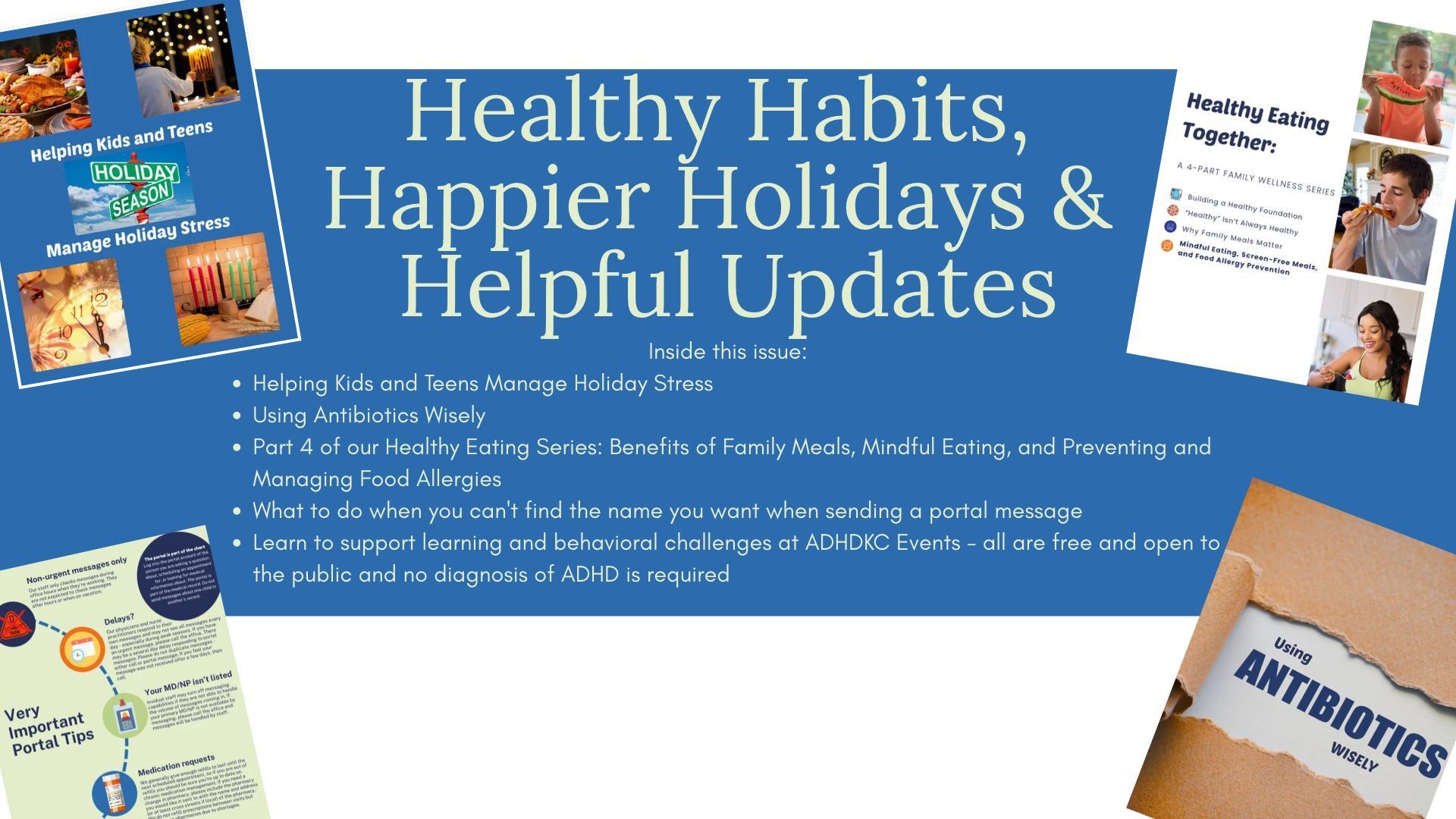
Here’s what’s inside:
- IMPORTANT: Tips for using your portal successfully, including what to do when you can't find the name you want when sending a portal message
- Cinnamon Recall Information
- Helping Kids and Teens Manage Holiday Stress
- Using Antibiotics Wisely - including evidence-based changes to how long infections require treatment
- Part 4 of our Healthy Eating Series: Benefits of Family Meals, Mindful Eating, and Preventing and Managing Food Allergies
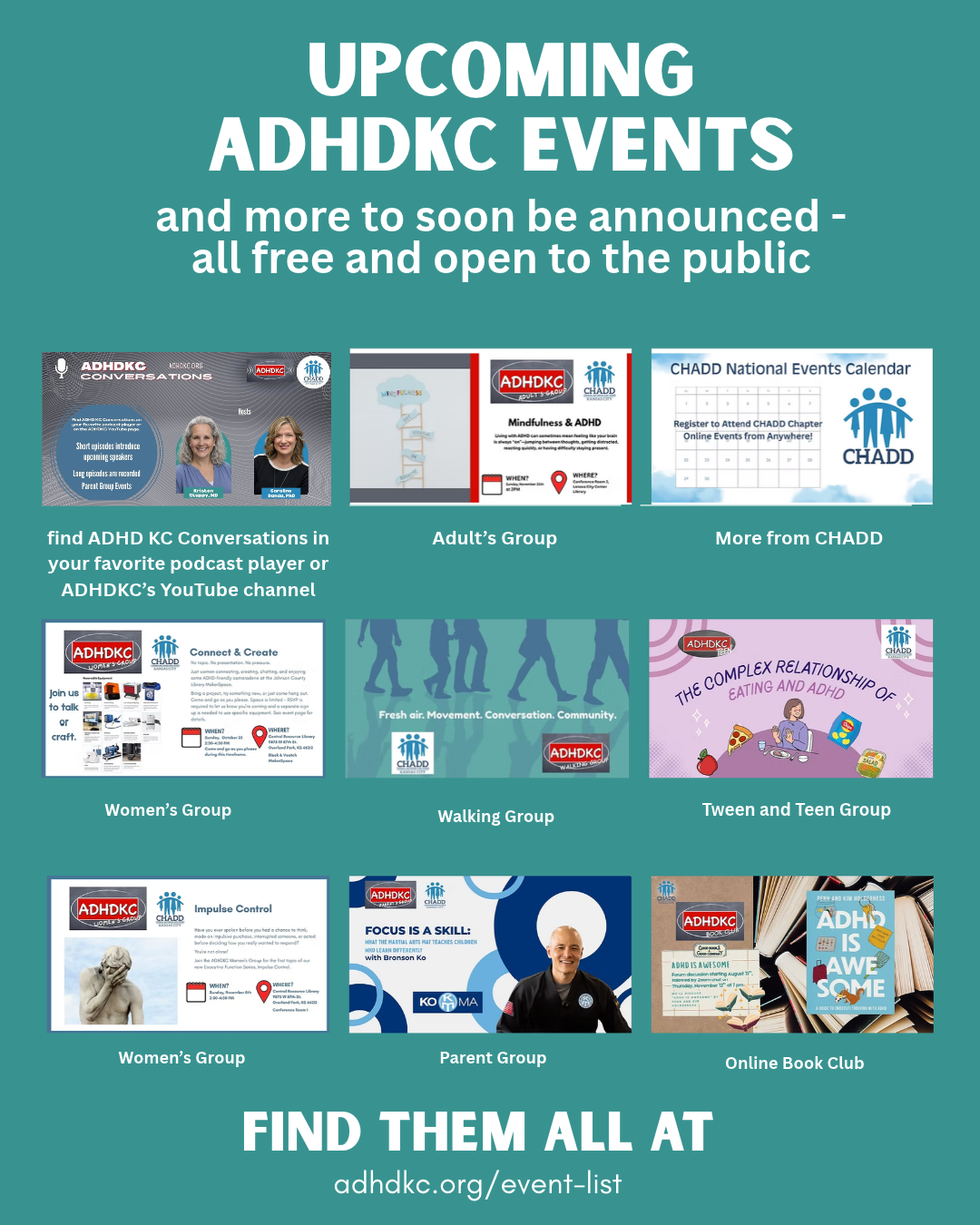
- Learn to support learning and behavioral challenges at ADHDKC Events - all are free and open to the public and no diagnosis of ADHD is required, just an interest to learn.
This newsletter is for you, so I’d love to know what you want to see next. If there’s a topic you’ve been wondering about, or something you’d like explained more clearly, let me know. Your suggestions guide future editions and keep me inspired when I’m staring at a blank page. Use the button to let us know what you want to read about in future editions of this blog.

Helping Kids and Teens Manage Holiday Stress
The holiday season is often filled with celebrations, family traditions, and time with loved ones. But for many children and teens, it can also bring stress, anxiety, and overwhelming emotions. Changes in routines, end-of-semester finals and projects, busy schedules, family gatherings, travel, financial worries, and pressure to make the holidays feel “perfect” can be a lot for young people to manage.
A little extra understanding and support can help make the holidays happier and healthier for the whole family.
How Families Can Help
- Keep routines when possible. Late nights, travel, and busy schedules can disrupt sleep, meals, and other routines. Try to maintain consistent sleep schedules and allow time for rest.
- Make room for downtime. Children and teens may need breaks from social activities, noise, and crowds. It's okay to skip an event or leave early if someone feels overwhelmed.
- Listen without judgment. Ask how your child is feeling about upcoming plans, family gatherings, or holiday expectations. Let them know their feelings are valid, even when those feelings differ from your own.
- Set realistic expectations. The holidays don't have to be perfect! Focus on connection and meaningful experiences rather than creating an ideal celebration.
- Respect individual needs. Some children love large gatherings, while others find them exhausting. Give kids and teens opportunities to recharge, spend time alone, or participate in ways that feel comfortable.
- Watch for signs of stress. Irritability, withdrawal, changes in sleep, frequent stomachaches or headaches, and increased emotional outbursts may signal that your child is struggling. Offer support rather than assuming they're simply being difficult.
- Make time for connection. A walk together, a favorite activity, or a quiet conversation can help children feel supported during a busy season.
It's Okay to Ask for Help
If your child or teen seems persistently anxious, sad, overwhelmed, or is having difficulty managing emotions, professional support may help. You don't have to wait until a problem becomes a crisis to reach out.
At Pediatric Partners, our clinical social worker, Sean Haley, works with children and teens to help them navigate emotional challenges, develop coping strategies, and build skills for managing stress. He can also help families find ways to support their child's emotional well-being.
The holidays don't need to be perfect to be meaningful. By slowing down, listening to one another, and making space for everyone's needs, families can create a season that feels more connected and less stressful.

Using Antibiotics Wisely With New Evidence-Based Recommendations
Cold and flu season is upon us, and we frequently see patients who are under the weather. Fortunately, most of them can go home and use home remedies to feel better as their body's immune system works to tackle the infection. Some will benefit from an antibiotic to help a presumed bacterial infection go away, but parents might notice some different things about the prescriptions compared to years past.
Healthcare professionals have learned a lot about how to use antibiotics safely.
Two ideas guide care today:
- Use an antibiotic only when it is really needed.
- When one is needed, use it for the shortest time that still cures the infection.
Recent high-quality studies show that for many common childhood infections, shorter courses work just as well as the longer courses used in the past. And another bonus with a shorter course is that we see fewer side effects. This is good news for your child.
Why not just use antibiotics "to be safe"?
Antibiotics only kill bacteria. They do nothing for infections caused by viruses, such as:
- Common colds and most coughs, even many pneumonias
- Most sore throats
- Flu and most "chest colds" (bronchitis)
- Runny nose with green or yellow mucus (this alone does NOT mean a bacterial infection)
Giving an antibiotic for a virus will not help your child get better faster, will not prevent a bacterial infection, and can cause real harm:
- Side effects such as diarrhea, rashes, vomiting, and allergic reactions.
- Resistant bacteria ("superbugs") that no longer respond to antibiotics, making future infections harder to treat.
- Disruption of the healthy bacteria in your child's gut, which has been linked in studies to problems like certain gut infections (C. difficile) and possibly allergies and asthma.
For these reasons, your child's prescriber may recommend comfort care and watchful waiting instead of an antibiotic. For some ear infections the prescriber may even give a "wait-and-see" prescription to fill only if your child is not improving.
Why shorter courses?
For many infections, the bacteria are cleared early in treatment.
Finishing a longer course than needed adds extra days of side-effect risk without extra benefit. Shorter courses also mean you don't have to remember to give the medicine or fight with your child to take it as long.
Studies in pneumonia, urinary tract infections, and ear infections have shown shorter courses cure the infection just as well as traditional 10 day courses.
Always give the full course prescribed, even if your child feels better. "Shorter" means the length your prescriber chooses based on current evidence, not stopping early on your own.
snap prescriptions
Many common childhood infections get better on their own without antibiotics. In some situations, though, it can be hard to know on day one whether an infection will improve naturally or eventually need treatment.
That's where a Safety Net Antibiotic Prescription (SNAP) comes in.
A SNAP is a prescription your child's healthcare provider gives you just in case. Rather than starting the antibiotic right away, families are encouraged to focus on comfort measures such as rest, fluids, pain relief, and other home treatments for a few days. Many children improve during that time and never need the antibiotic.
The prescription is there as a backup plan. If symptoms worsen, new symptoms develop, or your child is not improving after the timeframe discussed with your provider, you can fill the prescription and begin treatment without needing another office visit.
This approach helps children avoid unnecessary antibiotics while ensuring treatment is available if it's needed. Fewer unnecessary antibiotics means fewer side effects, less disruption to the body's healthy bacteria, and a lower risk of antibiotic resistance.
Think of a SNAP like carrying an umbrella when the forecast calls for a chance of rain. You may never need it, but it's reassuring to have it available if the weather changes.
SNAP is Commonly Used for Ear Infections
Many ear infections get better in 2-3 days without antibiotics but we cannot tell who will get better on their own versus who will need antibiotics to clear the infection early in the illness. Children who meet criteria can be safely monitored for 2-3 days to see if symptoms improve without antibiotics. During this time they can receive treatments that help alleviate symptoms, such as extra fluids and acetaminophen or ibuprofen as needed for pain.
If symptoms are not better in 2-3 days, or if symptoms worsen, (temperature > 102.2F, ear pain is not controlled with pain medications, or new drainage is seen from ear,) the antibiotic should be started.
Patients Who Qualify for a SNAP:
- 6-24 months old: mild symptoms and infection in 1 ear
- Over 24 months old: mild symptoms and infection in 1 or 2 ears
- Mild Symptoms: no more than mild ear pain for less than 48 hours, fever lower than 102.2 F
Patients Who Do NOT Qualify for a SNAP:
- Severe signs and symptoms at any age. (Severe ear pain, fever higher than 102.2)
- Infants under 6 months
- Children 6-24 months with ear infection in both ears
- Immune deficiencies
- Medical conditions involving the ear
- Ear tubes in place (oral antibiotics are generally not necessary, antibiotic ear drops can be used for any drainage)
- Ruptured ear drum (ear drainage present)
- History of recent or hard-to-treat ear infections
Common antibiotic Treatment Time Changes
Your prescriber will choose the appropriate antibiotic, dose, and how long to give it based on your child's age, weight, type of infection, and how sick they are. Your prescriber will tailor the plan. If you have questions, be sure to ask!
When to return for another check or give us a call
- Your child is not improving after 2–3 days on an antibiotic
- High fever that will not come down, or a child who seems much sicker
- Trouble breathing, trouble drinking, or very low urine output
- Severe rash, swelling of the face or lips, or trouble breathing (possible allergy — seek emergency care)
The takeaway for parents
Not every infection needs an antibiotic, and when one is needed, shorter is often better.
Trusting this approach protects your child from unnecessary side effects and helps keep antibiotics working when your child truly needs them.

Cinnamon Recall: What Parents Should Know About Lead Exposure
You may have heard about a recent recall of Wise Wife brand ground cinnamon because of elevated lead levels. While this news may be concerning, we want to help families understand what the recall means, what steps to take, and when lead testing may be appropriate.
Lead exposure is something we take seriously, especially in young children whose brains and nervous systems are still developing. The good news is that a brief or short-term exposure is not likely to cause a significant increase in a child's blood lead level. However, if your family has used the recalled product, it's worth reviewing your child's potential exposure and discussing testing with us if you have concerns.
Which cinnamon is included in the recall?
Wise Wife Brand Ground Cinnamon has been sold in Kansas. The recalled product has these identifying features:
- 110 g (3.88 oz) clear plastic container
- Black screw-top lid
- Best Before date: 4/25/2027
- UPC: 0688474302754
It was distributed to stores in Kansas and 13 other states between September 2025 and June 2026.
The recall was announced October 29, 2026, after testing found elevated lead levels in a sample of the product.
If you have this product, stop using it. Discard it or return it to the store where you purchased it for a refund. Do not continue using it, even if it looks or smells normal.
Why are we concerned about lead?
Lead can affect a child's developing brain and nervous system. Over time, significant or prolonged exposure has been associated with:
- Learning difficulties and lower IQ
- Problems with attention, impulse control, and behavior
- Slowed growth and development
Some effects can be long-lasting, which is why identifying exposure and removing its source are important.
One reassuring point: A brief exposure or occasional use of a contaminated product is not likely to cause a significant increase in a child's blood lead level. The greatest concerns are with ongoing exposure over weeks or months. However, there is no known safe level of lead exposure, and we cannot determine a child's lead level based on how much cinnamon they may have eaten or whether they seem healthy.
Most children with elevated lead levels have no obvious symptoms. A blood test is the only reliable way to know whether exposure has resulted in an elevated level.
When should my child be tested?
At Pediatric Partners, we routinely screen children for lead exposure at well visits before age 6. Blood tests are done for all children at 12 months and again for some children at 24 months and as recommended based on screening results. We also recommend testing outside of routine screening when a child has potential lead exposure or other risk factors.
If you have been using the recalled cinnamon, or if you discover another possible source of lead exposure in your home or environment, please talk with us about whether your child should have a blood lead test.
Other possible sources of lead include:
- Paint and dust in homes built before 1978, especially during remodeling or repairs.
- Older plumbing and water sources.
- Imported spices, candies, traditional medicines, cosmetics, pottery, toys, and jewelry.
- Soil near older buildings or busy roads.
- Dust brought home on clothing or shoes from certain jobs and hobbies, such as construction, auto repair, welding, or pottery making.
We're here to help!
We don't want families to panic over a potential exposure, but we do want parents to know when testing may be helpful. Identifying lead exposure early allows us to find and eliminate the source and monitor your child's health and development.
If you have questions about the cinnamon recall, possible lead exposure, or whether your child needs testing, please contact our office. We're happy to help you decide on the appropriate next steps.
Your child's health and development matter to us, and we're here to partner with you!
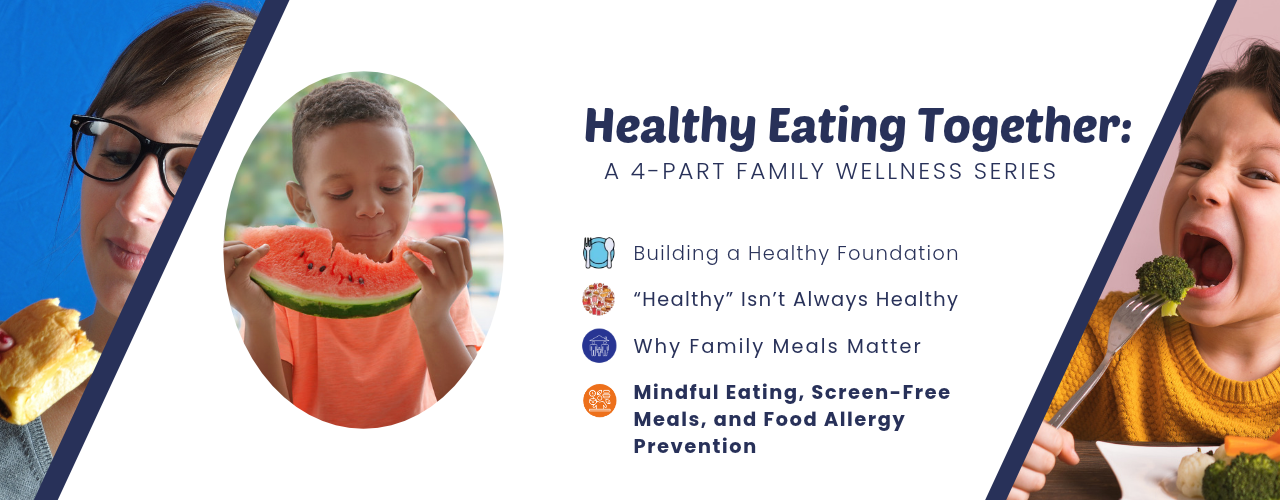
Healthy Eating Together, Part 4: Mindful Meals, Screen-Free Eating, and Food Allergy Awareness
Helping children build healthy habits means thinking beyond what's on their plates. How we eat, how we connect during meals, and how we protect one another from food allergies all play a role in family wellness.
Over the past three articles in our Healthy Eating Together series, we've explored how families can build healthy eating habits, recognize hidden sugars in foods marketed as healthy, and make time for family meals that nourish both body and mind.
For our final article, we're bringing those ideas together with three important topics: eating with intention, reducing screen distractions, and helping children safely explore foods while respecting the needs of people with food allergies.
These habits can benefit children at every age, from babies beginning solid foods to teenagers learning to make independent choices.
Put down the screens and reconnect with your food
Think about the last time you ate a meal while watching television, scrolling through your phone, or answering messages.
Did you notice how the food tasted? Did you recognize when you were comfortably full? Or did you look down and discover that your plate was empty before you really realized you had eaten?
This is an example of distracted eating.
When our attention is focused on a screen, we may pay less attention to the food we're eating and to our body's signals of hunger and fullness. Research suggests that distracted eating can affect how much we eat and how well we remember the meal afterward.
For children, mealtimes are also opportunities to practice recognizing their own hunger and fullness cues. Screens can make that learning more difficult by shifting attention away from the experience of eating.
But the effects go beyond nutrition.
When everyone is absorbed in a device, families miss opportunities to talk, listen, share stories, and notice how one another is doing.
A screen-free meal is an opportunity to nourish both the body and family relationships.
Why intentional eating matters at every age
- Babies and toddlers: Eating together provides opportunities to observe caregivers, explore new foods, and practice feeding skills. Babies learning to eat need close supervision and attentive caregivers.
- School-aged children: Meals provide time to learn about different foods, notice hunger and fullness, and practice conversation and social skills.
- Teenagers: Shared meals can offer a low-pressure opportunity to connect with parents and siblings during a busy stage of growing independence.
- Parents and caregivers: Adults benefit, too. Slowing down can make meals more enjoyable and create space to reconnect after a hectic day.
Intentional eating doesn't mean analyzing every bite or forcing children to eat slowly. It means giving food and the people sharing it our attention.
How to make family meals more screen-free
You don't have to change every family habit overnight. Start with one meal or snack each day.
Try these practical strategies:
- Create a device-free zone. Keep phones and tablets away from the table, including adult devices when possible.
- Turn off the television during meals. If your family is used to eating with the TV on, start with a few screen-free meals each week.
- Make conversation easy. Ask everyone to share a highlight of their day, something that made them laugh, or something they're looking forward to.
- Let children help. Choosing the menu, preparing food, or setting the table can make meals feel more engaging.
- Set realistic expectations. A family with demanding schedules may not be able to eat together every night. Focus on the opportunities you have.
If your child struggles to sit at the table or finds mealtimes difficult, consider whether the environment is helping or making things harder. Some children need movement, sensory accommodations, or shorter meals. The goal is connection and nourishment, not forcing everyone to sit perfectly still.
Screens aren't inherently bad, and there will be times when using a device during a meal makes sense. The goal is to establish regular opportunities to eat attentively and connect without digital distractions.
Helping prevent food allergies: Why early introduction matters
For many years, parents were advised to delay introducing foods such as peanuts and eggs to babies in the hope of preventing food allergies.
Research has changed that advice.
Studies, including the landmark Learning Early About Peanut Allergy (LEAP) trial, found that introducing peanut-containing foods during infancy can significantly reduce the risk of developing peanut allergy in certain children. Other research supports introducing well-cooked egg and other common allergens when babies are developmentally ready for solid foods, usually between 4 and 6 months.
This is an important shift in how we think about food allergy prevention.
When should babies try common allergens?
Most babies are ready to begin complementary foods at around 4 - 6 months, when they show developmental signs of readiness. Allergenic foods can be introduced alongside other age-appropriate foods rather than deliberately delayed.
Common food allergens include:
- Peanut and tree nuts
- Egg
- Milk and other dairy products
- Wheat
- Soy
- Sesame
- Fish and shellfish
Babies do not need to try every allergen on their first day of solid foods. Introduce foods in safe, age-appropriate forms, and continue offering foods that they tolerate.
Peanut introduction deserves special attention for babies with severe eczema, an existing egg allergy, or both. These infants may benefit from evaluation and guidance from their healthcare provider before peanut is introduced. For some high-risk babies, introduction may be recommended as early as 4–6 months, once they are developmentally ready.
What does safe introduction look like?
You don't need to prepare complicated recipes to introduce allergens.

Peanut
Mix smooth peanut butter with warm water, breast milk, formula, or puree until thin and smooth.
Peanut powder can also be mixed into a soft food.

Egg
Offer thoroughly cooked egg in a soft, age-appropriate texture, such as soft scrambled egg.

Dairy
Plain, pasteurized yogurt is one option for babies who are ready for solids. Many little ones love various cheeses.
Cow's milk can be used in foods, but it should not replace breast milk or infant formula as the main drink before 12 months.
Never give babies whole peanuts or whole nuts, thick spoonfuls of nut butter, or other foods that pose choking risks. Food texture and supervision are essential.
When introducing an allergen for the first time, offer a small amount when your child is well and you can observe them. Follow your healthcare provider's recommendations if your child has eczema, a known food allergy, or a history of a possible allergic reaction.
Once a food is tolerated, keep it in the child's diet regularly in an age-appropriate form. Early introduction is not a guarantee that a child will never develop a food allergy, but it can reduce risk, particularly for peanut allergy.
If a child develops symptoms such as hives, swelling, or vomiting after eating a food, stop offering that food and seek medical advice. Breathing difficulty, throat or tongue swelling, collapse, or other signs of a severe allergic reaction require emergency treatment. If anaphylaxis is suspected, use prescribed epinephrine promptly and call 911.
Food allergy awareness: Helping everyone eat safely
Preventing food allergies and protecting people who already have them are two different, equally important goals.
For a child with a serious food allergy, eating a food that is normally nutritious for someone else can cause a life-threatening reaction. Families, schools, childcare centers, camps, and community organizations can all help make shared spaces safer.
Food allergy awareness doesn't mean we need to fear food or eliminate every common allergen from every public setting. It means understanding the risks, following relevant safety policies, and taking reasonable steps to prevent accidental exposure.
Understand cross-contact
Cross-contact occurs when a food allergen is unintentionally transferred to another food, utensil, hand, or surface.
For example:
- A knife used to spread peanut butter is then used to prepare another child's sandwich.
- A child handles a snack containing an allergen and then touches a shared toy or table.
- Crumbs or food residue are left on a picnic table or restaurant high chair.
- A serving spoon is used in multiple dishes at a buffet.
Even small amounts of an allergen can trigger a reaction in someone with a food allergy. Simply picking an offending ingredient out of a dish does not reliably make the remaining food safe.
Simple ways families can protect others
- Wash hands with soap and water.
- After eating, especially when handling common allergens, wash hands before touching shared toys, equipment, or other people's food. Hand sanitizer alone does not reliably remove food allergens.
- Clean eating surfaces.
- Remove food residue from tables, high chairs, and counters using appropriate cleaning products. Brushing away crumbs may not be enough.
- Don't share food or utensils.
- Teach children not to trade snacks, share drinks, or use another person's utensils. This is especially important in schools and childcare settings.
- Follow allergy safety plans.
- If a school, daycare, camp, or activity has specific food allergy policies, follow them. Families managing allergies should communicate with staff about ingredients, cross-contact risks, and emergency plans.
These precautions can make a meaningful difference without requiring every family to follow the same food restrictions in every setting.
What about choosing foods to eat in public?
Families can be thoughtful about the foods they bring to shared spaces, especially when they know someone present has a serious allergy.
Consider these practices:
- Check with schools, childcare centers, and activity organizers about their food policies.
- Choose foods that are easy to contain and clean up when eating in shared spaces.
- Avoid leaving sticky residue, crumbs, or discarded food where other children may touch it.
- Keep allergen-containing foods separate from allergy-safe foods.
- Be willing to accommodate a specific, reasonable request from a family managing a severe allergy.
For example, if you are attending a small gathering and know a child has a severe peanut allergy, ask the host about the safest way to handle food rather than assuming that any snack is fine.
At the same time, there is no universal rule that everyone must avoid all peanuts or other allergens in every public place. Policies should be based on the setting, the individual's allergy plan, and practical safety considerations.
Severe food allergies deserve respect, and children with allergies should be included in meals, parties, and activities whenever possible.
Teach empathy, not fear
Children can learn that people have different medical needs without becoming afraid of foods themselves.
You might explain: “Peanut butter is safe for many people, but it can make some people very sick. We need to follow the rules that help keep everyone safe.”
This helps children understand that food allergy precautions aren't about being difficult or overly cautious. They are about caring for other people.
And when children see adults taking allergies seriously, they learn that inclusion and safety are shared responsibilities.
Bringing it all together: Small habits, lifelong benefits
Healthy eating is about more than choosing the right foods.
It's about creating routines that support physical health, helping children develop a positive relationship with food, making space for meaningful family connections, and recognizing that food choices can affect other people, too.
Across this four-part series, we've explored ways to:
- Build balanced eating habits without expecting perfection - Part 1.
- Recognize added sugars in foods marketed as healthy - Part 2.
- Use family meals to support nutrition, communication, and connection - Part 3.
- Reduce screen distractions and eat more intentionally - above.
- Introduce common allergens safely during infancy and help protect people with food allergies - above.
You don't need to change everything at once.
Choose one realistic step your family can work on this week. Maybe it's putting phones away during dinner, adding a fruit or vegetable to breakfast, reading a food label together, or learning more about safe allergen introduction before your baby begins solids.
Then build from there.
The goal isn't to create perfect eaters. It's to raise children who have the knowledge, skills, and confidence to nourish themselves, care for their health, and respect the needs of others.
Those are habits worth carrying into adulthood—and passing along to the next generation.
This article is for general education and does not replace individualized medical advice. Talk with your child's healthcare provider about introducing allergens, especially if your baby has severe eczema, an existing food allergy, or a history of a possible allergic reaction.
Resources
- Kids With Food Allergies
- Food Allergy and Research Education - FARE
- Food Allergy Handouts from the American Academy of Allergists and Immunologists
- Food Allergy Prevention Resources
Understanding How Our Patient Portal Works
As we head into the holiday season, we wanted to share a few reminders about patient portal messaging and how it is handled in our office.
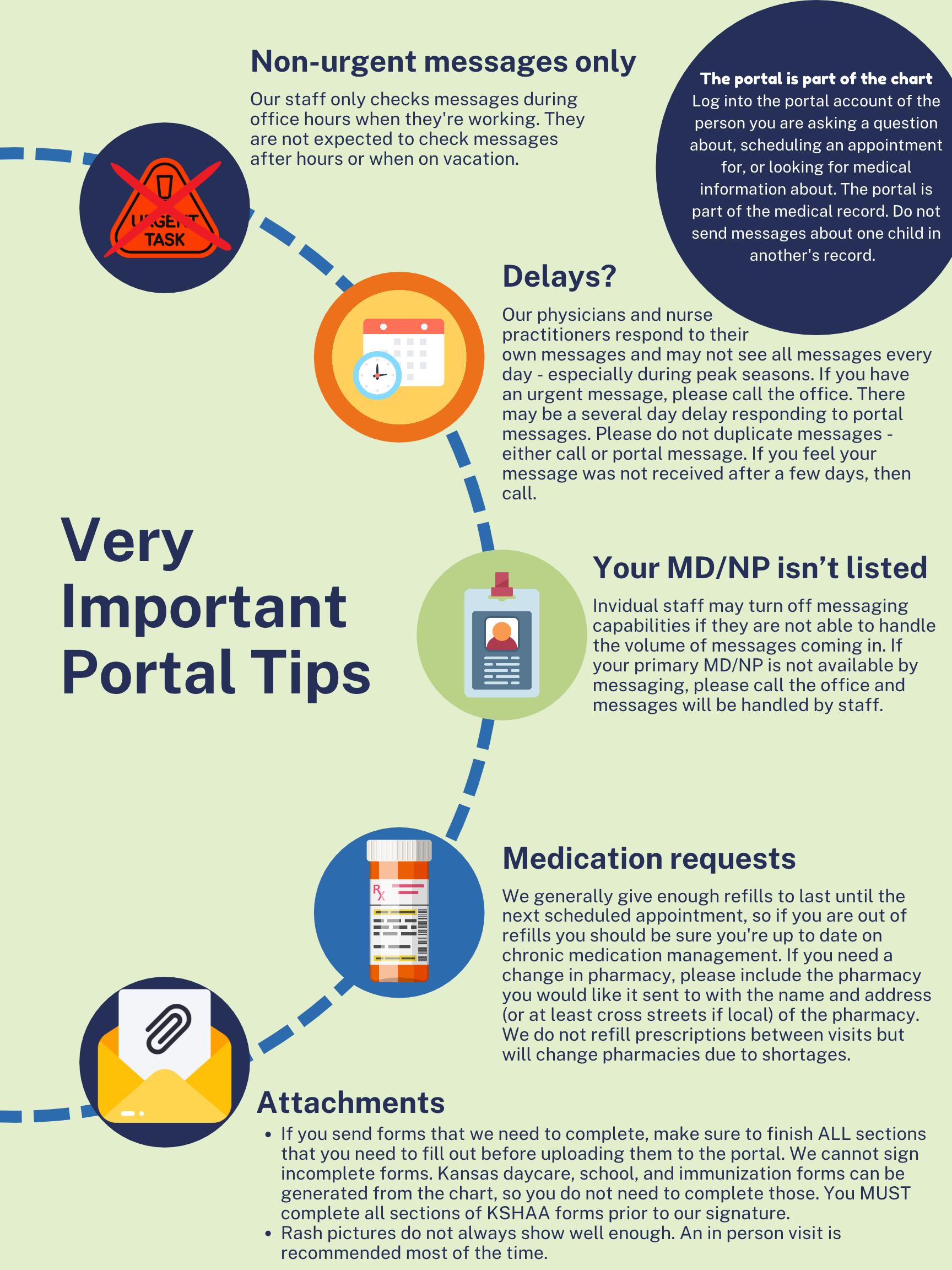
One of the biggest misconceptions about patient portals is that messages are monitored continuously by a shared team. In our practice, that's not how the system works. Our physicians and nurse practitioners personally review and respond to their own portal messages. If a provider is out of the office, on vacation, or unavailable, they will not see messages sent to them during that time.
To help prevent delays, messaging options may be turned off when a provider is away or unable to manage their message volume. If you do not see your provider's name available for messaging, please do not reply to an old portal message thread as a workaround. Messages sent through old conversations may not be reviewed promptly and can create duplicate work when providers return.
Portal Messages Are for Non-Urgent Concerns
Portal messages should be used for routine, non-urgent questions only. Messages are reviewed during office hours, not evenings, weekends, holidays, or vacations. If your concern is urgent, please call the office rather than sending a portal message.
Because providers answer their own messages, there may occasionally be a delay of several days, especially during busy seasons. Sending both a portal message and a phone call about the same issue doesn't speed up the process and often creates duplicate work for staff and providers who must sort through multiple requests for the same concern.
If Your Provider Isn't Listed
If your physician or nurse practitioner is not available in the messaging system, please call the office. Our staff can often help directly or route your concern to the covering provider when appropriate. This is the fastest and safest way to ensure your message reaches someone who can assist you.
A Few Additional Portal Tips
- Please log into the portal account of the person whose care you are asking about. The portal is part of the medical record, so questions about one child should not be sent through another child's chart.
- When requesting a pharmacy change, include the pharmacy name and location to help us process the request efficiently.
- If you upload forms for completion, be sure all parent sections are completed before submission. Blank forms cannot be signed.
- Photos can sometimes be helpful, but many conditions, including rashes, cannot be adequately evaluated through images alone and may require an office visit.
Our goal is to provide timely, thoughtful responses while maintaining safe and accurate medical care.
Understanding how portal messages are managed helps us serve everyone more efficiently, especially during holidays, vacations, and other busy times of the year.
Thank you for your partnership and for helping us keep communication running smoothly.
Learn About Upcoming Free Community Events from Our Local CHADD Chapter
Founded in 2012, ADHDKC is Kansas City’s Award Winning Non-Profit CHADD Chapter. ADHDKC provides support for thousands of area families thriving with ADHD and related conditions. Every month ADHDKC sponsors events online and around the KC Metro to help parents, adults, and adolescents learn how to regulate emotions, better manage executive functioning, and more.
We know many of you live with the challenges of having ADHD in the home. The good news is that you can learn to better support your family. ADHDKC offers monthly events for parents, adults, and teens to help you learn to thrive with ADHD.
ADHD KC Conversations is their podcast, which is shared on Spotify and Apple Podcasts and in video form on YouTube. It offers a glimpse into upcoming parent group speakers with a short interview released a month prior to their talk and longer episodes of the parent group talks.
All ADHDKC Events are free and open to the public. No diagnosis is required! You just need an interest in the topic to join us. Feel free to share this with friends and family who would benefit.