Well Visits
When can I schedule a sick child visit?
If you’re ever in doubt about whether your child needs a sick visit, call our office. The friendly nurse asks a few questions to determine the severity of your child’s symptoms, then helps you decide if you need to come into the office.
You can schedule same-day sick visits any time the office is open. See our Hours and Locations.
We offer online scheduling through our portal for your convenience for routine sick and standard well visits. Please do not use these spots for mental health concerns, as those visits typically are much longer than standard sick visits. Call the office so we can find the best fit for anticipated long visits.
What happens during a sick child visit?
The goal of a sick child visit is to quickly diagnose the problem and start treatment that will help your child feel more comfortable.
In addition to reviewing your child’s symptoms and medical history, a physical exam to assess the symptoms will be done.
Sick visit may require laboratory tests or imaging for identification of the source of symptoms. We can do rapid tests for Strep, flu A & B, urinalysis and COVID19 in our office.
We can collect samples for Strep throat cultures, some PCR tests, chlamydia, gonorrhea, and urine cultures to send to laboratories. We can order further tests from local labs and radiology facilities as needed.
What children’s conditions can a sick visit treat?
Sick visits treat many types of injuries and illnesses that need same-day or next-day medical care. Children’s symptoms can change quickly, so don’t hesitate to call if your child’s symptoms get worse.
The following are some of the most common conditions treated during sick visits:
- Flu Upper respiratory infections
- Earaches Headaches
- Sore throat or strep throat
- Congestion
- Coughs
- Abdominal pain
- Asthma
- Rashes or hives
- Allergic reactions
- Eye discharge or infection
- Vomiting and/or diarrhea
We also treats minor injuries like concussions without persistent vomiting or altered level of consciousness, cuts and sprains.
When does my child need immediate medical care?
Your child should be evaluated by a medical professional for the following symptoms:
- Fever of 100.4ºF or higher in children younger than 2 months of age - this is an emergency: do not wait until office hours
- Daily fever of 100.4ºF or higher that persists for 3-5 days (the younger the child or the more concerning the symptoms, sooner; older children who are overall well appearing can wait 5 days)
- Unusual symptoms or any symptoms that concern caregivers
- Difficulty breathing should be seen immediately unless home treatment improves sufficiently to wait until business hours
- Signs of dehydration (no tears, dry in mouth, decreased urine output or too much urine with other signs of dehydration) should be seen immediately
- Persistent pain may require emergent treatment, depending on severity and other symptoms
- Rash that you can't identify or know how to treat may require emergent treatment, depending on severity and other symptoms
- Fever with a rash, stiff neck, vomiting, and headache is an emergency and should be seen immediately
- Suspected bacterial infection, such as Strep throat (fever, sore throat, headache, nausea, vomiting , sandpaper rash in a child over 3 years - not all symptoms must be present) or urinary tract infection (painful urination, foul smelling urine, fever, vomiting - not all symptoms must be present): most of these can wait until business hours unless there are significant symptoms that are concerning
When your child is sick, call the office as early in the day as possible so they can schedule a same-day visit if necessary or come to our Urgent Care/Walk In hours.
If you have questions about your child’s symptoms or you need to schedule a sick visit, call our office or book an appointment online.
What is appropriate for walk in visits (urgent care)?
We have a full page about our Urgent Care (walk in) availabilities. Learn more here.
Walk in visits work well for acute injuries and illnesses. They are not appropriate for mental health concerns, routine well visits or chronic disease management.
Schedule an appointment with the provider your child most often sees for ongoing conditions such as chronic pain, asthma, and constipation. Your usual provider who knows the story should see chronic concerns. Of course, if there is an exacerbation or sudden worsening of symptoms, acute management can be done at our urgent care with follow up by appointment and ongoing management with your primary care provider.
Pediatric Partners reserves the right to dismiss patients who are not compliant with this standard of care. We need to regularly see our patients to maintain a relationship with them and provide the best medical care for each individual.
Preventive care promotes healthy growth and development and everyone deserves an annual visit for a medical exam. When possible we will have our social worker talk briefly with adolescents at their annual well visit to let them know that menal health services are available for a wide variety of concerns and hopefully to normalize the need for mental healthcare as well as physical healthcare.
Well visits provide you with the opportunity to bring up any questions or concerns you may have about your child’s health - or that they have about their own health. Many concerns deserve their own time to discuss sufficiently, so you may be asked to schedule a dedicated visit to address the issue. Sometimes problems are identified during a routine well visit and you will be asked to schedule a time to address them separately so that appropriate attention can be given.
Your child should have a well child visit at the intervals listed below.
* Click here to jump to the schedule, including recommendations for children with Down Syndrome.
* Click here to see common FAQs, including information about Sports Physicals.
We recommend that you use the portal to schedule or call our office 2- 3 months in advance to schedule an appointment with your child's primary care provider on the date that best fits your needs. Summer physical spots fill early due to state requirements of when sports physicals can be done. Plan ahead!
FAQs About Well Visits
Promoting Healthy Growth & Development
Did you know regular well child visits are one of the most important things you can do to keep your child healthy? Even as kids grow into adolescents and young adults, a yearly visit helps to continue a relationship so they trust their primary care provider and that provider knows them well.
The frequency of well visit appointments per the Academy of Pediatrics and Bright futures is yearly for those over 3 years of age and more often for younger children.
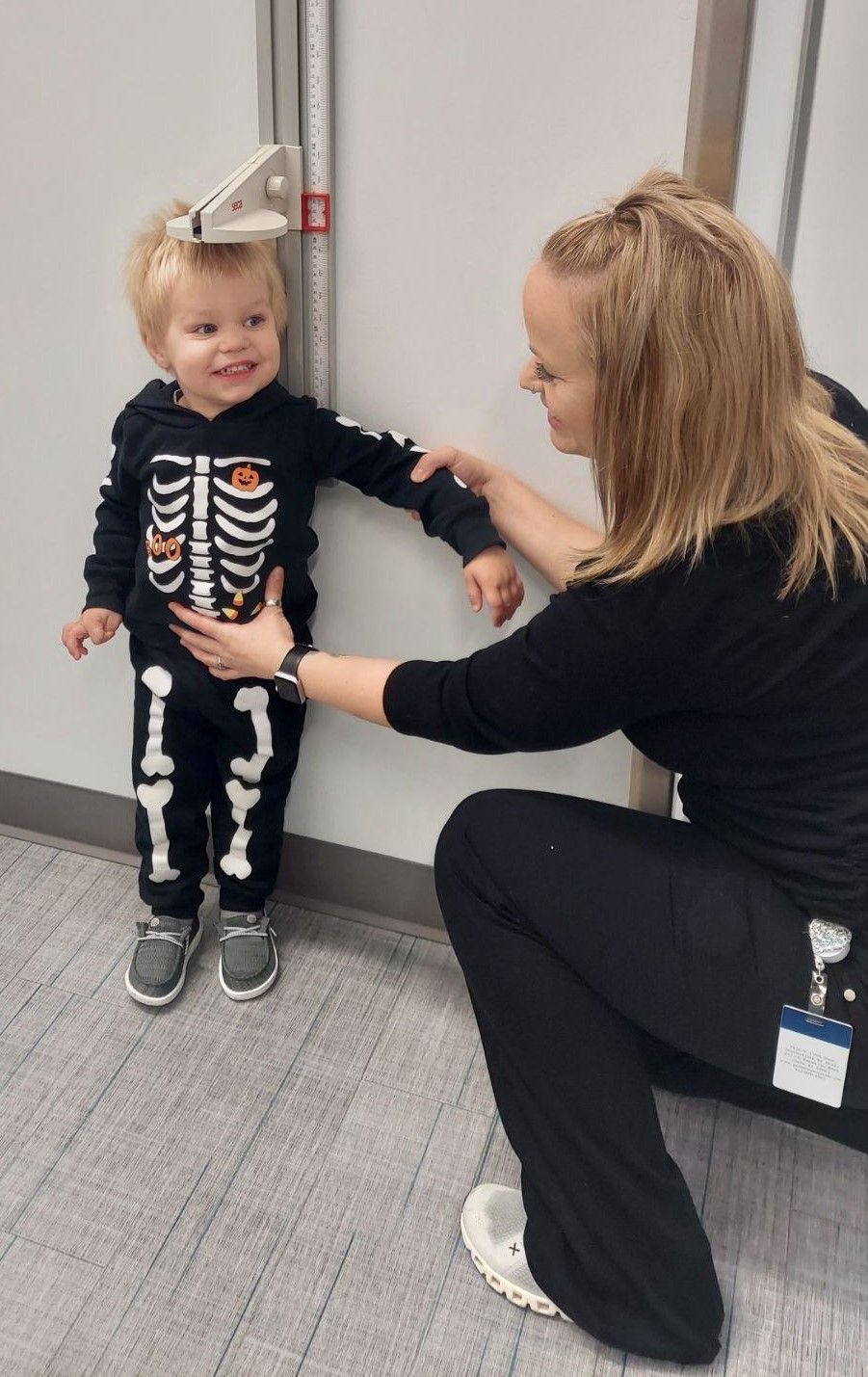
What is the difference between a preventive care visit and an office visit?
A preventive care visit is different from an office visit
The purpose of a preventive visit is to review your overall health, identify risks and find out how to stay healthy. Most insurance plans cover 100% of a preventive visit when you see a doctor in your plan network.
Insurance will only cover one annual well visit.
Sports physicals are not covered. We can often get around this by completing forms at your annual well visit, but it must be within the time frame that the form requires.
The purpose of an office visit is to discuss or get treated for a specific health concern or condition. You may have to pay for the visit as part of your deductible, copay and/or coinsurance. If you schedule a preventive care visit and ask about a specific health concern or condition, it may trigger an additional charge for an office visit.
A preventive care visit
These are usually covered in full by insurance
- Check your weight, height, blood pressure (over 3 years) and pulse
- Listen to your heart and lungs
- Check your ears, eyes, throat, skin and abdomen
- Recommended immunizations
- Screenings vary by age (development, lead, depression)
- Certain blood tests, such as to check for high cholesterol, lead or anemia
An office visit
You may be required to pay for these services, even if addressed during a preventative care visit
- Discussing or getting treatment for a specific health concern, condition or injury
- Refills of prescriptions are considered getting treatment for health conditions
- Lab work, X-rays or additional tests related to a specific health concern, condition or injury
What is the difference between a Sports Physical & a Well Visit?
What is a Routine Well Visit?
We recommend that everyone has a preventative care well visit each year, even if they don't need forms signed. Insurance generally covers these in full.
This visit monitors growth and development, helps to identify risks through screenings and labs at recommended ages, and helps to continue a relationship so that children and teens feel comfortable talking to a medical professional if a problem arises. Forms are often completed at this visit - think ahead and bring any you will need prior to the next well visit.
Sick visits do not replace well visits and well visits are not the best time to talk about concerns. Bringing a list of issues that have evolved over the past year doesn't allow time to talk about each concern sufficiently. Please schedule those separately so that each concern can get the attention it deserves!
We ask that all patients have at least one well visit per year (more for those under 3 years of age) so that we continue our relationship with each other. When annual visits are missed, it is easy for us to not recognize issues that might affect overall health. It may also be more uncomfortable for patients when they need to come in but don't recognize us.
You can schedule well visits through the portal or by calling the office. All the needed forms can be completed at your annual well visit.
Sports & Camp Physicals, Pre-op Physicals, and More
Many athletic teams, marching band, and camps require physicals to complete their forms. These are not specifically covered by insurance, but can be done at the same time as the annual well visit as long as it is done in the time frame required by the organization requiring the form.
If you'll need any forms completed (school, medication, asthma or allergy action plans, sports, camp) be sure to bring all forms with your sections completed to your well visit or sports physical. We cannot sign any form until the parent / student section(s) are completed.
Timing is important!
- Kansas middle and high school sports physicals must be done AFTER April 1st (new in 2025!) and BEFORE the first practice.
- Missouri middle and high school sports physicals must be done AFTER February 1st and BEFORE the first practice.
- Some private clubs, sports, and camps set their own dates.
- Schools need annual medication forms for prescription medications given at school. Usually the forms need to be filled out after May 1st for the upcoming school year. We recommend you bring these forms to your annual well visit or to the visit that addresses the issue for which the medication is needed, such as an asthma visit.
- Pre-op physicals must be done within 30 days typically. These are often covered by insurance because they are not "well" visits.
Insurance covers one well visit per year for kids over 3 years of age (and more frequently for younger children). If you've already done one prior to the state requirement for school sports, we offer cash based sports physicals. This is an abbreviated version of the annual well visit but will get your form completed, then next year you can do the annual visit during the required timeframe.
Spring is the time of year to schedule annual well visits for the summer!
While many younger kids continue to do their annual visit around their birth date, as kids approach middle and high school, we encourage scheduling in the spring/summer to fulfil many sport/camp form requirements.
What can you do if your child needs a form signed but has already had a well visit outside the required time frame?
We offer sports physicals for a small fee if your child has already had a well visit in our office outside the time frame required by the form's organization but within the past year.
This is a huge discount compared to other clinics and it can "re-set" your child's annual well visit time to a summer visit, which allows forms to be completed at the annual visit each following year.
We only offer this price for our patients who have had a well visit in our office during the previous year. Call our office and let them know your child has had a well visit, but needs a sports form signed. We'll see if we can use the last well visit to complete forms depending on dates or if we need to schedule a sports physical.
If your child has not had a well visit, schedule a well visit and forms can be completed at that time. Insurance companies cover well visits, so you save money and get a more comprehensive exam and visit.
Who's eligible for a sports physical without a well visit?
Sports physicals are available for patients who had a well visit in our office outside the time frame required by the form's organization but within the past year.
Call our office and let them know your child has had a well visit, but needs a sports form signed. We'll see if we can use the last well visit depending on dates or if we need to schedule a sports physical.
If your child is newer to our office and the last well visit was done in another location, please call to schedule a physical - if our staff did not perform the physical, we must ensure that all the required screenings were done elsewhere.
From May 1st through August 31st, we offer walk in sports physicals to established patients who are otherwise
eligible for a sports-only physical as above when there are not high numbers of sick patients to see in walk in. You must complete the patient portions of the paperwork prior to the exam. We
do NOT offer walk in well visits and if your athlete is due for a well visit, please schedule this and we can complete the sports physical at that time.
Please do not use the portal to schedule a sports physical. The portal spots are for routine well visits, which has a completely different workflow in the system. We schedule sports physicals differently, which helps with this automated workflow - and will save you time not having to do as many online check in surveys!
When does a well visit (preventive visit) become an office visit?
A preventive care visit is different from an office visit:
- The purpose of a preventive visit is to review your overall health, identify risks and find out how to stay healthy. Most insurance plans cover 100% of a preventive visit when you see a doctor in your plan network.
- The purpose of an office visit is to discuss or get treated for a specific health concern or condition. You may have to pay for the visit as part of your deductible, copay and/or coinsurance.
If you schedule a preventive care visit and ask about a specific health concern or condition, it may trigger an additional charge for an office visit.
If you want to know about costs, ask your insurance plan for an estimate of fees before you visit. You can call the number on the back of your member ID card and describe what you want to cover at your well visit. The table below shows what services are typically covered during a preventive visit.
What can I discuss at a preventive visit without getting charged?
During your preventive well care visit, the following is included:
- Your current health
- Your family health history
- Past illnesses and surgeries
- Risks you may have for specific conditions (note: some insurance companies deny coverage for the recommended screening surveys)
- How to maintain a healthy lifestyle
Does insurance cover routine preventative care?
Most of the things your provider recommends for routine preventative care will be covered by your plan, but some may not. This may include some of the screening recommendations and tests recommended routinely if your insurance company does not cover them. We will not know this in advance. It is insurance plan dependent.
When you have a test or treatment that isn't covered, or you get a prescription filled for a drug that isn't covered, your insurance company won't pay the bill. This is often called "denying the claim." You can still obtain the treatment that is recommended, but you will have to pay for it yourself. Some companies will pay a percentage and the patient is responsible for the remainder. This is in addition to your co-pay.
If your insurance company denies your claim, you have the right to appeal (challenge) the decision. Before you decide to appeal, know your insurance company's appeal process. This should be discussed in your plan handbook. Not all appeals will end in your favor, but some challenged claims will be covered eventually by the insurance company.
Most insurance companies have different levels of co-pays for the primary care office, specialist, urgent care, and emergency room. These are often printed on your insurance card and can change yearly with new contracts. Some insurance plans require a referral to see any provider other than your primary care provider on your insurance card.
What are Athletic Heart Screens?
We are commonly asked if we think the athletic heart screens offered in the community through My Heart Check are recommended. In general we support these, as they have found previously unidentified conditions in those screened.
At these clinics an echocardiogram (ECHO) and electrocardiogram (ECG) are performed and then read by a local pediatric cardiologist. They send results to the home as well as the identified primary care physician.
Dr Stuppy discusses these screens further in Should my child have an Athletic Heart Screen?
We have been allowing My Heart Check to rent space in our offices to do heart screenings. We do not have an official relationship with them otherwise. Our patients as well as non-patients can do these screenings at any of their public clinics.
AFTER A COVID-19 INFECTION
Athletes may be at increased risk after a COVID-19 exposure. Talk with your doctor prior to return to play - these guidelines are evolving as we learn more about risks.
What are sleep needs and tips?
Tired children should fall to sleep easily, but if they are overtired, they may become hyper and unable to sleep. Signs of being tired include fussiness, tantrums, rubbing eyes, asking for the bedtime routine (book, toothbrush, snack, etc.), not having interest in playing, and becoming hyperactive.
OVERVIEW
Provide a regular nap and bedtime and routine, even on weekends. When children stay up late, they tend to wake up early and are grumpy the next day. At nap and bedtime, help your child settle down by doing calming activities: Bath, brushing teeth, reading books, turning on white noise or soft music, keeping the room dark. Make sure toddlers and children have access to a water bottle to avoid the begging for another drink. (Be sure it is only water - juices and milk contribute to cavities!) Part of the bedtime routine must include going to the bathroom for potty trained children, as needing to go potty is a common toddler excuse to leave the bedroom! The sleeping room should be quiet. White noise or soft music may help many sleep, but any extraneous noises, such as a fish tank or battery operated toys, may keep some children awake.
Toddlers and young children may require a nightlight, but darkness triggers the sleep center of the brain. They may also like a security object, such as a favorite stuffed animal or blanket. A cooler room is more comfortable for sleeping. Babies should have enough clothing on them to keep warm, as blankets may pose a hazard for infants under 1 year. As you tuck all of your children in each night, be sure to include plenty of hugs and kisses (even when they think they’re too old!).
FOLLOWING REGULAR ROUTINES WITH ACTIVITIES, EATING AND SLEEPING WILL HELP MANY UNWANTED BEHAVIORS.
- Make sure children get plenty of exercise during the day to keep them healthy and help them sleep better. Avoid exercise 1-2 hours before bedtime to let them calm down.
- Do not allow a television in the bedroom for any child. Television viewing within about an hour of bedtime may disrupt sleep. Turn off the television and play with your children in the evenings.
- Before a long stretch of sleep, be sure your child has had an adequate meal or snack. For infants this is breast milk or formula. Older children should have complex carbohydrates with fats and protein. A snack high in sugar, even if it is a healthy piece of fruit, will not sustain a good night’s sleep. Add cheese to apple slices, yogurt, granola, whole wheat breads, peanut butter (if over 2 years), and even ice cream (in moderation) are good snacks.
- If your child has a hard time sleeping, follow these tips.
NEWBORNS
Newborns sleep 16-18 hours per day, waking only for feedings initially and gradually working toward a regular pattern of naps and nighttime sleeping in longer stretches. Remember that newborns need to eat every 2-4 hours, so do not expect them to sleep longer stretches until at least 4 months. Be sure they sleep on their back without any loose bedding.
THREE MONTH
A three month old generally takes about 3 naps daily totaling about 5-6 hours of sleep with these naps. Nighttime sleep is about 10-11 hours, but this may be interrupted for feedings. Their total sleep time should be about 16-17 hours per 24 hour period. Put babies to sleep when they are sleepy, but not quite asleep. This can eventually teach them to be able to put themselves to sleep when they awaken at night. Babies typically need to be about 12-14 pounds and 4-6 months before they can sleep over 6 hours without feeding.
SIX MONTHS
By 6 months, an infant generally takes about 2 naps daily, for a combined nap time of 3-4 hours. They sleep 10-11 hours at night and most should be able to do this without waking to feed. Six month olds sleep a total of 14-15 hours per 24 hour period. A 9 month old will spend about 14 hours asleep. Many infants in this age range begin waking again at night. Putting them to bed awake helps them learn to put themselves back to sleep. Unless they are teething or sick during the day, you can let the baby who is awakening out of habit fuss and cry for a while to try to self-calm and return to sleep.
ONE YEAR
At 1 year, babies may be ready to go from 2 to 1 nap a day. This nap is generally after lunch. Their nap times are 2-3 hours. They sleep 11-12 hours/night. Total sleep time should be about 13-15 hours.
TWO YEARS
By 2 years, toddlers are down to 1 nap of about 1-2 hours. They sleep 11-12 hours at night, for a total sleep time of 13-14 hours. It is about this age (18-30 months) that many toddlers move from crib to bed. This can be a challenging experience, as the crib is a place of security. Many will start with naps and reading books in the bed, but sleep in the crib while transitioning and getting comfortable in the “big boy/girl bed.”
3-7 YEARS
Between 3 and 7 years, children wean off naps. They should sleep about 11 hours at night, and may need up to 13 hours sleep in a 24 hour period. When weaning off naps, use their cues. If they seem to want to stay up too late, cut out a nap. Many kids will nap every other day for a while and gradually take naps fewer days each week. Between 3 and 5 years, children should get 11-13 hours of sleep daily.
5-12 YEARS
Between 5 and 12 years, kids need 9-11 hours’ sleep each night. Busy schedules, television and video games, and caffeine may start to disrupt sleep more during these years. Getting regular exercise earlier in the day, avoiding television and video games for an hour before bedtime and avoiding any caffeine (especially after 3 pm) may help.
TEENAGERS AND YOUNG ADULTS
Teenagers and young adults between 12 and 25 years are especially prone to too little sleep. Busy schedules, caffeine, homework, anxiety, and the natural tendency of teens to be awake at night and sleepy during the day all contribute to this poor sleep. Getting regular exercise earlier in the day, avoiding television and video games for an hour before bedtime, and avoiding caffeine after 3 pm may help. This age group requires 8-10 hours of sleep a night, but many “make by” with much less. This contributes to decreasing grades, motor vehicle accidents, headaches, poor attention span, and other problems.
ADULTS
Adults typically need 7-9 hours of sleep, so if you are one of the many who struggle with headaches, tiredness, short-temperedness with your children, addiction to caffeine, or other problems, rearrange your schedule to get more sleep too!
Need more help?
Sleep Help: Click here for Sleep for Kids and here for Sleep Tips
We have a Pinterest board dedicated to sleep topics for even more!
AAP Sleep Information: https://www.aap.org/en/patient-care/safe-sleep/
What forms are able to be completed at well visits?
Routine Daycare and School forms
We can upload Kansas immunization records and school /daycare forms after well visits to your portal so that you have easy access to them as need arises. Our nurses generally do this at the end of each day, but if yours is inadverently missed, please call to ask that we upload it to the portal.
Missouri and other state schools and daycares often accept the Kansas forms, but if yours requires a special form, you must provide that to us, ideally at the time of your well visit.
These forms will always be dated with the date of the last well visit, not sick visit, so if your child is not up to date on routine well preventative care, the school or organization requesting a form may not accept the form.
Sport and Camp Forms
Each year pediatricians are asked to fill out many forms: sports and camp physicals, school and daycare physicals, medication forms, asthma action plans, and more. Ideally these are done at the annual well visit to save everyone time. Bring any forms you will need for the upcoming year to your routine well visits when possible.
If your child needs a form filled out, we may be able to do it without an additional visit if they've been seen for a well visit in the required time frame.
Forms at Sick Visits
Sick visits cannot be considered valid for many form requirements. Exceptions include allergy/asthma visits for allergy/asthma action plans and school medication forms.
Please note that an annual well visit can be used to print off an Asthma Action Plan, but we still require devoted asthma visits on a regular basis (every 3-6 months, depending on severity) to have the time to discuss asthma management and adjust the plan as needed.
Special Forms
Usually if your child has had an annual well visit forms can be completed for most organization forms.
The exception is if your child sees a specialist, that person should fill out forms related to the diagnosis. This includes medication forms for the medications they prescribe, driving forms required for conditions such as seizures, and other specific issues that we do not manage at Pediatric Partners.
Sports Forms if a Well Visit Was Done Outside the Timeframe
See the separate tab for this to be covered in detail.
What can I do to help my child's development?
There are many resources that can help you teach your child or get help if your child's development is not on target. Early intervention is one of the best ways to help!
Milestone Tracking and Tools to Maximize Your Child's Development
- Track your child's development with FREE online tools.
- Find developmental milestone information so you can keep track at home.
- Pathways offers resources for infant and child development.
- Zero to Three offers resources for infant and child development and parenting.
- The Imagination Library will ship a free book to your home monthly for your child(ren) from birth to 5 years if you live in Kansas (or other participating states). Sign up here!
Local Resources to Optimize Development
- Parents As Teachers works with parents to teach them how to teach their infants through 3 year olds.
- Infant and Toddler Services provides therapies for Kansas infants and toddlers through 3 years of age with delays in developmental skills, such as speech and language or gross motor skills.
- First Steps provides therapies for Missouri infants and toddlers through 3 years of age with developmental delays.
- Early childhood developmental screenings for 3-5 year olds are held through the local school districts.
- Shawnee Mission School District
- Olathe School District
- Blue Valley School District
- Others: click here
What if my school or daycare needs a medication form?
Prescription Medications
We will complete school and camp forms for prescription medications we prescribe that may be given at school or camp.
If another prescriber has written a prescription, such as an allergist for allergy or asthma medications, they should complete the forms for the affected medications.
Over the Counter Medications
The state of Kansas DOES NOT require a physician prescription or note to use over the counter medications in schools or day cares.
The state form is found here: https://www.kdhe.ks.gov/DocumentCenter/View/1040/CCL-026-Short-Term-Medication-Authorization-PDF
You can see in the top paragraph that it specifically states that parents can give written permission for non-prescription medications.
Even prescription medications do not require separate physician written instructions in day cares. The prescription label serves the purpose for day cares to give medications prescribed by a licensed provider.
DAYCARE SETTING
Kansas Regulations for preschools and childcare centers do NOT require a note from a physician. See the top of this state medication form for clarification. Giving this information should help. If not please contact us.
SCHOOL SETTING
Please see page 14 of Guidelines for Medication Administration In Kansas Schools for information on school guidelines. Although it is encouraged for a physician signature for over the counter medications, it is not required. Prescription medications DO require a physician note, so be sure to get this with each prescription renewal if your child will need a prescription medication at school.
WHY WE CAN'T COMPLETE SOME FORMS
Our malpractice carrier has cautioned us against writing a blanket authorization for over the counter medications at school due to liability. Over the counter medications have therapeutic benefits and it is generally agreed that parents and other caregivers can assess the need for these medications and safely give an appropriate dose per package labeling. They do carry risks if used incorrectly, either inappropriate dosing or inappropriate choice of medication. We cannot rely on any other person to make a diagnosis and treat with a medication we approved without assessing the child ourselves.
As an example, it is common for a child with a headache to go to the nurse and get acetaminophen and then be sent back to class. If that child is really sick with Strep throat, the treatment masks further symptoms and appropriate evaluation and management. It also exposes others to a contagious disease. We are liable because we authorized acetaminophen for the patient. We cannot accept this risk.
WHAT IF MY SCHOOL REQUIRES A FORM SIGNED BY THE DOCTOR?
Some local school districts are encouraging their nurses to have a medication form signed by a physician for over the counter medications. We cannot sign these forms unless we assess the child ourselves. The school district is attempting to shift liability to the physician, but as stated above, we have been cautioned against this by our malpractice insurance carrier so we will not make any exceptions. The state law does not require a doctor's signature. The school can legally give your child over the counter medicine without a doctor's note.
What to Expect
Watch with your kids so they understand what to expect at their visit!
Services
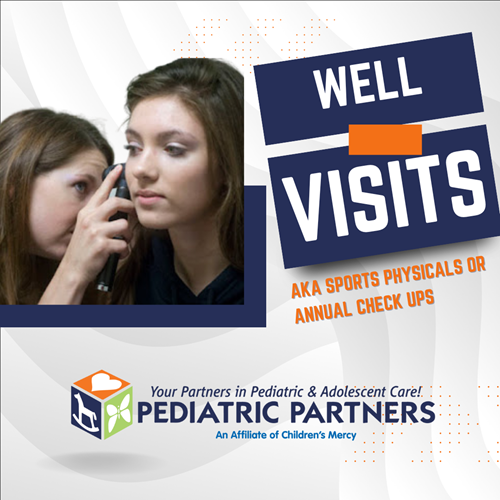
Schedule of Visits
Important information about well visits
- Routine well visits (AKA physicals) are recommended at the following ages:
- 3-5 days (usually 1-2 days after discharge from the hospital), additional weight checks are usually required but are not considered "well" visits for insurance purposes
- 2 week (recommended to check weight and heart, but not considered a "well" visit per insurance)
- 1 month
- 2 months
- 4 months
- 6 months
- 9 months
- 12 months
- 15 months
- 18 months
- 24 months
- 30 months
- Yearly beginning at 3 years. While initially this is around the birth date, as children become school aged, we recommend moving up a few months at a time to get to a summer physical. This avoids missing school during the school year for well care and allows athletes in 7th -12th grade to have required sports forms filled out after May 1st but before the season starts (as required by Kansas law).
- We recommend reading each well section corresponding to your child's age before and/or after your well visits.
- At each well visit we will offer age-appropriate labs and screenings as recommended by Bright Futures Guidelines. While most of these are covered by insurance, some insurance plans put these to patient responsibility. We recommend these screenings routinely, regardless of coverage, but know how your insurance plan covers (or does not cover) screenings. We are not able to know the details of each individual plan. These treatments, screenings and tests may include the following. The codes submitted to insurance are listed so you can ask insurance before your visit if you're concerned. For more coding information, see this AAP resource.
- Maternal depression screening (96161)
- Depression screening (96127)
- Vision screening (99177 for 1-4 years of age and 99173 for 5+ years)
- Autism screening (96110)
- Developmental screening (96110)
- Lead and hemoglobin testing (36416 + 85018 + 83655 if done at our office, may be done at a lab)
- Lipid panel (cholesterol test) (36416 + 80061 - if done in our office)
- Sexually transmitted disease testing (Urine is collected at our office and sent to a lab for chlamydia and/or gonorrhea. An order will be given for HIV and other tests that require a blood draw at a lab. We do not bill for these - costs are per the lab.)
- Tuberculosis testing if screening questions are positive (86580)
- Topical fluoride treatment (99188)
- Hearing (92552)
- Insurance now asks us to do a social risk screen yearly. There is no charge for this but it's coded as G9920.
- All Kansas athletes in grades 7-12 need to have a physical after May 1st and before the season starts. (Missouri is after February 1st and before the season.) View more information about required forms. If your insurance will not allow a second well visit but a sports physical is required, we can bill you a lower fee directly.
- If you are interested in WIC, please view the Kansas WIC Program Fact Sheet.
- If your additional concern is something that deserves a considerable amount of time (asthma management, behavior concerns, chronic headaches or abdominal pain), we may require that you schedule a separate appointment to evaluate it to provide the best care for your child.
- If your child has an emergent need on the day of a well appointment (such as wheezing), we may choose to address that issue and reschedule the well visit.
- If you need to discuss something with the provider but you don't want you child to hear, please plan ahead. For more on this, see Talking About Your Child Privately.
A preventive care visit (routine well visit) focuses on overall health and how to stay healthy. But a preventive visit may turn into an office visit that costs you money. Learn why.
When does a preventive visit become an office visit?
A preventive care visit is different from an office visit:
- The purpose of a preventive visit is to review your overall health, identify risks and find out how to stay healthy. Most insurance plans cover 100% of a preventive visit when you see a doctor in your plan network. We can fill out sports physical and camp forms during the annual well visit for no additional charge as long as the dates are acceptible for the sport team or camp.
- The purpose of an office visit is to discuss or get treated for a specific health concern or condition. You may have to pay for the visit as part of your deductible, copay and/or coinsurance.
If you schedule a preventive care visit and ask about a specific health concern or condition, it may trigger an additional charge for an office visit.
If you want to know about costs, ask your insurance plan for an estimate of fees before you visit. You can call the number on the back of your member ID card and describe what you want to cover at your well visit. The table below shows what services are typically covered during a preventive visit.
What can I discuss at a preventive visit without getting charged?
During your preventive well care visit, the following is included:
- Your current health
- Your family health history
- Past illnesses and surgeries
- Risks you may have for specific conditions (note: some insurance companies deny coverage for the recommended screening surveys)
- How to maintain a healthy lifestyle
Sports Physicals When A Well Visit Has Been Done At The Wrong Time For The Form
Spring is the time of year to think of annual well visits for school aged kids! While many younger kids continue to do their annual visit around their birth date, as kids approach middle and high school, we encourage scheduling in the spring/summer to fulfil many sport/camp form requirements.
✨ You can schedule well visits (not sports physicals- see below for the difference) in the portal! Log in and look for the calendar on the left tool bar. We ask that all patients have at least one well visit per year (more for those under 3 years of age) so that we continue our relationship with each other. When annual visits are missed, it is easy for us to not recognize issues that might affect overall health. It may also be more uncomfortable for patients when they need to come in but don't recognize us.
🚶Walk in sports physicals will be offered as availability allows. This does NOT include annual well visits, only active patients who have already had an annual well visit in the past 12 months, but need a form filled out with an exam more recent than the last well visit are eligible for a walk in sports physical. Please see our Urgent Care Page prior to coming to see if they are available on the date you plan to walk in. We will not be able to do these when there are too many sick patients to see in our urgent care.
📄 If you'll need any forms completed (school, medication, asthma or allergy action plans, sports, camp) be sure to bring all forms with your sections completed to your well visit or sports physical. We cannot sign any form until the parent / student section(s) are completed.
👟Students in middle and high school sports need to follow state guidelines for when physicals need to be completed:
- Missouri school physicals must be done after February 1st
- Kansas school physicals must be done after May 1st
⏰ Remember they'll need to be done before your first practice - so don't delay!
💲 Insurance covers one well visit per year for kids over 3 years of age (and more frequently for younger children). If you've already done one prior to the state requirement for school sports, we offer cash based sports physicals. This is an abbreviated version of the annual well visit but will get your form completed, then next year you can do the annual visit during the required timeframe.
🙋Sick visits do not replace well visits and well visits are not the best time to talk about concerns. Bringing a list of issues that have evolved over the past year doesn't allow time to talk about each concern sufficiently. Please schedule those separately so that each concern can get the attention it deserves!
Forms can be done at routine well (preventative) visits when timed appropriately
Each year pediatricians are asked to fill out many forms: sports and camp physicals, school and daycare physicals, medication forms, asthma action plans, and more. If your child needs a form filled out, we may be able to do it without an additional visit if they've been seen for an appropriate visit in the required time frame. Usually if your child has had an annual well visit forms can be completed. Please note that an annual well visit can be used to print off an Asthma Action Plan, but we still require devoted asthma visits on a regular basis (every 3-6 months, depending on severity) to have the time to discuss asthma management and adjust the plan as needed.
Timing of well visits doesn't always work for forms
The big exception that many parents discover is the middle and high school sports physical requirements. When children are little we tend to see them around their birthdays for their annual well visits, but some forms require that the visit is completed at a different time. Please be aware that insurance companies only cover one well visit a year, so there may be times that your child will need an exam that insurance does not cover.
Some of these "timed" visits include:
- Kansas middle and high school sports physicals must be done AFTER May 1st and BEFORE the first practice.
- Missouri middle and high school sports physicals must be done AFTER February 1st and BEFORE the first practice.
- Some private clubs, sports, and camps set their own dates.
- Schools need annual medication forms for prescription medications given at school. Usually the forms need to be filled out after May 1st for the upcoming school year. We recommend you bring these forms to your annual well visit or to the visit that addresses the issue for which the medication is needed, such as an asthma visit.
- Pre-op physicals must be done within 30 days typically. These are often covered by insurance because they are not "well" visits.
What can you do if your child needs a form signed but has already had a well visit outside the required time frame?
We offer sports physicals for $30 if your child has already had a well visit in our office outside the time frame required by the form's organization but within the past year.
This is a huge discount compared to other clinics and it can "re-set" your child's annual well visit time to a summer visit, which allows forms to be completed at the annual visit each following year.
We only offer this price for our patients who have had a well visit in our office during the previous year. Call our office and let them know your child has had a well visit, but needs a sports form signed. We'll see if we can use the last well visit to complete forms depending on dates or if we need to schedule a sports physical.
If your child has not had a well visit, schedule a well visit and forms can be completed at that time. Insurance companies cover well visits, so you save $30 and get a more comprehensive exam and visit.
Who's eligible for a sports physical without a well visit?
Sports physicals are available for patients who had a well visit in our office outside the time frame required by the form's organization but within the past year.
Call our office and let them know your child has had a well visit, but needs a sports form signed. We'll see if we can use the last well visit depending on dates or if we need to schedule a sports physical.
If your child is newer to our office and the last well visit was done in another location, please call to schedule a physical - if our staff did not perform the physical, we must ensure that all the required screenings were done elsewhere.
We will offer walk in sports physicals to established patients who are otherwise eligible for a sports-only physical when there are not high numbers of sick patients to see in walk in. Please check our Urgent Care Page prior to coming in for a walk in sports physical or call ahead to schedule an appointment. We do NOT offer walk in well visits.
Please do not use the portal to schedule a sports physical. The portal spots are for routine well visits, which has a completely different workflow in the system. We schedule sports physicals differently, which helps with this automated workflow - and will save you time not having to do as many online check in surveys!
Who should do an annual well visit?
We recommend that everyone has a comprehensive well visit each year, even if they don't need forms signed. This visit monitors growth and development, helps to identify risks through screenings and labs at recommended ages, and helps to continue a relationship so that children and teens feel comfortable talking to a medical professional if a problem arises.
You can schedule well visits through the portal or by calling the office. All the needed forms can be completed at your annual well visit.
What is covered in an annual well visit vs a sick (office visit)?
A preventive care visit (routine well visit) focuses on overall health and how to stay healthy. But a preventive visit may turn into an office visit that costs you money. Learn why.
When does a well visit (preventive visit) become an office visit?
A preventive care visit is different from an office visit:
- The purpose of a preventive visit is to review your overall health, identify risks and find out how to stay healthy. Most insurance plans cover 100% of a preventive visit when you see a doctor in your plan network. Insurance will only cover one annual well visit. Sports physicals are not covered. We can often get around this by completing forms at your annual well visit, but it must be within the time frame that the form requires.
- The purpose of an office visit is to discuss or get treated for a specific health concern or condition. You may have to pay for the visit as part of your deductible, copay and/or coinsurance.
If you schedule a preventive care visit and ask about a specific health concern or condition, it may trigger an additional charge for an office visit.
If you want to know about costs, ask your insurance plan for an estimate of fees before you visit. You can call the number on the back of your member ID card and describe what you want to cover at your well visit. The table below shows what services are typically covered during a preventive visit.
What can I discuss at a preventive visit without getting charged?
During your preventive well care visit, the following is included:
- Your current health
- Your family health history
- Past illnesses and surgeries
- Risks you may have for specific conditions (note: some insurance companies deny coverage for the recommended screening surveys)
- How to maintain a healthy lifestyle
What is the difference between a preventive care visit and an office visit?
A preventive care visit
Your plan typically covers these services
- Check your weight, height, blood pressure (over 3 years) and pulse
- Listen to your heart and lungs
- Check your ears, eyes, throat, skin and abdomen
- Recommended immunizations
- Screenings vary by age (development, lead, depression)
- Certain blood tests, such as to check for high cholesterol, lead or anemia
An office visit
You may be required to pay for these services, even if addressed during a preventative care visit
- Discussing or getting treatment for a specific health concern, condition or injury
- Refills of prescriptions are considered getting treatment for health conditions
- Lab work, X-rays or additional tests related to a specific health concern, condition or injury
When you have a test or treatment that isn't covered, or you get a prescription filled for a drug that isn't covered, your insurance company won't pay the bill. This is often called "denying the claim." You can still obtain the treatment that is recommended, but you will have to pay for it yourself. Some companies will pay a percentage and the patient is responsible for the remainder. This is in addition to your co-pay.
If your insurance company denies your claim, you have the right to appeal (challenge) the decision. Before you decide to appeal, know your insurance company's appeal process. This should be discussed in your plan handbook. Not all appeals will end in your favor, but some challenged claims will be covered eventually by the insurance company.
Most insurance companies have different levels of co-pays for the primary care office, specialist, urgent care, and emergency room. These are often printed on your insurance card and can change yearly with new contracts. Some insurance plans require a referral to see any provider other than your primary care provider on your insurance card.
Well Child Care: 0-2 Months
Information regarding developmental goals, safety, immunizations, and nutrition information is sent prior to each well visit. Please review the information before your visit so you can generate questions and anticipate what we'll ask!
You must have portal access to read all the important information that will be given with each visit. Please ask for a PIN to get set up if you don't have a portal account for each child.
Review immunizations that will be recommended before your visit.
- VIS (Vaccine Information Sheets)
- Check our After Immunization Page for more details on how to manage symptoms after vaccines.
- Parents should have current Pertussis (whooping cough) shots and seasonal flu and COVID vaccines to help protect their little ones.
Milestone Tracking and Tools to Maximize Your Child's Development
- Track your child's development with FREE online tools.
- Find developmental milestone information so you can keep track at home.
- Pathways offers resources for infant and child development.
- Zero to Three offers resources for infant and child development and parenting.
Local Resources to Optimize Development
- Parents As Teachers works with parents to teach them how to teach their infants through 3 year olds.
- Infant and Toddler Services provides therapies for Kansas infants and toddlers through 3 years of age with delays in developmental skills, such as speech and language or gross motor skills.
- First Steps provides therapies for Missouri infants and toddlers through 3 years of age with developmental delays.
- Early childhood developmental screenings for 3-5 year olds are held through the local school districts.
- Shawnee Mission School District
- Olathe School District
- Blue Valley School District
- Others: click here
Children With Down Syndrome: Birth to 1 Year
Down Syndrome: Birth to 1 Year
Diagnosis:
- Complete physical examination to confirm the known physical features and to check for any possible associated conditions.
- Genetic testing:
- If a diagnosis of Down syndrome was given by prenatal testing and the exam after birth agrees: no further testing is probably needed in the newborn period.
- If the physical examination after birth raises the possibility of Down syndrome, testing by rapid (FISH) confirmation and a complete chromosome analysis are both needed. The rapid analysis results are typically available within 48 hours, whereas the complete analysis might take 3‐5 days for the results.
Local resources:
It is very important that children receive services to help encourage the best developmental outcomes.
- Children’s Mercy Down Syndrome Clinic is a multidisciplinary clinic to help serve medical needs. childrensmercy.org/departments-and-clinics/down-syndrome-program
- Down Syndrome Innovations (kcdsi.org) offers many services and education and we encourage you to reach out to them.
- Infant and Toddler Services provides therapy to infants through 3 years in Kansas.
- First Steps provides therapy to infants through 3 years in Missouri.
- Britain Development Center (britaindevelopment.org) provides therapies to children.
Health and Feeding
- Feeding: Infants with Down syndrome sometimes have low muscle control, which can cause feeding problems, so they should be closely watched for slow feeding or choking and for good weight gain. Breastfeeding is strongly encouraged, but extra attention may need to be given to positioning and to keeping the baby awake or alert.
- Heart: An echocardiogram (an ultrasound picture of the heart) is needed to check for any evidence of heart disease, even if a prenatal echocardiogram was done.
- Breathing that is too fast or cyanosis (a bluish color of the skin) are signs for possible concern - seek immediate healthcare if you notice these symptoms.
- Hearing and vision: Infants with Down syndrome are at risk for vision and hearing problems. Referrals to an ophthalmologist (eye specialist) and ear, nose, and throat (ENT) physicians should be done during the infant period.
- Blood tests:
- Thyroid hormone levels can be too low in newborns and needs to be checked. The TSH test is on the newborn screen. It should be repeated at 6 months of age, sooner if symptoms suggest thyroid problems. Thyroid hormone imbalance is very treatable, but if unrecognized and untreated, it can cause a variety of problems.
- White and red blood counts can be unusually high in infants with Down syndrome. These blood counts need to be checked by a CBC with differential at birth and then yearly, sooner if symptoms dictate.
- Stomach or bowel problems (reflux, constipation, blockages) can occur. Spitting up,stomach swelling, or an abnormal stool pattern can be signs that there is an issue. Seek medical attention if you notice any of these.
- Infection risk is higher in children with Down syndrome. Infants should be protected from any unnecessary exposures to sick siblings, relatives, or others. It is also recommended to get checked quickly when any infection is suspected.
Well Child Care: 4 Months
Information regarding developmental goals, safety, immunizations, and nutrition information is sent prior to each well visit. Please review the information before your visit so you can generate questions and anticipate what we'll ask!
You must have portal access to read all the important information that will be given with each visit. Please ask for a PIN to get set up if you don't have a portal account for each child.
Review immunizations that will be recommended before your visit.
- VIS (Vaccine Information Sheets)
- Check our After Immunization Page for more details on how to manage symptoms after vaccines.
- Parents should have current Pertussis (whooping cough) shots and seasonal flu and COVID vaccines to help protect their little ones.
MILESTONE TRACKING AND TOOLS TO MAXIMIZE YOUR CHILD'S DEVELOPMENT
- Track your child's development with FREE online tools.
- Find developmental milestone information so you can keep track at home.
- Pathways offers resources for infant and child development.
- Zero to Three offers resources for infant and child development and parenting.
LOCAL RESOURCES TO OPTIMIZE DEVELOPMENT
- Parents As Teachers works with parents to teach them how to teach their infants through 3 year olds.
- Infant and Toddler Services provides therapies for Kansas infants and toddlers through 3 years of age with delays in developmental skills, such as speech and language or gross motor skills.
- First Steps provides therapies for Missouri infants and toddlers through 3 years of age with developmental delays.
- Early childhood developmental screenings for 3-5 year olds are held through the local school districts.
- Shawnee Mission School District
- Olathe School District
- Blue Valley School District
- Others: click here
Well Child Care: 6 Month Visit
Information regarding developmental goals, safety, immunizations, and nutrition information is sent prior to each well visit. Please review the information before your visit so you can generate questions and anticipate what we'll ask!
You must have portal access to read all the important information that will be given with each visit. Please ask for a PIN to get set up if you don't have a portal account for each child.
Review immunizations that will be recommended before your visit.
- VIS (Vaccine Information Sheets)
- Check our After Immunization Page for more details on how to manage symptoms after vaccines.
- Parents should have current Pertussis (whooping cough) shots and seasonal flu and COVID vaccines to help protect their little ones.
MILESTONE TRACKING AND TOOLS TO MAXIMIZE YOUR CHILD'S DEVELOPMENT
- Track your child's development with FREE online tools.
- Find developmental milestone information so you can keep track at home.
- Pathways offers resources for infant and child development.
- Zero to Three offers resources for infant and child development and parenting.
LOCAL RESOURCES TO OPTIMIZE DEVELOPMENT
- Parents As Teachers works with parents to teach them how to teach their infants through 3 year olds. Call your district for more information. Use the link above if your district is not here:
- Infant and Toddler Services provides therapies for Kansas infants and toddlers through 3 years of age with delays in developmental skills, such as speech and language or gross motor skills.
- First Steps provides therapies for Missouri infants and toddlers through 3 years of age with developmental delays.
- Early childhood developmental screenings for 3-5 year olds are held through the local school districts.
- Shawnee Mission School District
- Olathe School District
- Blue Valley School District
- Others: click here
Well Child Care: 9 Months
Information regarding developmental goals, safety, immunizations, and nutrition information is sent prior to each well visit. Please review the information before your visit so you can generate questions and anticipate what we'll ask!
You must have portal access to read all the important information that will be given with each visit. Please ask for a PIN to get set up if you don't have a portal account for each child.
Review immunizations that will be recommended before your visit.
- VIS (Vaccine Information Sheets)
- Check our After Immunization Page for more details on how to manage symptoms after vaccines.
- Parents should have current Pertussis (whooping cough) shots and seasonal flu and COVID vaccines to help protect their little ones.
MILESTONE TRACKING AND TOOLS TO MAXIMIZE YOUR CHILD'S DEVELOPMENT
- Track your child's development with FREE online tools.
- Find developmental milestone information so you can keep track at home.
- Pathways offers resources for infant and child development.
- Zero to Three offers resources for infant and child development and parenting.
LOCAL RESOURCES TO OPTIMIZE DEVELOPMENT
- Parents As Teachers works with parents to teach them how to teach their infants through 3 year olds.
- Infant and Toddler Services provides therapies for Kansas infants and toddlers through 3 years of age with delays in developmental skills, such as speech and language or gross motor skills.
- First Steps provides therapies for Missouri infants and toddlers through 3 years of age with developmental delays.
- Early childhood developmental screenings for 3-5 year olds are held through the local school districts.
- Shawnee Mission School District
- Olathe School District
- Blue Valley School District
- Others: click here
Well Child Care: One Year
Information regarding developmental goals, safety, immunizations, and nutrition information is sent prior to each well visit. Please review the information before your visit so you can generate questions and anticipate what we'll ask!
You must have portal access to read all the important information that will be given with each visit. Please ask for a PIN to get set up if you don't have a portal account for each child.
Review immunizations that will be recommended before your visit.
- VIS (Vaccine Information Sheets)
- Check our After Immunization Page for more details on how to manage symptoms after vaccines.
- Parents should have current Pertussis (whooping cough) shots and seasonal flu and COVID vaccines to help protect their little ones.
MILESTONE TRACKING AND TOOLS TO MAXIMIZE YOUR CHILD'S DEVELOPMENT
- Track your child's development with FREE online tools.
- Find developmental milestone information so you can keep track at home.
- Pathways offers resources for infant and child development.
- Zero to Three offers resources for infant and child development and parenting.
LOCAL RESOURCES TO OPTIMIZE DEVELOPMENT
- Parents As Teachers works with parents to teach them how to teach their infants through 3 year olds.
- Infant and Toddler Services provides therapies for Kansas infants and toddlers through 3 years of age with delays in developmental skills, such as speech and language or gross motor skills.
- First Steps provides therapies for Missouri infants and toddlers through 3 years of age with developmental delays.
- Early childhood developmental screenings for 3-5 year olds are held through the local school districts.
- Shawnee Mission School District
- Olathe School District
- Blue Valley School District
- Others: click here
Children With Down Syndrome: 1 to 5 Years
Children with Down Syndrome: 1 - 5 Years
- It is important to check growth on the Down Syndrome Growth Chart at every visit because children with Down syndrome grow differently than other children. Discuss your child’s diet, activity level, and growth.
- Your child should follow the routine vaccine schedule unless there is an immune deficiency identified that prevents live virus vaccines from being given. It is especially important to vaccinate on time, since children with Down syndrome have increased risk with routine infections. Some children under 2 years of age with co-existing conditions will qualify for a vaccine to protect against RSV. All children over 6 months should receive the influenza vaccine seasonally and the COVID19 vaccine should be given per current recommendations. Children with chronic cardiac (heart) or pulmonary (lung) disease should be given the 23-valent pneumococcal polysaccharide vaccine at 2 years of age or older.
- Children with cardiac (heart) conditions may need to be monitored by a cardiologist even after repair for remaining lesions and development of pulmonary hypertension (high pressure in blood vessels of the lungs).
- Hearing should be checked by an audiogram at 1 year of age. If unable to complete an audiogram, additional testing by BAER should be performed at 1 year. Children with hearing loss or other ear concerns will be referred to an otolaryngologist (ENT). Ear examinations should be performed by the ENT every 3 - 6 months. Higher risks of hearing problems can go with middle ear fluid and ear infections, and tubes may be required.
- Vision problems are more common in children with Down syndrome. By 6 months of age, the child should start evaluations by a pediatric ophthalmologist (special eye doctor) or a general ophthalmologist who is good with children with disabilities. Early use of eye patches, glasses, or both may help to fix eye crossing while lowering the need for surgery and the risk of vision loss.
- Blood tests:
- The thyroid gland stops working normally for half of people with Down syndrome by adulthood. The symptoms of low thyroid can be hard to notice in people with Down syndrome, so a blood test (TSH) is needed at least yearly, sooner if symptoms change. When there is a problem, treatment with thyroid hormone is safe and effective.
- Yearly blood testing should include TSH - Children with Down syndrome are at risk for leukemia and unrecognized iron deficiency.
- Yearly blood testing should include
CBC with differential + ferritin + crp or
CBC with differential + total iron + total iron binding capacity - Celiac screening is recommended if there are concerns with poor growth, constipation, diarrhea, abdominal pain or swelling, or behavioral concerns. Treatment is a change in diet once the diagnosis is confirmed.
- celiac testing with IgA and TTG should be done based on symptoms - Stomach or bowel problems are common in children with Down syndrome, so discuss any concerns with your doctor. Some children with Down syndrome have celiac disease, which is a problem with tolerating some grains, including wheat. Testing can be done if there are any symptoms of poor growth, abdominal pain or swelling, constipation, diarrhea, or behavioral concerns. Celiac disease can affect growth, stooling patterns, and behavior but is treated with dietary changes once the diagnosis is confirmed.
- Bones in the neck or spine can be unstable in some people with Down syndrome. There are almost always visible signs when there are problems. Daily physical activity is important to your child and should not be limited by unneeded worries. X‐rays are not needed unless there is pain or changes in the use of hands, walking, or bowel or bladder function. If x‐rays are done and the results are abnormal, your child may be referred to a spine or neck specialist. Special neck positioning may be needed for some medical procedures. Let your child’s doctor know if your child is having:
- stiff or sore neck
- change in stool or urination pattern
- change in walking
- change in use of arms or legs
- numbness (loss of normal feeling) or tinglingn in arms or legs
- head tilt - Sleep issues:
- Restless leg syndrome is common with low iron levels. Ferritin is a way to screen for this (and is one of the yearly testing recommendations). If the ferritin is less than 50mcg, iron supplementation will be recommended.
- Obstructive sleep apnea is a common problem for people with Down syndrome, especially those with low muscle tone. Some symptoms are obvious (snoring, restless waking at night, daytime sleepiness), but it can be hard to tell just by watching. AAP guidelines recommend that every child with Down syndrome have a sleep study at 3 - 4 years of age, sooner if problems are noticed. Treatment can include special breathing equipment or surgery, depending upon the cause.
- Seizures are more common in children with Down syndrome. Discuss with your child’s doctor concerns about neurologic problems, such as seizures or shaking.
- Delayed and missing teeth are common in children with Down syndrome. Teeth often come in unusual order. Visit a pediatric dentist by one year of age.
- Skin problems are common in patients with Down syndrome, including vitiligo, alopecia (bald areas), dry skin, and thinning hair. Xerosis (very dry skin) or hair thinning may be a sign of hypothyroidism and requires blood testing. Tell your doctor about any skin color or texture changes or loss of hair.
- Speech progress can be very delayed in children with Down syndrome, but most will learn to talk well. Until speech is easier for your child, he or she might need help finding other ways to communicate, such as using sign language, pictures, reading, or using electronic communication tools. Work with a speech therapist to help your child learn these communication tools.
- Autism and other behavioral problems occur with increased frequency in children with Down syndrome, and symptoms may manifest as early as 2 or 3 years of age. Children with Down syndrome and autism spectrum disorder have better imitation, relating, and receptive skills when compared with children with autism spectrum disorder without Down syndrome. However, these adaptive skills are impaired in children with a dual diagnosis when compared with children with Down syndrome alone. Children with a dual diagnosis of autism and Down syndrome show more stereotypies, repetitive language, overactivity, social withdrawal, anxiety, and self-injury. There is also decreased receptive and expressive language skills, as well as cognitive skills in children with a dual diagnosis. Routine autism screening should be done at 18 and 24 months, and any concerns should be further evaluated by a specialist.
- Talk with your doctor about and work with your early childhood educators about how to explain social safety and “good and bad touch” as your child grows older.
Local resources:
It is very important that children receive services to help encourage the best developmental outcomes.
- Children’s Mercy Down Syndrome Clinic is a multidisciplinary clinic to help serve medical needs. childrensmercy.org/departments-and-clinics/down-syndrome-program
- Down Syndrome Innovations (kcdsi.org) offers many services and education and we encourage you to reach out to them.
- Infant and Toddler Services provides therapy to infants through 3 years in Kansas.
- First Steps provides therapy to infants through 3 years in Missouri.
- Britain Development Center (britaindevelopment.org) provides therapies to children.
- Your local school district’s preschool program will provide services for 3-5 year olds.
Well Child Care: 15 Months
Information regarding developmental goals, safety, immunizations, and nutrition information is sent prior to each well visit. Please review the information before your visit so you can generate questions and anticipate what we'll ask!
You must have portal access to read all the important information that will be given with each visit. Please ask for a PIN to get set up if you don't have a portal account for each child.
Review immunizations that will be recommended before your visit.
- VIS (Vaccine Information Sheets)
- Check our After Immunization Page for more details on how to manage symptoms after vaccines.
- Parents should have current Pertussis (whooping cough) shots and seasonal flu and COVID vaccines to help protect their little ones.
MILESTONE TRACKING AND TOOLS TO MAXIMIZE YOUR CHILD'S DEVELOPMENT
- Track your child's development with FREE online tools.
- Find developmental milestone information so you can keep track at home.
- Pathways offers resources for infant and child development.
- Zero to Three offers resources for infant and child development and parenting.
LOCAL RESOURCES TO OPTIMIZE DEVELOPMENT
- Parents As Teachers works with parents to teach them how to teach their infants through 3 year olds.
- Infant and Toddler Services provides therapies for Kansas infants and toddlers through 3 years of age with delays in developmental skills, such as speech and language or gross motor skills.
- First Steps provides therapies for Missouri infants and toddlers through 3 years of age with developmental delays.
- Early childhood developmental screenings for 3-5 year olds are held through the local school districts.
- Shawnee Mission School District
- Olathe School District
- Blue Valley School District
- Others: click here
Well Child Care: 18 Months
Information regarding developmental goals, safety, immunizations, and nutrition information is sent prior to each well visit. Please review the information before your visit so you can generate questions and anticipate what we'll ask!
You must have portal access to read all the important information that will be given with each visit. Please ask for a PIN to get set up if you don't have a portal account for each child.
Review immunizations that will be recommended before your visit.
- VIS (Vaccine Information Sheets)
- Check our After Immunization Page for more details on how to manage symptoms after vaccines.
- Parents should have current Pertussis (whooping cough) shots and seasonal flu and COVID vaccines to help protect their little ones.
MILESTONE TRACKING AND TOOLS TO MAXIMIZE YOUR CHILD'S DEVELOPMENT
- Track your child's development with FREE online tools.
- Find developmental milestone information so you can keep track at home.
- Pathways offers resources for infant and child development.
- Zero to Three offers resources for infant and child development and parenting.
LOCAL RESOURCES TO OPTIMIZE DEVELOPMENT
- Parents As Teachers works with parents to teach them how to teach their infants through 3 year olds.
- Infant and Toddler Services provides therapies for Kansas infants and toddlers through 3 years of age with delays in developmental skills, such as speech and language or gross motor skills.
- First Steps provides therapies for Missouri infants and toddlers through 3 years of age with developmental delays.
- Early childhood developmental screenings for 3-5 year olds are held through the local school districts.
- Shawnee Mission School District
- Olathe School District
- Blue Valley School District
- Others: click here
Well Child Care: 2 Years
Information regarding developmental goals, safety, immunizations, and nutrition information is sent prior to each well visit. Please review the information before your visit so you can generate questions and anticipate what we'll ask!
You must have portal access to read all the important information that will be given with each visit. Please ask for a PIN to get set up if you don't have a portal account for each child.
Review immunizations that will be recommended before your visit.
- VIS (Vaccine Information Sheets)
- Check our After Immunization Page for more details on how to manage symptoms after vaccines.
- Parents should have current Pertussis (whooping cough) shots and seasonal flu and COVID vaccines to help protect their little ones.
MILESTONE TRACKING AND TOOLS TO MAXIMIZE YOUR CHILD'S DEVELOPMENT
- Track your child's development with FREE online tools.
- Find developmental milestone information so you can keep track at home.
- Pathways offers resources for infant and child development.
- Zero to Three offers resources for infant and child development and parenting.
LOCAL RESOURCES TO OPTIMIZE DEVELOPMENT
- Parents As Teachers works with parents to teach them how to teach their infants through 3 year olds.
- Infant and Toddler Services provides therapies for Kansas infants and toddlers through 3 years of age with delays in developmental skills, such as speech and language or gross motor skills.
- First Steps provides therapies for Missouri infants and toddlers through 3 years of age with developmental delays.
- Early childhood developmental screenings for 3-5 year olds are held through the local school districts.
- Shawnee Mission School District
- Olathe School District
- Blue Valley School District
- Others: click here
Well Child Care: 2 1/2 Years (30 Months)
Information regarding developmental goals, safety, immunizations, and nutrition information is sent prior to each well visit. Please review the information before your visit so you can generate questions and anticipate what we'll ask!
You must have portal access to read all the important information that will be given with each visit. Please ask for a PIN to get set up if you don't have a portal account for each child.
Review immunizations that will be recommended before your visit.
- VIS (Vaccine Information Sheets)
- Check our After Immunization Page for more details on how to manage symptoms after vaccines.
- Parents should have current Pertussis (whooping cough) shots and seasonal flu and COVID vaccines to help protect their little ones.
MILESTONE TRACKING AND TOOLS TO MAXIMIZE YOUR CHILD'S DEVELOPMENT
- Track your child's development with FREE online tools.
- Find developmental milestone information so you can keep track at home.
- Pathways offers resources for infant and child development.
- Zero to Three offers resources for infant and child development and parenting.
LOCAL RESOURCES TO OPTIMIZE DEVELOPMENT
- Parents As Teachers works with parents to teach them how to teach their infants through 3 year olds.
- Infant and Toddler Services provides therapies for Kansas infants and toddlers through 3 years of age with delays in developmental skills, such as speech and language or gross motor skills.
- First Steps provides therapies for Missouri infants and toddlers through 3 years of age with developmental delays.
- Early childhood developmental screenings for 3-5 year olds are held through the local school districts.
- Shawnee Mission School District
- Olathe School District
- Blue Valley School District
- Others: click here
Well Child Care: 3 Years
Information regarding developmental goals, safety, immunizations, and nutrition information is sent prior to each well visit. Please review the information before your visit so you can generate questions and anticipate what we'll ask!
You must have portal access to read all the important information that will be given with each visit. Please ask for a PIN to get set up if you don't have a portal account for each child.
Review immunizations that will be recommended before your visit.
- VIS (Vaccine Information Sheets)
- Check our After Immunization Page for more details on how to manage symptoms after vaccines.
- Parents should have current Pertussis (whooping cough) shots and seasonal flu and COVID vaccines to help protect their little ones.
MILESTONE TRACKING AND TOOLS TO MAXIMIZE YOUR CHILD'S DEVELOPMENT
- Track your child's development with FREE online tools.
- Find developmental milestone information so you can keep track at home.
- Pathways offers resources for infant and child development.
LOCAL RESOURCES TO OPTIMIZE DEVELOPMENT
- Early childhood developmental screenings for 3-5 year olds are held through the local school districts.
- Shawnee Mission School District
- Olathe School District
- Blue Valley School District
- Others: click here
Talk to your kids about what will happen at their check up!
Well Child Care: 4-6 Years
Information regarding developmental goals, safety, immunizations, and nutrition information is sent prior to each well visit. Please review the information before your visit so you can generate questions and anticipate what we'll ask!
You must have portal access to read all the important information that will be given with each visit. Please ask for a PIN to get set up if you don't have a portal account for each child.
Review immunizations that will be recommended before your visit.
- VIS (Vaccine Information Sheets)
- Check our After Immunization Page for more details on how to manage symptoms after vaccines.
- Parents should have current Pertussis (whooping cough) shots and seasonal flu and COVID vaccines to help protect their little ones.
MILESTONE TRACKING AND TOOLS TO MAXIMIZE YOUR CHILD'S DEVELOPMENT
- Track your child's development with FREE online tools.
- Find developmental milestone information so you can keep track at home.
- Pathways offers resources for infant and child development.
LOCAL RESOURCES TO OPTIMIZE DEVELOPMENT
- Early childhood developmental screenings for 3-5 year olds are held through the local school districts.
- Shawnee Mission School District
- Olathe School District
- Blue Valley School District
- Others: click here
Help your kids prepare for their visit with this video!
Children With Down Syndrome: 5 to 13 Years
Children with Down Syndrome: 5-13 Years
- It is important to check growth on the Down Syndrome Growth Chart at every visit because children with Down syndrome grow differently than other children. Discuss your child’s diet, activity level, and growth.
- Your child should follow the routine vaccine schedule unless there is an immune deficiency identified that prevents live virus vaccines from being given. It is especially important to vaccinate on time, since children with Down syndrome have increased risk with routine infections. All children should receive the influenza vaccine seasonally and the COVID19 vaccine should be given per current recommendations. Children with chronic cardiac (heart) or pulmonary (lung) disease should be given the 23-valent pneumococcal polysaccharide vaccine at 2 years of age or older.
- Children with normal newborn testing for heart problems may not need more evaluation at this age, but those with known cardiac conditions should continue to see their cardiologist regularly.
- Hearing testing is needed every 6 months, until each ear can be tested alone yearly. Children with hearing concerns should be referred to an otolaryngologist (ear, nose, and throat doctor or ENT).
- Children with Down syndrome have a 50% risk of developing a lazy eye by 5 years of age. Vision should be checked at each well‐care visit. It is also important to have an exam at least every 2 years by a pediatric ophthalmologist (special eye doctor) or a general ophthalmologist who is good with children with disabilities. Visits may be needed more often if your child has known eye or vision issues.
- Blood tests:
- The thyroid gland stops working normally for half of people with Down syndrome by adulthood. The symptoms of low thyroid can be hard to notice in people with Down syndrome, so a blood test (TSH) is needed at least yearly, sooner if symptoms change. When there is a problem, treatment with thyroid hormone is safe and effective.
- Yearly blood testing should include TSH - Children with Down syndrome are at risk for leukemia and unrecognized iron deficiency.
- Yearly blood testing should include
CBC with differential + ferritin + crp or
CBC with differential + total iron + total iron binding capacity - Celiac screening is recommended if there are concerns with poor growth, constipation, diarrhea, abdominal pain or swelling, or behavioral concerns. Treatment is a change in diet once the diagnosis is confirmed.
- celiac testing with IgA and TTG should be done based on symptoms - Seizures are more common in children with Down syndrome. Discuss with your child’s doctor concerns about neurologic problems, such as seizures or shaking.
- Sleep issues:
- Restless leg syndrome is common with low iron levels. Ferritin is a way to screen for this and is one of the yearly testing recommendations. If ferritin is less than 50mcg, iron supplementation will be recommended.
- Obstructive sleep apnea is a common problem for people with Down syndrome, especially those with low muscle tone. Some symptoms are obvious, but it can be hard to tell just by watching. Sleep problems can affect a child’s behavior and ability to pay attention and can also affect the heart. AAP guidelines recommend that every child with Down syndrome have a sleep study by 4 years and again if symptoms arise. Treatment can include special breathing equipment or surgery, depending upon the cause. Let your child’s doctor know if your child is having:
- Loud breathing
- Restless sleep (moving around a lot)
- Snoring
- Uncommon sleep positions (like sitting up to sleep or sleeping with neck arched back)
- Waking up often at night
- Pauses in breathing during sleep
- Daytime sleepiness
- Behavior problems
- Bones in the neck or spine can be unstable in some people with Down syndrome. There are almost always visible signs when there are problems. Daily physical activity is important to your child. Trampoline use and participation in contact sports (such as football, soccer, gymnastics) places children at risk for spinal cord injury, but there are many fun activities that are safer. X‐rays are not needed unless there are symptoms. If x‐rays are done and the results are abnormal, your child may be referred to a spine or neck specialist. Special neck positioning may be needed for some medical procedures. Let your child’s doctor know if your child is having:
- Stiff or sore neck or head tilt
- Change in stool or urination pattern
- Change in walking or in the use of arms or legs
- Numbness (loss of normal feeling) or tingling in arms or legs
- Skin problems are common in patients with Down syndrome, including vitiligo, alopecia (bald areas), dry skin, and thinning hair. Tell your doctor about any skin color or texture changes or loss of hair.
- Provide routine dental care with twice daily tooth brushing and visit a pediatric dentist regularly.
- Some children with Down syndrome can have behavior or mental health issues that affect how they play and work at home, at school, or in the community. Let your child’s doctor know if your child is having problems that make it hard for them to function in the home, community, or school, including:
- Anxiety
- Attention problems, not listening, or high activity level
- Sad mood or lack of interest in activities
- Wandering off
- Loss of skills (not being able to do the things they used to do)
- Obsessive compulsive behaviors (behaviors that are repeated frequently)
- Other behavior concerns
- School progress: Please forward a copy of assessments your school completes to our office.
- Children can need extra support at times of transition: discuss transition from elementary to middle school with the teachers and therapists at school and with your child.
- Discuss developing social skills, self‐help skills, and a sense of responsibility with your child and their teachers.
- Discuss working toward independence (doing things by themself) with bathing, grooming, and self‐care.
- Sexuality and puberty: Children need help to learn appropriate touch in social situations and correct names for body parts. Puberty can bring many changes. As your child approaches and enters puberty, discussions can include:
- Changes in puberty
- Managing sexual behaviors (such as masturbation)
- Gynecologic (women’s health) care for girls with Down syndrome, including periods and mood changes
- Fertility, birth control, prevention of sexually transmitted infections
- Risk for a person with Down syndrome having a child with Down syndrome
- Resources:
- Families Together, Inc. (familiestogetherinc.org) is a free Kansas program that assists those with disabilities and/or special health care needs by encouraging, educating, and empowering families to be effective advocates for their children. These services are available in English and Spanish.
- Missouri Parents Act (MPACT) (missouriparentsact.org) is Missouri’s Parent Training and Information Center that empowers families to advocate for themselves so that children with special educational needs can reach their full potential in education and life – through support, training, and education.
- Down Syndrome Innovations (kcdsi.org) offers many services and education and we encourage you to reach out to them.
Well Child Care: 7-12 Years
Information regarding developmental goals, safety, immunizations, and nutrition information is sent prior to each well visit. Please review the information before your visit so you can generate questions and anticipate what we'll ask!
You must have portal access to read all the important information that will be given with each visit. Please ask for a PIN to get set up if you don't have a portal account for each child.
Review immunizations that will be recommended before your visit.
- VIS (Vaccine Information Sheets)
- Check our After Immunization Page for more details on how to manage symptoms after vaccines.
- Parents should have current Pertussis (whooping cough) shots and seasonal flu and COVID vaccines to help protect their little ones.
Children With Down Syndrome: 14 to 21 Years
Children with Down Syndrome: 5-13 Years
- It is important to check growth on the Down Syndrome Growth Chart at every visit because children with Down syndrome grow differently than other children. Discuss your child’s diet, activity level, and growth.
- Your child should follow the routine vaccine schedule unless there is an immune deficiency identified that prevents live virus vaccines from being given. It is especially important to vaccinate on time, since children with Down syndrome have increased risk with routine infections. All children should receive the influenza vaccine seasonally and the COVID19 vaccine should be given per current recommendations. Children with chronic cardiac (heart) or pulmonary (lung) disease should be given the 23-valent pneumococcal polysaccharide vaccine at 2 years of age or older.
- Children with normal newborn testing for heart problems may not need more evaluation at this age, but those with known cardiac conditions should continue to see their cardiologist regularly.
- Hearing testing is needed every 6 months, until each ear can be tested alone yearly. Children with hearing concerns should be referred to an otolaryngologist (ear, nose, and throat doctor or ENT).
- Children with Down syndrome have a 50% risk of developing a lazy eye by 5 years of age. Vision should be checked at each well‐care visit. It is also important to have an exam at least every 2 years by a pediatric ophthalmologist (special eye doctor) or a general ophthalmologist who is good with children with disabilities. Visits may be needed more often if your child has known eye or vision issues.
- Blood tests:
- The thyroid gland stops working normally for half of people with Down syndrome by adulthood. The symptoms of low thyroid can be hard to notice in people with Down syndrome, so a blood test (TSH) is needed at least yearly, sooner if symptoms change. When there is a problem, treatment with thyroid hormone is safe and effective.
- Yearly blood testing should include TSH - Children with Down syndrome are at risk for leukemia and unrecognized iron deficiency.
- Yearly blood testing should include
CBC with differential + ferritin + crp or
CBC with differential + total iron + total iron binding capacity - Celiac screening is recommended if there are concerns with poor growth, constipation, diarrhea, abdominal pain or swelling, or behavioral concerns. Treatment is a change in diet once the diagnosis is confirmed.
- celiac testing with IgA and TTG should be done based on symptoms - Seizures are more common in children with Down syndrome. Discuss with your child’s doctor concerns about neurologic problems, such as seizures or shaking.
- Sleep issues:
- Restless leg syndrome is common with low iron levels. Ferritin is a way to screen for this and is one of the yearly testing recommendations. If ferritin is less than 50mcg, iron supplementation will be recommended.
- Obstructive sleep apnea is a common problem for people with Down syndrome, especially those with low muscle tone. Some symptoms are obvious, but it can be hard to tell just by watching. Sleep problems can affect a child’s behavior and ability to pay attention and can also affect the heart. AAP guidelines recommend that every child with Down syndrome have a sleep study by 4 years and again if symptoms arise. Treatment can include special breathing equipment or surgery, depending upon the cause. Let your child’s doctor know if your child is having:
- Loud breathing
- Restless sleep (moving around a lot)
- Snoring
- Uncommon sleep positions (like sitting up to sleep or sleeping with neck arched back)
- Waking up often at night
- Pauses in breathing during sleep
- Daytime sleepiness
- Behavior problems
- Bones in the neck or spine can be unstable in some people with Down syndrome. There are almost always visible signs when there are problems. Daily physical activity is important to your child. Trampoline use and participation in contact sports (such as football, soccer, gymnastics) places children at risk for spinal cord injury, but there are many fun activities that are safer. X‐rays are not needed unless there are symptoms. If x‐rays are done and the results are abnormal, your child may be referred to a spine or neck specialist. Special neck positioning may be needed for some medical procedures. Let your child’s doctor know if your child is having:
- Stiff or sore neck or head tilt
- Change in stool or urination pattern
- Change in walking or in the use of arms or legs
- Numbness (loss of normal feeling) or tingling in arms or legs
- Skin problems are common in patients with Down syndrome, including vitiligo, alopecia (bald areas), dry skin, and thinning hair. Tell your doctor about any skin color or texture changes or loss of hair.
- Provide routine dental care with twice daily tooth brushing and visit a pediatric dentist regularly.
- Some children with Down syndrome can have behavior or mental health issues that affect how they play and work at home, at school, or in the community. Let your child’s doctor know if your child is having problems that make it hard for them to function in the home, community, or school, including:
- Anxiety
- Attention problems, not listening, or high activity level
- Sad mood or lack of interest in activities
- Wandering off
- Loss of skills (not being able to do the things they used to do)
- Obsessive compulsive behaviors (behaviors that are repeated frequently)
- Other behavior concerns
- School progress: Please forward a copy of assessments your school completes to our office.
- Children can need extra support at times of transition: discuss transition from elementary to middle school with the teachers and therapists at school and with your child.
- Discuss developing social skills, self‐help skills, and a sense of responsibility with your child and their teachers.
- Discuss working toward independence (doing things by themself) with bathing, grooming, and self‐care.
- Sexuality and puberty: Children need help to learn appropriate touch in social situations and correct names for body parts. Puberty can bring many changes. As your child approaches and enters puberty, discussions can include:
- Changes in puberty
- Managing sexual behaviors (such as masturbation)
- Gynecologic (women’s health) care for girls with Down syndrome, including periods and mood changes
- Fertility, birth control, prevention of sexually transmitted infections
- Risk for a person with Down syndrome having a child with Down syndrome
- Resources:
- Families Together, Inc. (familiestogetherinc.org) is a free Kansas program that assists those with disabilities and/or special health care needs by encouraging, educating, and empowering families to be effective advocates for their children. These services are available in English and Spanish.
- Missouri Parents Act (MPACT) (missouriparentsact.org) is Missouri’s Parent Training and Information Center that empowers families to advocate for themselves so that children with special educational needs can reach their full potential in education and life – through support, training, and education.
- Down Syndrome Innovations (kcdsi.org) offers many services and education and we encourage you to reach out to them.
- Resources (residential and day services, employment services, recreation services and more) https://www.kumc.edu/resources-for-adults-with-down-syndrome.html
- Transition to adult physician: Special Pediatric-to-Adult Need (SPAN) Clinic https://myhealthkc.com/blog/span-providing-primary-care-for-adults-with-special-needs
Children With Down Syndrome: 5 to 13 Years
Children with Down Syndrome: 5-13 Years
- It is important to check growth on the Down Syndrome Growth Chart at every visit because children with Down syndrome grow differently than other children. Discuss your child’s diet, activity level, and growth.
- Your child should follow the routine vaccine schedule unless there is an immune deficiency identified that prevents live virus vaccines from being given. It is especially important to vaccinate on time, since children with Down syndrome have increased risk with routine infections. All children should receive the influenza vaccine seasonally and the COVID19 vaccine should be given per current recommendations. Children with chronic cardiac (heart) or pulmonary (lung) disease should be given the 23-valent pneumococcal polysaccharide vaccine at 2 years of age or older.
- Children with normal newborn testing for heart problems may not need more evaluation at this age, but those with known cardiac conditions should continue to see their cardiologist regularly.
- Hearing testing is needed every 6 months, until each ear can be tested alone yearly. Children with hearing concerns should be referred to an otolaryngologist (ear, nose, and throat doctor or ENT).
- Children with Down syndrome have a 50% risk of developing a lazy eye by 5 years of age. Vision should be checked at each well‐care visit. It is also important to have an exam at least every 2 years by a pediatric ophthalmologist (special eye doctor) or a general ophthalmologist who is good with children with disabilities. Visits may be needed more often if your child has known eye or vision issues.
- Blood tests:
- The thyroid gland stops working normally for half of people with Down syndrome by adulthood. The symptoms of low thyroid can be hard to notice in people with Down syndrome, so a blood test (TSH) is needed at least yearly, sooner if symptoms change. When there is a problem, treatment with thyroid hormone is safe and effective.
- Yearly blood testing should include TSH - Children with Down syndrome are at risk for leukemia and unrecognized iron deficiency.
- Yearly blood testing should include
CBC with differential + ferritin + crp or
CBC with differential + total iron + total iron binding capacity - Celiac screening is recommended if there are concerns with poor growth, constipation, diarrhea, abdominal pain or swelling, or behavioral concerns. Treatment is a change in diet once the diagnosis is confirmed.
- celiac testing with IgA and TTG should be done based on symptoms - Seizures are more common in children with Down syndrome. Discuss with your child’s doctor concerns about neurologic problems, such as seizures or shaking.
- Sleep issues:
- Restless leg syndrome is common with low iron levels. Ferritin is a way to screen for this and is one of the yearly testing recommendations. If ferritin is less than 50mcg, iron supplementation will be recommended.
- Obstructive sleep apnea is a common problem for people with Down syndrome, especially those with low muscle tone. Some symptoms are obvious, but it can be hard to tell just by watching. Sleep problems can affect a child’s behavior and ability to pay attention and can also affect the heart. AAP guidelines recommend that every child with Down syndrome have a sleep study by 4 years and again if symptoms arise. Treatment can include special breathing equipment or surgery, depending upon the cause. Let your child’s doctor know if your child is having:
- Loud breathing
- Restless sleep (moving around a lot)
- Snoring
- Uncommon sleep positions (like sitting up to sleep or sleeping with neck arched back)
- Waking up often at night
- Pauses in breathing during sleep
- Daytime sleepiness
- Behavior problems
- Bones in the neck or spine can be unstable in some people with Down syndrome. There are almost always visible signs when there are problems. Daily physical activity is important to your child. Trampoline use and participation in contact sports (such as football, soccer, gymnastics) places children at risk for spinal cord injury, but there are many fun activities that are safer. X‐rays are not needed unless there are symptoms. If x‐rays are done and the results are abnormal, your child may be referred to a spine or neck specialist. Special neck positioning may be needed for some medical procedures. Let your child’s doctor know if your child is having:
- Stiff or sore neck or head tilt
- Change in stool or urination pattern
- Change in walking or in the use of arms or legs
- Numbness (loss of normal feeling) or tingling in arms or legs
- Skin problems are common in patients with Down syndrome, including vitiligo, alopecia (bald areas), dry skin, and thinning hair. Tell your doctor about any skin color or texture changes or loss of hair.
- Provide routine dental care with twice daily tooth brushing and visit a pediatric dentist regularly.
- Some children with Down syndrome can have behavior or mental health issues that affect how they play and work at home, at school, or in the community. Let your child’s doctor know if your child is having problems that make it hard for them to function in the home, community, or school, including:
- Anxiety
- Attention problems, not listening, or high activity level
- Sad mood or lack of interest in activities
- Wandering off
- Loss of skills (not being able to do the things they used to do)
- Obsessive compulsive behaviors (behaviors that are repeated frequently)
- Other behavior concerns
- School progress: Please forward a copy of assessments your school completes to our office.
- Children can need extra support at times of transition: discuss transition from elementary to middle school with the teachers and therapists at school and with your child.
- Discuss developing social skills, self‐help skills, and a sense of responsibility with your child and their teachers.
- Discuss working toward independence (doing things by themself) with bathing, grooming, and self‐care.
- Sexuality and puberty: Children need help to learn appropriate touch in social situations and correct names for body parts. Puberty can bring many changes. As your child approaches and enters puberty, discussions can include:
- Changes in puberty
- Managing sexual behaviors (such as masturbation)
- Gynecologic (women’s health) care for girls with Down syndrome, including periods and mood changes
- Fertility, birth control, prevention of sexually transmitted infections
- Risk for a person with Down syndrome having a child with Down syndrome
- Resources:
- Families Together, Inc. (familiestogetherinc.org) is a free Kansas program that assists those with disabilities and/or special health care needs by encouraging, educating, and empowering families to be effective advocates for their children. These services are available in English and Spanish.
- Missouri Parents Act (MPACT) (missouriparentsact.org) is Missouri’s Parent Training and Information Center that empowers families to advocate for themselves so that children with special educational needs can reach their full potential in education and life – through support, training, and education.
- Down Syndrome Innovations (kcdsi.org) offers many services and education and we encourage you to reach out to them.
Well Child Care: Teens and Young Adults
Information regarding developmental goals, safety, immunizations, nutrition, and other health topics is sent prior to each well visit. Please review this information before your visit so you can generate questions and anticipate what we'll ask!
You must have portal access to read all the important information provided with each visit. Please ask for a PIN to get set up if you don't have a portal account for each child. We encourage teens over 16 years to set up their own account too. This helps them learn to be accountable for their healthcare and allows for a smooth transition when they turn 18, when parental portal access is removed by law.
Health & Wellness Tips for Teens
Nutrition & Vitamins
- Females: Adequate iron (especially during menstruation), calcium, vitamin D, and sometimes folic acid are important to support bone health and future reproductive health.
- Males: Calcium, vitamin D, and protein are essential for growth and strength. Iron may also be important for athletes or those with restrictive diets.
- A balanced diet with fruits, vegetables, lean proteins, and whole grains usually provides what’s needed—but if you’re unsure about vitamins or supplements, schedule a visit with us to discuss your individual needs.
Sleep
Teens need 8–10 hours of sleep per night. Good sleep improves mood, school performance, and athletic ability. Tips for better sleep:
- Keep a consistent bedtime and wake-up schedule.
- Limit screens at least an hour before bed.
- Avoid caffeine in the afternoon and evening.
Mental Health
Your mental health is just as important as your physical health.
- Talk about stress, anxiety, or mood changes with a trusted adult.
- Build healthy coping strategies like exercise, journaling, or spending time with friends.
- If you notice sadness, withdrawal, irritability, or changes in eating/sleeping habits that last more than 2 weeks, schedule a visit to talk with us.
Remember: You’re not alone. If something feels “off,” reach out. We’re here to help.
Immunizations
Review immunizations that will be recommended before your visit.
- VIS (Vaccine Information Sheets)
- Check our After Immunization Page for more details on how to manage symptoms after vaccines.
- Parents should have current Pertussis (whooping cough) shots and seasonal flu and COVID vaccines to help protect their little ones.
Later Teen Years: Important Legal Information
We all know that under 18 years of age children are minors and in most instances parents have access to their medical information. But when children turn 18, parents lose this access—even though they often still help provide care and financial support.
- Portal Access: When your teen turns 18, parental access to their portal is automatically turned off. Your teen will need to establish their own account. Please have them talk to us to get this set up.
- HIPAA Authorization: Allows your adult child to designate who can receive health information in an emergency.
- Healthcare Power of Attorney (POA): Appoints someone to make medical decisions if your adult child cannot.
- Durable Power of Attorney: More comprehensive, including financial/legal matters—helpful for students studying abroad.
Talk to a lawyer for guidance on which forms are most appropriate for your family.
Kansas Law & Mature Minors
In Kansas, minors 16 years and older may consent to their own care if a parent is not available. They can specifically consent to:
- Pregnancy testing and related healthcare
- Sexually transmitted disease testing/treatment
- Emergency care
- Drug or alcohol misuse or addiction treatment
We encourage open communication with parents, but we must maintain confidentiality if a teen requests it. Exceptions include:
- Suspected abuse
- Risk of self-harm or harm to others
- Billing claims (which may reflect services provided)
Continuing Care & Transition
We see our patients through college if they choose to continue with us. When it’s time to change physicians, we’ll provide records (especially immunizations and chronic condition summaries) to your new provider upon request.
- Gynecologic Care: Females and trans males should begin seeing a gynecologist at age 21 (or earlier if needed).
- For tips on transitioning to adult healthcare, see Got Transition.
Scheduling Reminders
- Annual well visits are important for monitoring growth, development, and preventive care.
- If concerns develop during the year—such as mental health, sleep, sports injuries, or ongoing symptoms—please schedule a separate visit. These issues deserve their own time and attention and may not be adequately addressed during a well visit.
👉 We’re here for you. If you ever have concerns—big or small—please reach out and schedule a visit.