A Season of Connection, Safety, and Well-Being

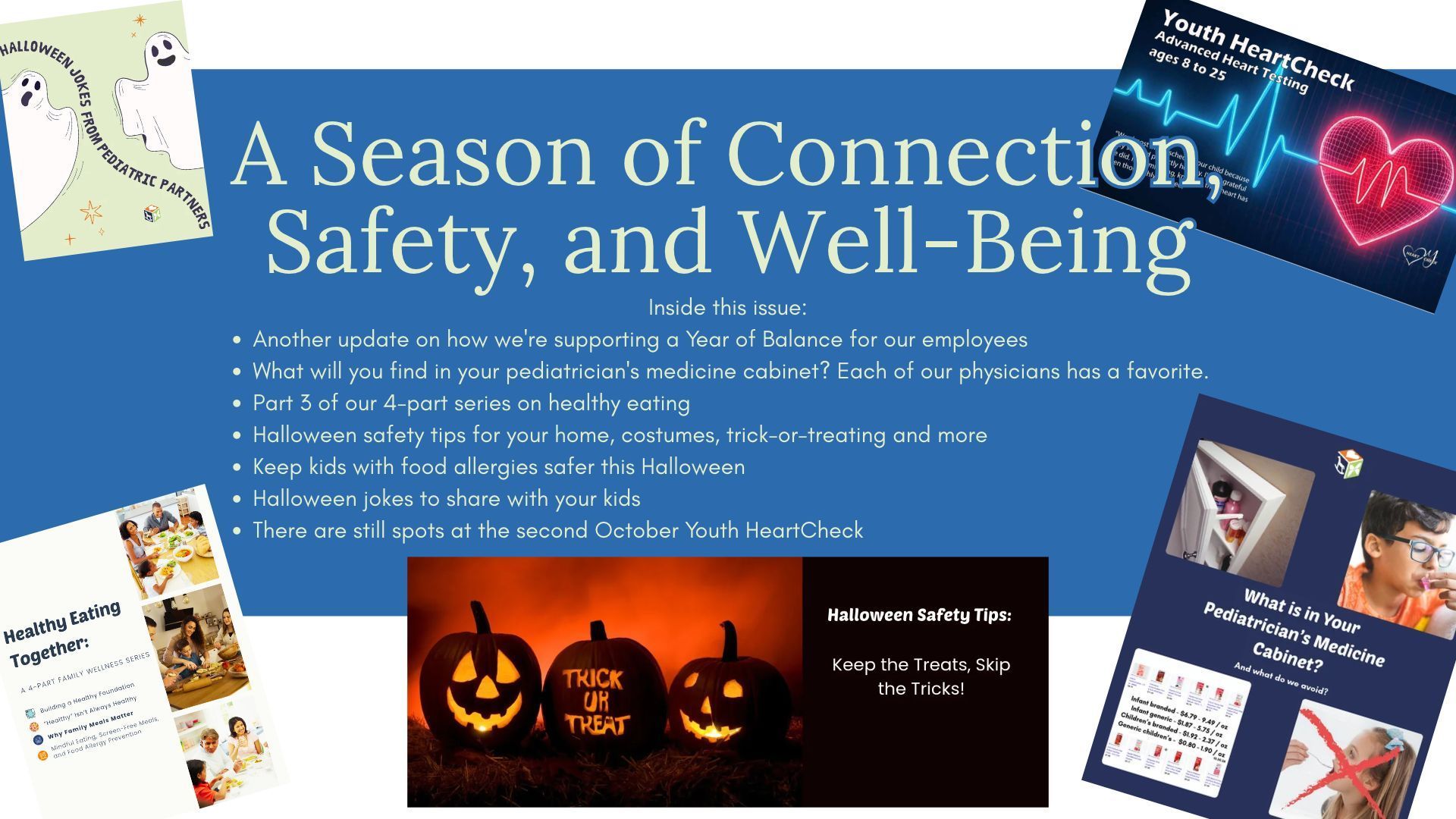
“A Season of Connection, Safety, and Well-Being” with graphics highlighting main blog topics

October 22, 2026


Welcome to another edition of Growing Together with Pediatric Partners!


This month, we're sharing stories and resources focused on caring for ourselves, our families, and our community. From our team's Year of Balance to practical guidance about head bumps, seasonal illnesses, and choosing the right type of medical visit, there's something here for every family.


We're also kicking off a new series about healthy eating, sharing important updates about measles and respiratory viruses in our area, and helping you prepare for seasonal vaccines.


Here’s what’s inside:


This newsletter is for you, so I’d love to know what you want to see next. If there’s a topic you’ve been wondering about, or something you’d like explained more clearly, let me know. Your suggestions guide future editions and keep me inspired when I’m staring at a blank page. Use the button to let us know what you want to read about in future editions of this blog.


Year of Balance 2026 poster with stacked stones on a gray background and inspirational text.

If you missed our introduction of our Year of Balance or the last update, you can find them here and here.


This month we're sharing how Pediatric Partners is supporting a nurse during this Year of Balance.


"This has been a year of home improvements for my family. We put a new cover on our chimney, replaced wood rot and had our house painted. Then our oven quit working and we had to replace it. Your generous gift helped relieve some of the financial burden we have experienced. I am so thankful for my work family!"

- Nurse

Front entry with white door, wreath, sidelights, and potted flowers on a sunny porch
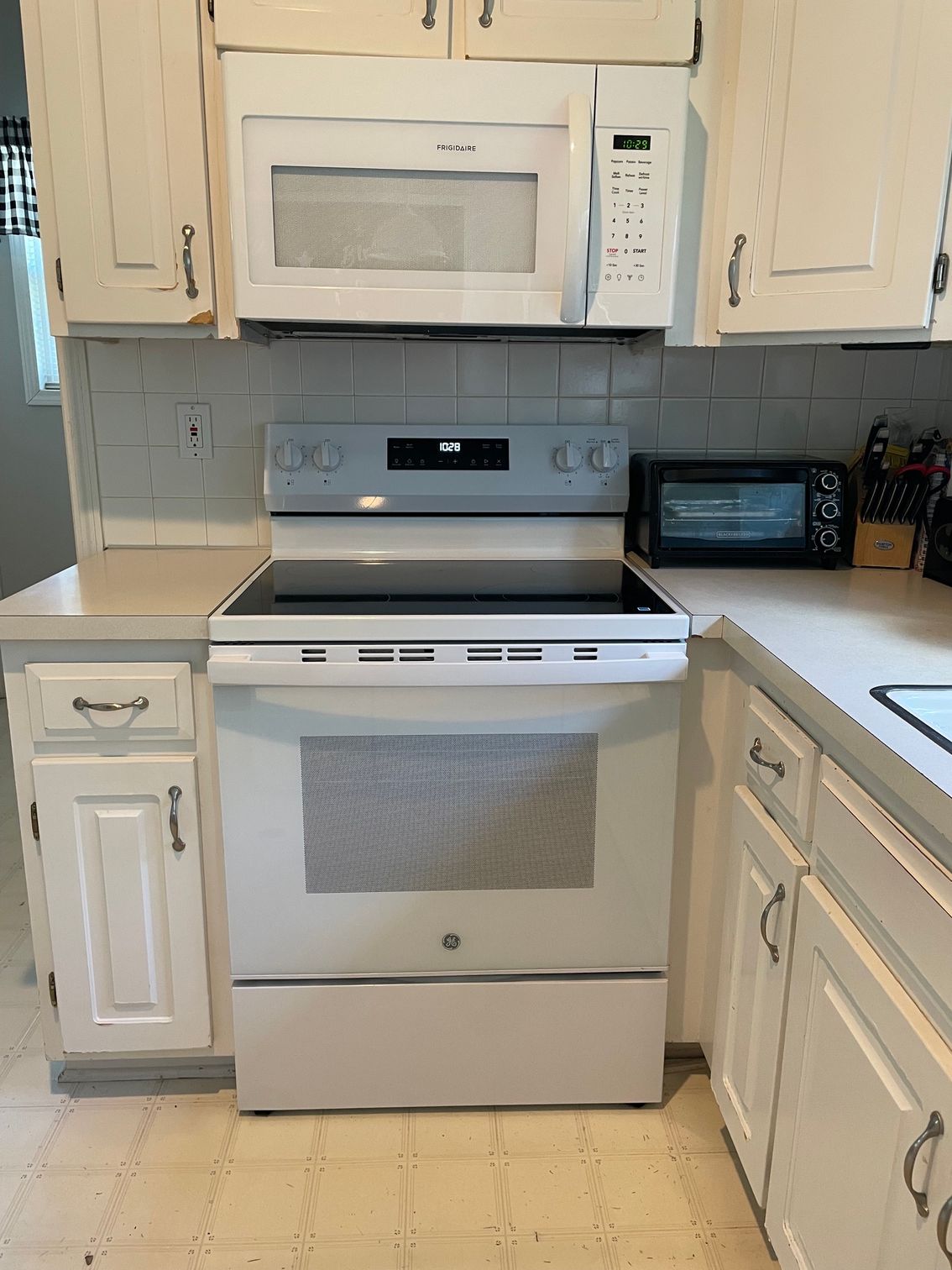
White kitchen with stove, microwave, and light wood cabinets

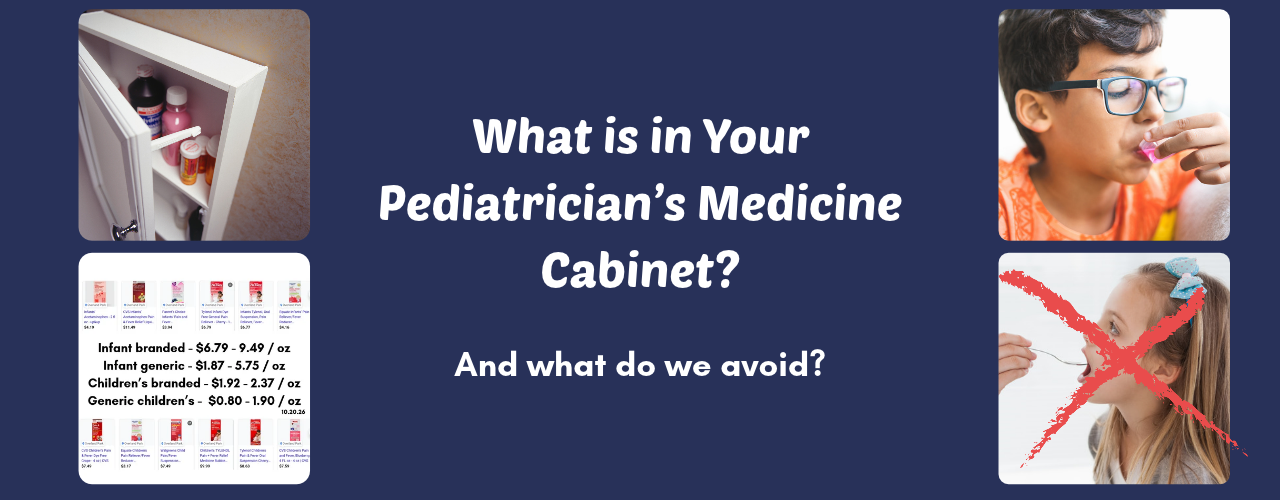
What Pediatricians Keep in Their Medicine Cabinet for Their Own Kids


If you peeked inside a pediatrician's medicine cabinet, you might be surprised by what you do or don't find. After taking care of children for decades, I've learned that a well-stocked medicine cabinet doesn't need to be complicated. I want a few inexpensive, useful products that can handle the common problems kids bring home: fever, congestion, coughs, itchy bug bites, dry skin, scrapes, and the occasional stomach bug.


I've asked our pediatricians what they think is important to keep at home for middle-of-the-night things that pop up -- because it always seems to be late at night that stuff is needed and the closest pharmacy is closed.


Our personal top choices:

  • Dr. Carter - acetaminophen and cetirizine (for itch, allergies, hives, bug bites, etc)
  • Dr. Khaleghi - dosing amounts for Tylenol and ibuprofen for each child and nasal saline
  • Dr. Mellick - urine drug screening test, narcan
  • Dr. Ratliff - a lock box for meds
  • Dr. Stuppy - saline


We have an Amazon store that shares products we commonly recommend to families. Products listed are examples of good options, but many other high-quality products may fit your needs. Inclusion in this list does not imply an official endorsement.

A few notes before we start:
Medication doses for children are based primarily on weight and age, and infants have special considerations. Always check with a dosing chart when you're unsure about a medication or dose. Dr. Khaleghi is smart to keep the dosing amounts with her medicine so she doesn't have to search for it in the middle of the night, but you can always find dosing on our website.
Always use the proper dosing device, not spoons designed for food. A syringe allows you to measure small doses accurately, which is particularly important for babies. Older kids can use the measuring cup that comes with the medication or a syringe.
Use single-ingredient medications, not multi-symptom cough and cold products.
Keep a current list of your child's medications, allergies, weights, and the dosing instructions available for all caregivers, including babysitters, to use as needed.

1. Pain and fever reducers


Acetaminophen for 2 months and up


Acetaminophen (Tylenol) is one of the medications used for pain or discomfort from things like injuries, headaches, or fever if it makes a child uncomfortable.


The correct dose depends on your child's weight. Don't guess. Find dosing in our website's resources here.


What about ibuprofen?


We'd also keep ibuprofen available for children who are old enough to take it—generally 6 months and older. It can be particularly useful for pain and inflammation.


Again, dose by weight and use the correct measuring device.


2. A good thermometer


Every household with children should have a reliable thermometer. It can help guide whether or not you can send your child to school or if the "they feel warm" child truly has a fever or not.


You don't have to treat every fever. If your child has a fever but is comfortable, drinking, and playing, there may be no reason to bring the temperature down. We treat the child, not just the number on the thermometer. Hot and happy, no treatment needed. Treat hot and bothered.


When to treat a fever with medication


Fever is often the first sign of illness. Most infections are treated by managing the symptoms. Here's a temperature guide for treatment of fever as a symptom:

  • 100°F – 102°F (Low-grade): Generally do not treat, as these fevers help the body fight the infection.
  • 102°F – 104°F (Moderate-grade): Treat only if the child is uncomfortable, fussy, or in pain.
  • 104°F – 105°F (High-grade): Treat the fever.
  • Above 105°F (Very high): Treat the fever and seek medical evaluation.


You don't need the fanciest thermometer on the market. You need one that:

  • works,
  • you know how to use,
  • and you can find when your child wakes up at 2 a.m.


Digital thermometers are inexpensive and easy to use. Keep the thermometer somewhere you can find it easily, not buried behind the Halloween decorations in the linen closet.


3. Saline: AN ALL NATURAL TREATMENT


If I could convince parents to buy just one product for all the childhood colds that are coming their way, it would be saline. Saline is salt water. It can be used in all ages and repeated as often as needed. It comes as drops, spray, mist, and rinses to use to loosen mucus and clean noses.


Yes, this was my personal pick and one of Dr. Khaleghi's favorites. I love saline and use it for colds and allergies routinely, and even found it helped when I had a nosebleed once.


For babies


For infants, saline drops or spray followed by gentle suction can make a huge difference—especially before feeding or sleeping.


I prefer a nasal aspirator where the parent provides the suction or a battery-operated aspirator over the traditional bulb syringe. Bulb syringes can be difficult to clean thoroughly. Moisture and mucus can remain inside the bulb, creating an environment where germs can grow.


Whatever device you use, follow the manufacturer's instructions and clean it carefully.


For children who can rinse their own noses


Once children are old enough to participate, saline rinses can be remarkably helpful.


One resource I frequently recommend is Nasopure. Their instructions and videos walk families through teaching children to rinse their noses, including age-specific guidance. Nasopure states that its system is intended for children age 2 and older and emphasizes that the child—not the parent—should control the rinse.


One important safety point: nasal-rinse water needs to be distilled, sterile, or appropriately boiled and cooled. It is not recommended to use ordinary tap water for a nasal rinse.


4. Honey instead of cough syrup


Here's another item in my medicine cabinet: Honey.


For children over 1 year old, honey can be surprisingly effective for coughs. Studies have found that honey can reduce coughing and improve nighttime symptoms. It often works better than the over-the-counter cough products parents are tempted to buy and have wasted money on. Those products have never been shown to work well.


A small spoonful of honey can be given directly or mixed into warm water or tea.


Never give honey to a baby under 12 months because of the risk of infant botulism. This is from a toxin that could be in honey that can lead to paralysis. Infants are at risk due to their immature gut and immune system.


Why not cough medicine?


Over-the-counter cough and cold medicines aren't recommended for young children because they don't work particularly well and can cause significant side effects.


Large studies of various cold and cough medications found no benefit over placebo for antitussives, antihistamines, decongestants, or antitussive/bronchodilator combinations, and medicines containing antihistamine and dextromethorphan were associated with side effects, including death in young children. Stick with honey.


We know it's tempting to try medicine when you're watching your child struggle with cough, so most families will at some point try a cough medicine. If your older child seems to improve with a cough medication, you can continue it at the recommended dosage on the bottle. If it does not seem to help, stop giving it. Even if you're tempted to give your young child a cough medicine, remember that it is especially important to avoid cough medications in children under 6 years due to increased risk of significant side effects, including death, at this age. 


Cough drops?


Cough drops or lozenges can soothe an irritated throat.


The AAP recommends using them with physician guidance ages 4 - 6 years due to choking risks and for older children per package instructions.


Vapor rubs or pads?


Menthol/camphor rubs for the skin or pads to use in vaporizers or humidifiers are products that many feel help them breathe easier when sick. These have low-quality evidence for sleep relief and may be a reasonable option in older children, but should never be used under 2 years of age.


Risks of menthol and camphor products include:

  • Seizures from ingestion
  • Liver damage in infants
  • Eye injury
  • Skin sensitivity and rash
  • Damage to the respiratory tract (lipoid pneumonia)


If used, follow these general rules:

  • Don't use under age 2.
  • Older children should get it no more than 3 times daily.
  • Use only on intact skin (not overly dry and cracked skin or in areas of wounds).
  • Do not use near the eye, nose, and mouth.
  • Never heat it.
  • Store it out of reach.
  • If swallowed, contact Poison Control - 800-222-1222


5. A once-daily antihistamine


I remember when Benadryl (diphenhydramine) seemed to be the answer to everything itchy or allergy. Doctor's even once thought it had benefits over newer antihistamines.


We've learned a lot since then.


For routine allergy symptoms, it is now preferred to use newer, longer-acting antihistamine, such as:

  • cetirizine (Zyrtec) - one of Dr. Carter's favorites
  • loratadine (Claritin)
  • fexofenadine (Allegra)
  • levocetirizine (Xyzal)


These provide longer-lasting allergy control without the same degree of sedation and other side effects associated with diphenhydramine. The AAP specifically notes that newer antihistamines are generally safer choices for routine allergy symptoms.


And remember: if a child is having a serious allergic reaction—with trouble breathing, throat swelling, or other signs of anaphylaxis—epinephrine is the emergency medication, not an antihistamine of any type. After epinephrine, a 24-hour antihistamine is preferred over Benadryl.


6. Hydrocortisone cream for itchy things


A tube of 1% hydrocortisone cream is another staple.


It can be useful for:

  • itchy bug bites
  • mild allergic skin reactions
  • irritated patches
  • mild eczema flares
  • poison ivy and similar itchy rashes


For a small, itchy area, a thin layer can help reduce mild inflammation and itching. For more significant eczema or skin conditions a prescription strength topical steroid is preferred.


But remember that even over-the-counter hydrocortisone is still a medication. Use it per package directions, keep it away from young children, and if it is not working, schedule a visit to discuss other options.


What about Benadryl cream?


If a bug bite is itchy, I would rather use:

  • a cool compress,
  • 1% hydrocortisone,
  • and, when appropriate, an oral antihistamine.


I don't recommend topical diphenhydramine (Benadryl cream). Topical antihistamines can themselves cause skin irritation or allergic reactions. Large areas of application or repeated use can lead to overdose.


What about calamine lotion?


Calamine lotion can help relieve itching and dry out oozing or weeping rashes, such as those caused by poison ivy, insect bites, or minor skin irritation. It works by providing a cooling, soothing effect and helping the skin dry out.


However, calamine lotion does not treat the underlying cause of the rash or speed up healing. Its main benefit is temporary symptom relief, and while it is commonly recommended and widely used, there is limited high-quality research showing how well it works.


In other words, it can help your child feel more comfortable, but it won't make the rash go away faster.


7. Plain petroleum jelly


This is one of the cheapest and most useful things in the house. I'm surprised it wasn't one of the favorites chosen because it is highly recommended.


Petrolatum (Vaseline or another plain petroleum jelly) can be used for:

  • dry, cracked skin
  • irritated noses during colds
  • chapped lips
  • minor scrapes
  • protecting the skin barrier
  • eczema-prone skin


It also has an important role in wound care.


For a simple cut or scrape:

  1. Wash your hands.
  2. Clean the wound gently with water and mild soap.
  3. Apply a thin layer of plain petroleum jelly.
  4. Cover it with a clean bandage.
  5. Change the bandage daily and keep the wound moist and covered while it heals.


Keeping a wound moist rather than allowing it to dry out and form a thick scab can support healing and may reduce scarring.


The American Academy of Dermatology specifically recommends petroleum jelly rather than routine topical antibiotics for uncomplicated minor wounds. And this is one place where my medicine cabinet has changed over the years: I don't routinely use antibiotic ointment on every cut.


In particular, I don't recommend routinely reaching for products containing neomycin. Topical antibiotics can cause contact dermatitis and allergic reactions, and most clean, minor wounds don't need an antibiotic at all.


If a wound becomes increasingly red, warm, swollen, painful, drains pus, develops red streaking, or your child develops a fever, that's different. It may need medical evaluation.


What about Aquaphor?


For most uses, plain white petrolatum is the better default: it works better, has almost no risk of causing allergy, and costs less.


Aquaphor is less greasy and may feel nicer to use, but it contains lanolin alcohol and bisabolol, which are known contact allergens. That matters most in eczema (atopic dermatitis) and in wound care.


In short, choose the cheaper petrolatum jelly.


8. A serious supply of moisturizer


If your child has eczema or chronically dry skin, your medicine cabinet should probably contain more moisturizer than medication.


For eczema, thick, fragrance-free creams or ointments rather than thin lotions are recommended.


Good options include products such as:

  • CeraVe cream
  • Vanicream
  • Eucerin cream
  • Cetaphil cream
  • plain petroleum jelly


You don't have to buy the most expensive eczema-branded product. The important characteristics are:

Thick + Fragrance-free + Something your child will actually tolerate


The AAP and American Academy of Dermatology recommend fragrance-free creams or ointments and emphasize applying moisturizer regularly, especially immediately after bathing while the skin is still damp.


General moisturizer rule:

Cream is better than lotion. Ointment is even better when your child will tolerate it.


And don't wait until the skin looks terrible to moisturize. Dry weather is coming and that leads to dry skin for many of us, especially those prone to eczema.


Regular moisturizing helps maintain the skin barrier even when the skin looks good. Once skin is dry and cracked, it is harder to repair.


Another good rule for skincare:

Skip the fragrance.


"Unscented" and "fragrance-free" are not the same thing.


  • Fragrance can be an irritant for children with sensitive skin. Look specifically for fragrance-free products.
  • "Unscented" products often contain chemical masking agents designed to neutralize or hide the natural odor of base ingredients and these can irritate skin.


9. A gentle cleanser


You don't need antibacterial soap for everyday bathing.


Use a mild, fragrance-free cleanser and short, lukewarm baths or showers.


Hot water damages the skin, so if your child looks like a lobster after bathing and struggles with dry skin, turn down the heat.


Bubble baths are particularly good at making eczema-prone children miserable, which means they are not good for kids with sensitive skin. Avoid them and find another way to make baths fun, such as water toys to encourage bath-hesitant kids to hop in.


10. Bandages and tools for wound care


Kids are going to get hurt. You will need bandages. I recall a time I had to buy a box of band aids because my child got injured in the store and my purse supply was out of stock.


It's good to keep:

  • assorted adhesive bandages
  • larger sterile gauze pads
  • medical tape
  • nonstick pads for larger scrapes
  • petroleum jelly (see above)
  • a small pair of clean scissors
  • tweezers for splinters
  • a small flashlight


You don't need an elaborate emergency-room-in-a-box kit.


You need enough supplies to clean something, cover it, and get your child comfortable.


If  wound is gaping open, won't stop bleeding, or otherwise concerns you, seek medical attention. We can repair mild cuts and lacerations, but some require an emergency room due to time of day (wounds must be closed quickly to avoid bacterial contamination), need for sedation if fear or age prevents the child from holding still enough for a safe and accurate closure, or the size and depth of the wound requires specialized closure. Give us a call if you're unsure of where to go.


11. Oral rehydration solution


It's a great idea to have a few packets or bottles of oral rehydration solution available. Vomiting has a way of starting at 11 pm when your grocery store and pharmacy are closed.


For most mild illnesses, children can stay hydrated with their usual fluids. But when vomiting or diarrhea is significant, an appropriately formulated oral rehydration solution can help replace both fluid and electrolytes.


This is one of those things you hope you never need—but you'll be very happy to have it when you do.


12. A cool-mist humidifier


Not technically a medicine-cabinet item, but absolutely worth having. A cool-mist humidifier can make dry winter air and congested noses more comfortable.


But there is an important catch: Clean it. A dirty humidifier can become a lovely little ecosystem for mold and bacteria, which is not exactly what we're trying to add to the bedroom.


And while it's great during the dry months, using it in the summer heat isn't advised. The humidity is already high when the AC is running, so adding more water to the air isn't needed. Use it when your heater is on.


13. Sunscreen


A reliable broad-spectrum sunscreen should be available for everyday use.


For children, I generally look for something that is:

  • broad spectrum
  • SPF 30 or higher
  • water resistant when needed
  • something my child will actually allow me to apply


For the first time in more than 25 years, the FDA has approved a new sunscreen ingredient called bemotrizinol (BEMT). It provides broad-spectrum protection against both UVA rays (which contribute to skin cancer and skin aging) and UVB rays (which cause sunburn). BEMT is highly stable in sunlight and, unlike many mineral sunscreens, does not leave a white cast on the skin. Products containing BEMT are now becoming available in U.S. stores.


The best sunscreen is the one you will use generously and consistently.


14. Narcan: A medication every family should consider keeping on hand


You might have been surprised to see urine drug tests and Narcan (naloxone) listed as Dr. Mellick's favorites, but Narcan is definitely something that belongs in a pediatrician's medicine cabinet, and it's worth considering for every household.


Narcan is a medication that can rapidly reverse an opioid overdose, including one caused by prescription pain medications or illicit opioids such as fentanyl. It is available as a nasal spray and can be lifesaving when given promptly.


Why keep it if no one in your family uses opioids? Accidental exposures can happen, counterfeit pills may contain fentanyl, and an overdose could occur in a friend, relative, visitor, or someone in your community. You don't have to know someone is at risk to be prepared.


A few important things to know:

  • It is safe to have on hand. Naloxone does not cause harm if given to someone who is not experiencing an opioid overdose.
  • It is available without a prescription in the United States at many pharmacies. Over-the-counter (OTC) brand-name Narcan (two 4 mg nasal spray devices per box) typically costs between $34.97 and $44.99 at major retail pharmacies and online stores.
  • It works quickly, but its effects can wear off. Emergency medical care is still necessary, even if the person wakes up or appears to recover.
  • It does not replace calling 911. If you suspect an overdose, call 911, administer naloxone according to the package instructions, and follow the emergency dispatcher's directions. Give additional doses as directed if the person does not respond or symptoms return.
  • Know the signs of an opioid overdose: inability to wake the person, slow or absent breathing, unusual snoring or gurgling, and blue or gray lips or fingertips.


Narcan is not a substitute for securely storing medications. Keep all medications—including prescription pain medicines—locked away and out of children's reach. Never assume a pill is safe because it resembles a familiar prescription medication.


We hope we never need it, but keeping naloxone available is a simple step that could save a life. Learn more at Narcan.com or ask for a prescription at your next visit. Insurance may help cover the cost.


As pediatricians and parents, we know that preparation matters. Having naloxone available is another way to protect our families and the people around us.


When might parents keep an at-home urine drug test kit?


As mentioned above, you might be surprised to see a urine drug test kit on Dr Mellick's list of medicine cabinet essentials. After all, routine or secret drug testing isn't generally recommended as a way to monitor teens. But there is another reason some parents choose to keep a kit at home—and it has less to do with catching their teens and more to do with helping them say no.


Dr Mellick shared why she kept urine drug screens at home while her teenagers were growing up: she wanted her kids to have an excuse to decline drugs without having to lie to their friends.


If a teen is offered drugs and feels uncomfortable saying no, they can honestly say, "I can't. My mom keeps urine drug screens at home and will test me if she's concerned."


Her philosophy? She was perfectly happy to let her daughters portray her as a slightly overbearing—or even a little crazy—mom if it gave them a socially acceptable way to turn down drugs and save face with their friends. That seemed like a small price to pay for an extra layer of protection.


Fortunately, her daughters felt comfortable simply telling friends they weren't interested in drugs. But not every teen has that confidence, even within the same family!


Could this approach work for your family?


Some teens are comfortable standing their ground. Others worry about being teased, excluded, or pressured to go along with what their friends are doing. Giving teens a ready-made excuse can help them get out of an uncomfortable situation without feeling they have to defend their decision.


Parents might consider keeping an at-home drug test kit available as one possible tool, while making it clear that the goal is safety—not punishment or surveillance. You could even discuss this strategy before your teen ever encounters peer pressure.


For example, you might say:

"If you're ever in a situation where someone offers you a substance and you don't want to look uncool by saying no, you can always blame me. Tell them I might test you. I'll gladly be the overprotective parent if it helps you get out of a situation you're uncomfortable with."


It's also worth practicing other ways to decline, such as "No thanks," changing the subject, leaving with a friend, or texting you for a ride home—no questions asked until they're safe.


A few important cautions:

  • Keeping a test kit at home doesn't mean routine testing is necessary or that testing should happen secretly. Drug tests have limitations: a negative result doesn't rule out substance use, a positive result may need confirmation, and standard kits may not detect fentanyl or every substance a teen could encounter. If you have a specific concern about your teen's substance use, talk with their pediatrician about the best next steps.
  • And remember, if your teen ever calls or texts for help because they've used a substance or are worried about a friend, prioritize safety over consequences. A teen who trusts that you will help first and discuss what happened later is more likely to reach out when it matters most.


The bottom line: We want our teens to feel empowered to say no, but we also know that peer pressure can be hard to navigate. Sometimes, giving them permission to blame us can be one more tool in their toolbox. And if being the slightly overprotective parent helps keep your teen safe, that may be a role worth embracing!


Why using home drug kits are generally discouraged


The American Academy of Pediatrics (AAP) cautions against at-home drug testing without a teen's knowledge and consent. Routine or surprise testing can undermine trust and may make teens less willing to talk honestly about substance use.


Home tests have important limitations:

  • A negative result doesn't rule out drug use. The test may not detect the substance, or the timing may fall outside its detection window.
  • A positive result doesn't tell the whole story. Some medications can cause false-positive screening results, and a positive test may require confirmation.
  • Not every test detects fentanyl. Parents should not assume a standard drug-screening kit can identify all dangerous substances.
  • A positive test cannot diagnose addiction or determine impairment. It is only one piece of information.


If you suspect your teen is using substances, start with a calm, direct conversation. Explain what you've noticed, ask open-ended questions, and focus on safety rather than punishment. Consider involving your teen's pediatrician, who can help to assess the situation, determine whether testing is appropriate, and connect your family with support if needed.


If testing is recommended, involve your teen in the decision, explain what the test can and cannot tell you, and agree ahead of time on how the results will be handled. Testing should be part of a plan to support your teen, not simply a way to prove that they're doing something.


Important: If your teen is difficult to wake, has slow or irregular breathing, or may have overdosed, don't wait for a drug test. Call 911 and administer naloxone (Narcan) if an opioid overdose is possible.


The goal is not to catch our teens. It's to keep them safe, help them make healthier decisions, and make sure they know they can come to us when they need help.


What we don't recommend stocking


Here's a short list of things that you can skip at the pharmacy:

  • Combination cold medicines - They're not very effective and can cause side effects, particularly in young children.
  • Antibiotic ointment - Clean minor wounds generally need cleaning, petroleum jelly and a bandage—not antibiotics.
  • Neomycin-containing ointments - The potential for contact allergy makes them a poor routine choice for minor wounds.
  • Benadryl / diphenhydramine - Newer, longer-acting antihistamines are preferable for safety, efficacy, and cost.
  • Fancy "baby" versions of everything - Sometimes the baby version is simply a smaller, more expensive package of essentially the same product.
  • A cabinet full of cough syrups - Honey is often more helpful for children over 1, and simple supportive care goes a long way.


Final tips


You don't need to treat every symptom.


Kids get runny noses. They cough. They get fevers. They get scraped knees and bug bites. Their skin gets dry in the winter. Most of these things don't require a medicine for every symptom.


Sometimes the best treatment is saline, honey, moisturizer, a bandage, fluids, a cuddle—and time.


And sometimes your child really does need medical care. The trick isn't having a medicine for everything. It's knowing when home care is enough and when it's time to call your pediatrician.


Spending more does not mean you'll get a better product.


One general rule: skip infant products that are the same as children's products.


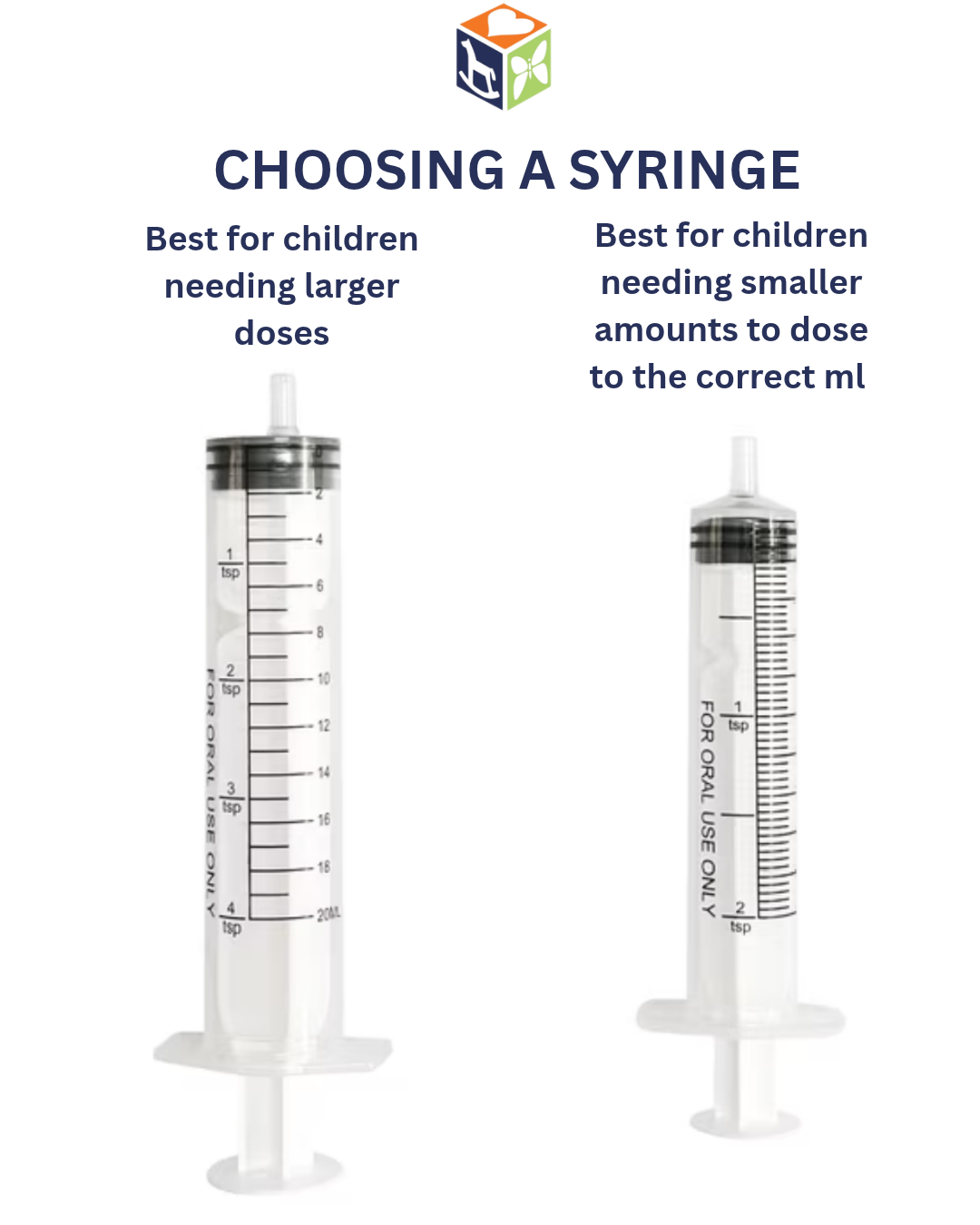
Infographic comparing syringes for large and small pediatric doses to measure the correct mL

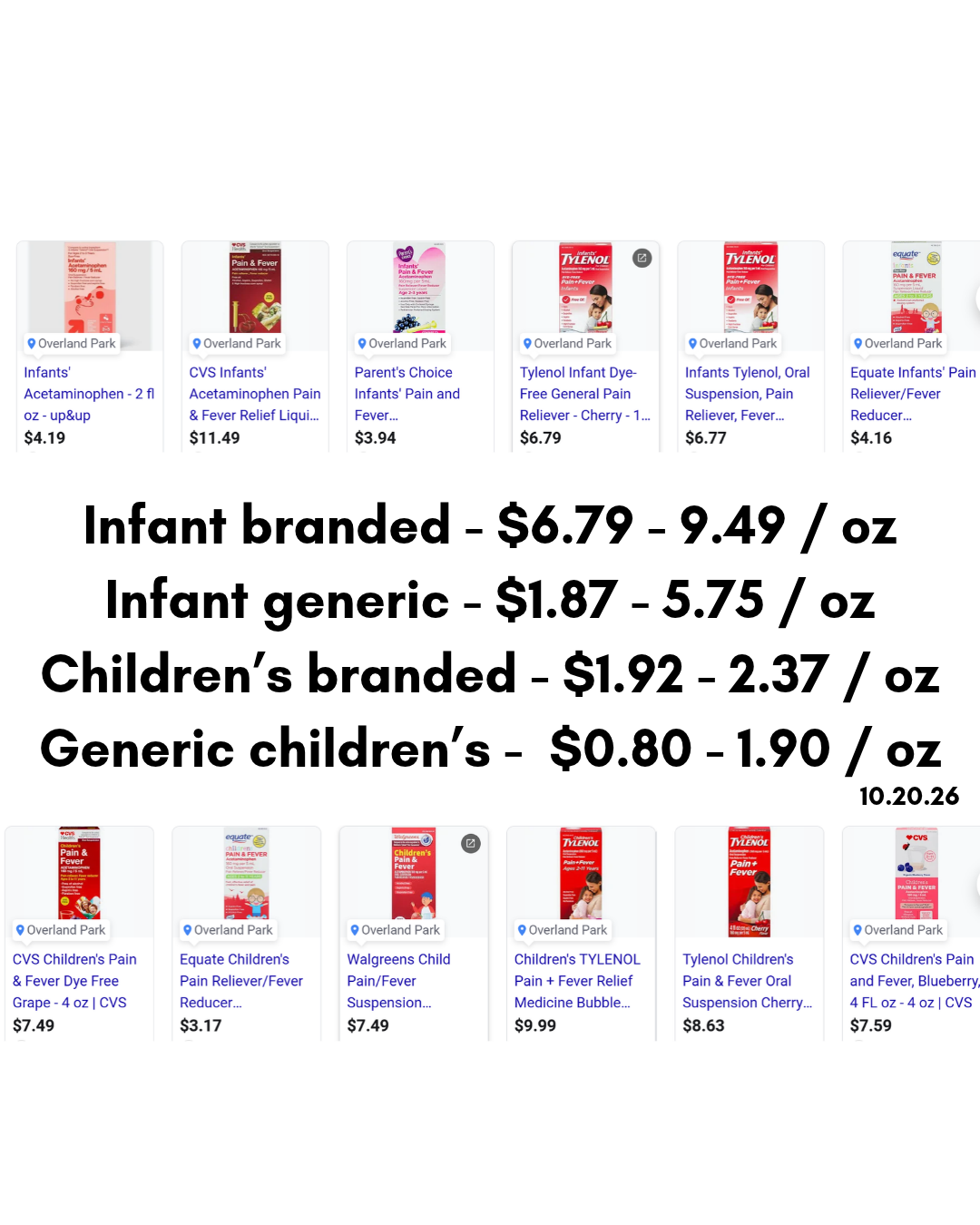
I made some quick calculations based on online prices of generic and name brand infant and children's acetaminophen, as seen in the image above.


The liquid acetaminophen sold today for infants and children is the same concentration: 160 mg per 5 mL. The old, more concentrated infant drops that caused dosing confusion are no longer the standard product. 


Name brand and generic medications are the same. 


Instead of buying a tiny bottle labeled "infant acetaminophen" at a much higher price, I generally recommend buying the children's liquid acetaminophen and an oral dosing syringe. Even purchased separately, you'll save money. Just make sure it has the dosing you need. For example, low weights often require less than 1 ml, so if you get a 1 ml syringe that's very thin, it is easier to draw up a small amount accurately.


Choosing a generic version also saves money.


Three glowing jack-o’-lanterns with “Halloween Safety Tips: Keep the Treats, Skip the Tricks!” text

Halloween Safety Tips: Keep the Treats, Skip the Tricks!


Halloween is a favorite time of year for kids and families, with costumes, candy, and spooky fun around every corner. A few simple precautions can help everyone enjoy the festivities while avoiding preventable injuries and emergencies.


At Pediatric Partners, we want every little ghost, goblin, and superhero to have a safe and happy Halloween! Here is a series of safety tips to keep the frights fun and not actual risks.


1. Pills Aren't Candy — Keep Medications Out of Reach


Children and teens may not recognize the difference between a pill and a piece of candy, especially when medications are colorful, small, or resemble candy-coated treats. Even adults can mistake look-alike products for something edible!


  • Store all prescription and over-the-counter medications in their original, child-resistant containers and locked or otherwise securely inaccessible storage.
  • Keep vitamins, gummies, supplements, melatonin, and medications away from candy bowls, snack drawers, and other places where kids might look for treats.
  • Be especially careful with cannabis edibles, nicotine products, and other items that may resemble candy or snacks. Keep them secured away from children and teens.
  • Never refer to medication as candy, even when trying to make it easier for a young child to take.
  • If you suspect a child has swallowed an unknown pill or substance, don't wait for symptoms. In the U.S., call Poison Control at 1-800-222-1222 for immediate guidance. Call 911 for severe symptoms, including trouble breathing, seizures, or unresponsiveness.


2. Make Sure Trick-or-Treaters Can Be Seen


Halloween often means children are walking around at dusk or after dark, when drivers may have difficulty seeing them.


  • Add reflective tape to costumes, treat bags, jackets, and shoes.
  • Give children glow sticks or flashlights to help them see and be seen.
  • Choose bright colors when possible, or add reflective accessories to darker costumes.
  • Remind children to look both ways before crossing streets and to use sidewalks and crosswalks whenever available.
  • Make eye contact with drivers before crossing rather than assuming a driver has seen them.


A fun costume shouldn't make a child invisible!


3. Choose Costumes That Are Safe to Wear


Costumes should be fun, comfortable, and easy to move in. A few adjustments can prevent trips, falls, and other injuries.

  • Make sure costumes are short enough to prevent tripping.
  • Choose well-fitting shoes instead of oversized shoes, high heels, or footwear that makes walking difficult.
  • Use face paint or makeup instead of masks that block vision or make breathing difficult.
  • Test makeup on a small patch of skin first, and remove it before bed.
  • Choose flame-resistant or flame-retardant costume materials when possible.
  • Check props for sharp edges or pointed tips. Choose flexible, soft accessories instead.
  • Keep long wigs, capes, and loose fabric away from candles, fire pits, and other open flames.


Practice walking, seeing, and moving in the costume before heading out.


4. Drivers: Slow Down and Watch for Children


Drivers have an important role in keeping Halloween safe, even if they aren't participating in trick-or-treating.

  • Drive slowly in residential neighborhoods and be extra cautious near parks, schools, and popular trick-or-treating areas.
  • Watch carefully for children crossing between parked cars or darting into the street.
  • Take extra time at intersections, driveways, and crosswalks.
  • Avoid distractions, including texting and checking your phone.
  • Turn on headlights early so children can see your vehicle.
  • Be especially alert during the hours when trick-or-treating is most active.


If you're driving on Halloween, expect children to be excited, distracted, and unpredictable. Plan accordingly.


5. Inspect Treats Before Kids Dig In


Children are often eager to start eating their Halloween haul as soon as they get home. Take a few minutes to check everything first.

  • Give children treats from trusted sources and inspect them before eating.
  • Discard candy with open, torn, or damaged packaging, unusual discoloration, or anything that looks suspicious.
  • Avoid homemade treats from people your family doesn't know well.
  • Remove choking hazards for young children, including hard candies, gum, whole nuts, and small toys.
  • Keep candy out of reach of young children when it isn't being supervised.


There is no need to panic about every imperfect wrapper, but anything suspicious should go in the trash.


6. Make a Trick-or-Treating Plan


A little planning helps children stay safe while enjoying their independence.

  • Young children should always be accompanied by a responsible adult.
  • Older children who are ready to go without an adult should travel in a group, stay in agreed-upon areas, and have a set check-in time.
  • Make sure children know their full name, a caregiver's phone number, and what to do if they become separated from their group.
  • Establish clear rules about crossing streets, entering homes, and approaching unfamiliar animals.
  • Carry a charged cell phone if appropriate for the child's age and maturity.
  • Stick to well-lit streets and familiar neighborhoods.


Set expectations before leaving home, when everyone is calm and listening.


7. Keep Decorations and Jack-o'-Lanterns Safe


Halloween decorations can create fire hazards and tripping risks if they aren't placed carefully.

  • Use battery-operated candles or LED lights in pumpkins instead of open flames.
  • Keep decorations away from doorways, stairs, sidewalks, and other walking paths.
  • Secure extension cords so no one trips over them.
  • Keep flames, space heaters, and other heat sources away from costumes and decorations.
  • Check outdoor lights and cords for damage, and use outdoor-rated equipment outside.


A glowing pumpkin is just as festive without a real flame.


8. Protect Pets From Halloween Hazards


Halloween can be stressful for pets, with frequent doorbells, unfamiliar visitors, and tempting treats.

  • Keep chocolate, sugar-free candy containing xylitol, raisins, and other potentially toxic foods away from pets.
  • Keep glow sticks, wrappers, and small toys out of reach.
  • Consider keeping pets in a quiet, secure room to reduce stress and prevent escapes through an open door.
  • Don't assume every pet enjoys wearing a costume. Avoid anything that restricts movement, vision, or breathing.


If your pet eats something potentially toxic, contact your veterinarian or an animal poison control service promptly.


10. Know When to Call for Help


Even with precautions, accidents can happen. Know what to do if something goes wrong.

  • Call 911 for a life-threatening emergency, such as severe breathing difficulty, a seizure, or loss of consciousness.
  • For suspected medication or chemical ingestion, contact Poison Control right away at 1-800-222-1222. Don't induce vomiting unless instructed by a medical professional.
  • If a child is injured, assess the situation and seek appropriate medical care.
  • If a child has a known food allergy, follow their emergency action plan immediately if symptoms develop.


Save important emergency numbers in your phone before the festivities begin.


11. Keep kids with allergies safe


Food allergies are more common and dangerous than many realize, so we'll go into this one in detail below.

Teal jack-o’-lantern beside glowing orange pumpkins on a dark autumn night, with text about allergy-friendly Halloween treats

Halloween Treats for Every Child: Supporting Kids with Food Allergies


Halloween is full of excitement for kids: choosing costumes, decorating pumpkins, walking through the neighborhood with friends, and, of course, collecting treats! But for children with food allergies, Halloween can also bring extra worry. Many traditional Halloween candies contain common allergens, and even treats that seem safe can pose a risk because of cross-contact during manufacturing or handling.


The good news? A few thoughtful choices can help make Halloween more inclusive, safer, and more fun for every child.


Whether you're a parent, a neighbor handing out candy, or a family hosting a Halloween party, you can help children with food allergies feel included without making Halloween complicated.


Why Halloween Can Be Tricky for Kids with Food Allergies


Food allergies are more than a food preference. For children with food allergies, eating even a small amount of a food they are allergic to can trigger an allergic reaction. Some reactions can be severe and potentially life-threatening.


Common food allergens include milk, eggs, peanuts, tree nuts, soy, wheat, fish, shellfish, and sesame. These ingredients appear in many popular candies, cookies, baked goods, and other Halloween treats.

Even when a candy doesn't appear to contain a child's allergen, there may be risks from cross-contact during manufacturing. Ingredients and manufacturing practices can vary by product and change over time, so checking the label matters.


For families managing food allergies, Halloween can mean carefully reading every wrapper, sorting through a bucket of candy, and explaining why a child can't eat some of the treats their friends enjoy.

Imagine being a child who has to give away most of the candy you worked so hard to collect. Or watching your friends eat a treat you can't safely have. Even when parents handle these situations with care, children may feel disappointed or left out.


Inclusion doesn't mean every child needs to eat the same treat. It means making sure every child has something fun to enjoy.


The Teal Pumpkin Project: A Simple Way to Make Halloween More Inclusive


Have you ever seen a teal pumpkin on someone's porch at Halloween? It may be part of the Teal Pumpkin Project, an initiative started by Food Allergy Research & Education (FARE) to make Halloween safer and more inclusive for children with food allergies.


A teal pumpkin signals that a household offers non-food treats as an alternative to candy. This simple idea helps children with food allergies participate in trick-or-treating without having to rely entirely on food.


The project also benefits children who have other dietary restrictions or who may not be able to eat traditional candy for other reasons.


You don't need to eliminate candy from your trick-or-treat bowl to participate. You can offer both candy and non-food options so families can choose what works for their children.


Learn more at FARE's Teal Pumpkin Project.


What Can You Hand Out Instead of Candy?


Non-food treats can be inexpensive, easy to find, and just as exciting for many kids as candy. Think about small items that spark creativity, encourage play, or add a little Halloween fun.


Small school supplies

Halloween stickers, pencils, erasers, bookmarks, and mini notepads are useful options that children can enjoy long after Halloween.


Toys and trinkets

Consider glow sticks, spider rings, bouncy balls, small figurines, mini slinkies, or temporary tattoos. Choose age-appropriate items and avoid small parts for children under 3 because of choking risks.


Activities and creative fun

Mini bubbles, stamps, crayons, coloring sheets, and small craft kits give kids something to do beyond eating sweets.


A choice of treats

Keep candy in one bowl and non-food treats in another, or let children choose from a mixed assortment. A separate bowl makes it easier for children to select a non-food option without having to explain why.


You can often find affordable non-food treats in multipacks at dollar stores, craft stores, online, and general retailers. You don't have to spend a lot to make a difference.


If You Prefer to Hand Out Candy, Here's How to Help


Non-food treats are a wonderful option, but there are other ways to support children with food allergies, too.


1. Keep candy in its original packaging

Individually wrapped treats make it easier for parents to review ingredient labels and allergen statements. Avoid homemade treats or unwrapped candy when you don't know a child's specific allergy needs or how the food was prepared.

2. Check labels every time

Don't assume a familiar candy is safe because it was safe in the past. Ingredients and manufacturing practices can change, and different sizes or varieties of a product may have different ingredients.

Parents should check the actual package and any applicable allergen statements rather than relying on a candy's name or appearance.

3. Don't promise that a treat is allergy-safe unless you know

It's tempting to reassure a parent that a particular candy is safe, but allergen needs differ from child to child. If you're unsure, be honest. Let the family decide whether a treat is appropriate.

4. Offer a non-food choice without making it a big deal

Children shouldn't have to explain a medical condition to get an alternative treat. A simple, friendly question like, "Would you like candy or a toy?" allows every child to make a choice without feeling singled out.

5. Be thoughtful about shared bowls

Keep non-food items separate from candy when possible, and wash your hands before handling treats. While a separate bowl can help reduce contact with food allergens, it doesn't guarantee that an item is allergen-free.


Prepare Children for a Safer Halloween


Parents and caregivers of children with food allergies can help make the evening less stressful with a little planning.

  • Talk about the plan ahead of time. Explain that the family will check treats together before anything is eaten.
  • Bring a safe alternative. If your child has a favorite treat that you know is safe for them, consider having it available at home or bringing an appropriate option along.
  • Make sorting part of the fun. After trick-or-treating, spread out the treats and review labels together. Children can learn to recognize their allergens as they grow.
  • Follow your child's allergy action plan. If your child has a prescribed epinephrine autoinjector, bring it along and make sure adults supervising the child know how to use it. Avoid eating treats with uncertain ingredients.
  • Practice a simple response. Children can learn to say, "No, thank you," or "I need to check with my grown-up first."


These habits help children build the skills they need to manage their allergies while still enjoying Halloween traditions.


A Few Things to Remember About Food Allergy Safety


Food allergies can be serious, and no single Halloween strategy eliminates every risk. A teal pumpkin indicates that non-food treats are available; it does not mean the entire home or every item offered is allergen-free.


Likewise, choosing a non-food treat doesn't require a child to disclose their allergy or explain their needs. The goal is to create a welcoming environment where families can make informed choices.


And remember that food allergies are not the same as food preferences. A child with a food allergy isn't being picky or difficult by avoiding a particular treat. Their family is making decisions to protect their health.


A little understanding goes a long way toward helping children feel safe and included.


Make Halloween a Little More Inclusive This Year


Halloween should be about costumes, imagination, neighborhood connections, and making happy memories. Children with food allergies deserve to enjoy those traditions just as much as everyone else.


This year, consider adding a few non-food treats to your trick-or-treat bowl, displaying a teal pumpkin, or sharing the Teal Pumpkin Project with your neighbors. If you're attending a Halloween party, ask the host how you can help make it more inclusive.


Small gestures can make a big difference to a child who might otherwise feel left out.


Let's make this Halloween about more than candy. Let's make it a celebration where every child feels welcome!


See if your kids can get any of these jokes...


Healthy Eating Together wellness flyer with photos of smiling people cooking, shopping, and eating healthy food with kids and adults

Part 3: Why Family Meals Matter


If you missed part 1 or part 2 of our healthy eating series, you can find them by clicking on the respective number.


There is something special about sitting down together to eat.


It doesn't have to be a picture-perfect dinner with everyone at the table at exactly 6:00 PM. It might be breakfast before school. Pizza around the kitchen island after soccer practice. Leftovers eaten together on a Sunday afternoon. Or a teenager finally coming downstairs to eat at the same time as everyone else.


The important part isn't perfection. It's connection.


Family meals provide an opportunity to nourish our bodies while also checking in with the people we love. Research has found that regular family meals are associated with better diet quality and a number of positive social and emotional outcomes for children and adolescents.


And those benefits aren't limited to young children. Families can benefit from eating together throughout childhood, adolescence, and even into the young-adult years.


Family meals nourish more than our bodies


When we think about healthy eating, we often focus on nutrients: protein, fiber, vitamins, minerals, and healthy fats.


Those things matter. But there is another ingredient in a healthy meal that doesn't appear on the nutrition label:

Connection.


Regular family meals can provide children with a predictable opportunity to interact with their parents and siblings. Conversations around the table can help children feel seen and heard. They give parents a chance to notice when something is bothering a child—and sometimes those conversations happen more naturally over food than during a formal “How was your day?” conversation.


For younger children, family meals also provide opportunities to practice:

  • Conversation
  • Listening
  • Taking turns
  • Trying new foods
  • Using utensils
  • Following social expectations
  • Expressing preferences appropriately


For older children and teens, the benefits shift. The dinner table can become a place where they talk about friends, school, activities, relationships, stress, or something funny they saw online. Sometimes they tell you something important without even realizing they are doing it. These are the moments that help strengthen family bonds.


Family meals are associated with better nutrition


Children who regularly eat meals with their families tend to have healthier dietary patterns.


Family meals are associated with increased consumption of foods such as:

  • Fruits and vegetables
  • Whole grains
  • Protein-rich foods
  • Calcium-rich foods


They are also associated with lower consumption of some less nutritious foods and beverages.


There is an important caveat: family meals don't cause all of these benefits by themselves.


Families who regularly eat together may also have other health-promoting habits. They may have more predictable schedules, greater access to nutritious foods, or more opportunities for parents and children to connect.

But that doesn't make family meals unimportant.


Instead, it reminds us that family meals are one piece of a larger picture of family health.


Family meals and mental health


One of the most interesting reasons to make time for family meals is that the potential benefits extend beyond physical health.


Research has found associations between more frequent family meals and better psychosocial outcomes in children and adolescents, including lower rates of some emotional and behavioral problems.


Why might this be?


It probably isn't because sitting at a table magically prevents anxiety or depression.


Rather, the meal may provide a consistent opportunity for connection, communication, and belonging.


Children need to know that they are part of something.


A shared meal says, "We have time for each other." That message can be especially important during the teen years, when children are naturally becoming more independent.


The teen years are an especially important time


Parents sometimes assume that teenagers don't need family meals anymore. They do.


In fact, adolescence is a time when family connection can be particularly important.


Teenagers are navigating:

  • Increasing academic demands
  • Friendships and relationships
  • Social media
  • Body image
  • Growing independence
  • Risk-taking opportunities
  • Mental health challenges
  • Decisions about their future


A family meal provides a regular opportunity to maintain connection during a stage when children are spending increasingly more time outside the family.


And here's an important parenting tip: Don't turn every family meal into an interrogation.


If every dinner starts with:

“Did you finish your homework?”

“Why is your grade missing?”

“Did you text your coach?”

“Why haven't you cleaned your room?”

—you may discover that your teenager suddenly has somewhere else to be.


Instead, let meal time simply be enjoyable. Talk about funny things. Tell stories. Ask silly questions. Share something about your own day. Ask about their favorite show, team, or a movie they recently watched.


Connection doesn't always require a serious conversation.


Family meals don't have to be dinner


The phrase “family dinner” can make this sound impossible for families with complicated schedules.


Maybe one parent works evenings.

Maybe a child has sports practice until 8:00 PM.

Maybe there are three different school schedules.

Maybe parents are divorced and children split their time between households.

Maybe your family doesn't look like the traditional picture of everyone sitting around a dining table.


That's okay.


A family meal doesn't have to happen at dinner, and it doesn't have to happen every day.


Try:

  • Breakfast together
  • Weekend lunch
  • A shared snack after school
  • Eating together before evening activities
  • Saturday morning pancakes
  • Sunday dinner
  • A meal together on the nights when everyone's schedules overlap


Even a few shared meals each week can create opportunities for connection.


And remember that “family” can mean many things. A family meal might include parents, grandparents, siblings, foster children, chosen family, or other important people in a child's life.


The goal is connection—not recreating a particular version of family life.


What if your child doesn't want to talk?


Don't force it. Sometimes simply being together is enough.


Children may not be ready to talk when you ask, “What's wrong?” But they may start telling you a story while you're passing the vegetables. Or talking about that latest movie. Or while you're cleaning up. Or three hours later.


The routine of being together creates repeated opportunities for conversation.


You don't have to make every meal meaningful. You just have to keep creating opportunities for connection.


Make the meal a low-pressure place


Family meals should not become another battleground.


Try to avoid making the table a place for:

  • Arguments about how much a child eats
  • Comments about weight or body size
  • Pressure to clean the plate
  • Criticism about food choices
  • Bribes to eat vegetables
  • Shaming a child for refusing a food


Instead, provide nutritious food and allow children to gradually develop their own relationship with eating.

This doesn't mean there are no expectations.


Families can have reasonable mealtime rules, such as:

  • We sit together when possible.
  • We speak respectfully.
  • We don't criticize someone else's food.
  • We try new foods without pressure to finish them.
  • We clean up after ourselves.


The goal is to create a positive food environment, not a perfect one.


Family meals can teach independence


As children grow, family meals can become an opportunity to gradually hand over responsibility.


A toddler might:

  • Help put napkins on the table
  • Choose between two vegetables
  • Practice feeding themselves


A school-aged child might:

  • Help plan the menu
  • Wash produce
  • Set the table
  • Pack part of a lunch
  • Help prepare a simple meal


A teenager might:

  • Grocery shop
  • Prepare dinner
  • Read nutrition labels
  • Plan meals around sports or activities
  • Learn to cook independently


Eventually, your child will leave home. The goal isn't for you to continue telling them what to eat or for them to rely on eating out every day.


The goal is to give them the skills to feed themselves well when you're no longer sitting at the table with them.


What about picky eaters?


Family meals can actually be a useful setting for children who are selective eaters—but only if we take the pressure off.


Try serving at least one food you know your child will usually eat alongside other foods. For example, if you're serving chicken, roasted vegetables, and rice, perhaps your child's familiar food is the rice.


You don't need to prepare an entirely separate meal for every family member, but you also don't need to force a child to eat something they dislike.


Repeated exposure matters. A child may need to see and experience a food many times before deciding they like it.

And sometimes they never will. That's okay.


The goal is variety over time, not winning a battle over broccoli tonight.


If your child has a very limited diet, this is something to schedule a visit to discuss. Nutritional deficiencies should be investigated, reasons behind the pickiness should be addressed, and a plan for moving forward can be made at an office visit.


Turn off the screens


One of the biggest barriers to intentional family meals today isn't the food. It's the distraction.


Phones, tablets, televisions, and other devices can easily take over the table.


When everyone is looking at a screen, we lose some of the very benefits that make family meals valuable in the first place.


Screens can interfere with:

  • Conversation
  • Paying attention to hunger and fullness
  • Noticing the flavors and textures of food
  • Social interaction
  • Family connection


That doesn't mean every meal needs to be completely silent and screen-free or that your family has failed if someone occasionally checks a phone when they're watching for an important message. Sometimes pizza on movie night is just what your family needs.


But creating regular screen-free meals gives everyone an opportunity to actually be present.


We'll explore this more in Part 4, including why screens can interfere with intentional eating and how families can establish realistic screen-free meal habits.


The goal isn't more rules. It's more connection.


If your family doesn't currently eat together regularly, don't worry about suddenly creating a nightly formal dinner.


Start small.

  • Choose one meal.
  • Put the phones away.
  • Sit down.
  • Eat something relatively simple.
  • Talk.

Then do it again.


Maybe your family eventually gets to several meals a week. Maybe your schedules mean that breakfast works better than dinner. Maybe “family meal” means eating together in the car between activities once in a while.


It all counts.


Because the most important thing on the table may not be the food.


It may be the message your child receives every time you sit down together: You belong here. We have time for you. You matter to us.


And that is a pretty powerful ingredient in a healthy childhood.


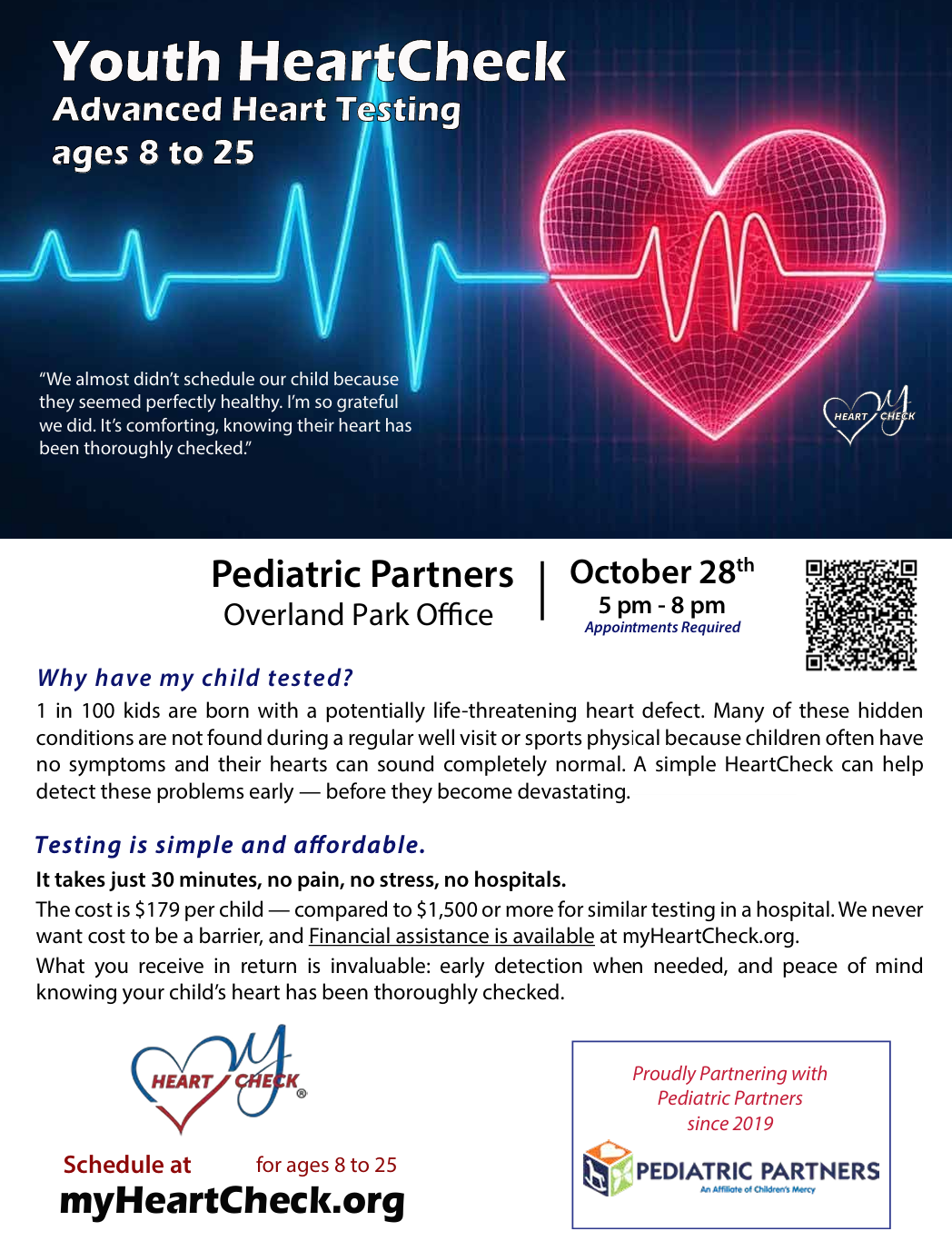
Youth HeartCheck event flyer with blue ECG line, glowing heart, and October 28 details.

Spots still available for the 2nd heart screen of the month!


The screening in Olathe earlier this month was efficiently run and got many screenings done.


Our Overland Park office will host a screening on Wednesday, Oct. 28th from 5pm to 8pm.


My HeartCheck is a trusted community partner that provides comprehensive, non‑invasive heart screenings for individuals ages 8–25 — and participants do not need to be Pediatric Partners patients to schedule.


Each 30‑minute screening includes:

• ECG (electrical activity) 

• Echocardiogram (cardiac ultrasound) 

• Blood pressure check 

• Health & family history review 

• Results reviewed by a pediatric cardiologist


The cost is $179, and financial assistance is available so no child misses the opportunity for early detection and peace of mind.


If this session is full, remember that our patients can go to any of their public screenings and that we'll host them again soon.


Learn About Free Community Events from the KC CHADD Chapter

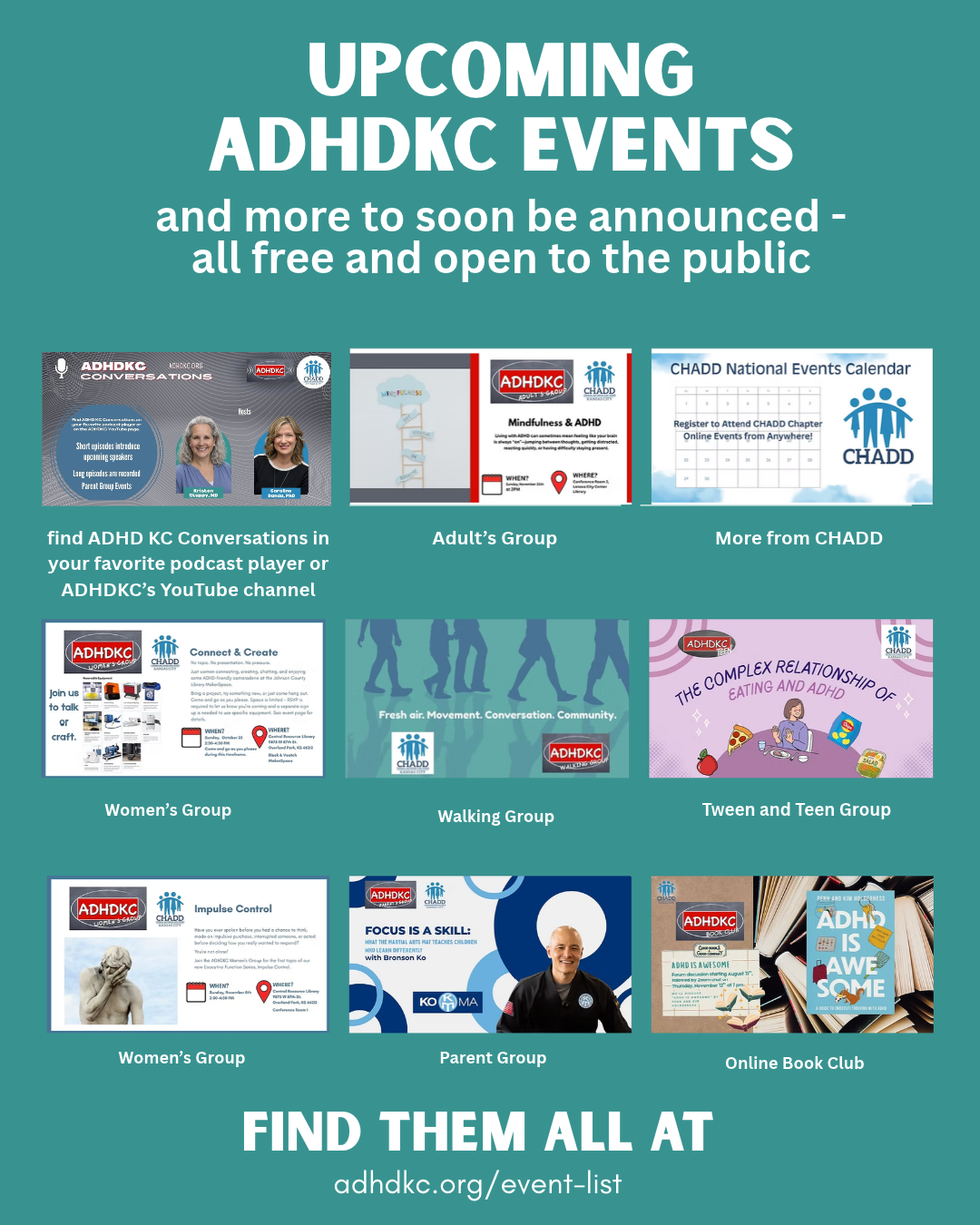
a screen shot of 9 upcoming adhd kc event images

Founded in 2012, ADHDKC is Kansas City’s Award Winning Non-Profit CHADD Chapter. ADHDKC provides support for thousands of area families thriving with ADHD and related conditions. Every month ADHDKC sponsors events online and around the KC Metro to help parents, adults, and adolescents learn how to regulate emotions, better manage executive functioning, and more. 


Since ADHD affects about one in 9 kids, we know many of you live with the challenges of having ADHD in the home. The good news is that you can learn to better support your kids. ADHDKC offers monthly events for parents, adults, and teens to help you learn to thrive with ADHD. 


Dr Stuppy always likes to see new faces in the parent and teen groups. 


The next Parent Group event will be fabulous! Dr. Sasha Hamdani will talk about emotions and ADHD. If you don't know her, she is a local psychiatrist, author, and social media influencer who shares reliable information about ADHD. Check out the ADHDKC Conversations podcast episode that introduced her from the button below and sign up to hear her October talk from the Events Page.


ADHDKCTeen is for middle and high schoolers who want to learn skills to navigate life with ADHD, but youth without ADHD can often find tools that help them too. They meet the first Tuesday of the month at 5:30 pm online for an interactive learning session that motivates youth to take control of their lives. A diagnosis of ADHD is not needed to join us. In October we'll be talking about ways you can move to help boost energy and focus. This will go beyond the typical advice to exercise.


All ADHDKC Events are free and open to the public. No diagnosis is required! You just need an interest in the topic to join us.  Feel free to share this with friends and family who would benefit. 


If you enjoyed this edition of Growing Together with Pediatric Partners, share it with a friend.

Share