Allergy Management: A Guide for Parents and Families
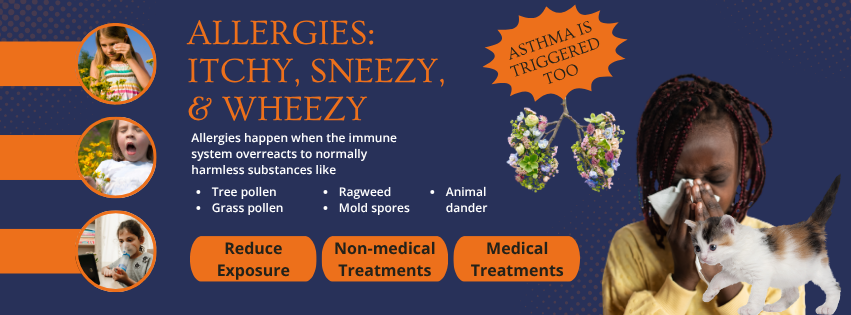
Allergies happen when the immune system overreacts to normally harmless substances like pollen, dust mites, pet dander, or mold. This guide will help you understand the best ways to manage allergy symptoms for children, teens, and adults in your family.
Reduce Your Exposure —
Simple Habits That Make a Big Difference
The most important first step in allergy treatment is reducing contact with the things that trigger symptoms. Here are practical steps your family can take:
- Remove shoes at the door. Shoes track in pollen, mold spores, and outdoor allergens throughout your home.
- Shower and wash hair before bed. Pollen and allergens collect in hair and on eyelashes throughout the day. If you don't wash them off, you transfer allergens to your pillow and breathe them in all night. At minimum, wash your face and eyelashes before bed.
- Sleeping cap tip: On nights when hair washing isn't possible (especially for young children), a smooth cotton or silk sleeping cap can help reduce pollen transfer from hair to the pillow. The cap should be washed frequently. This is a helpful backup, but washing hair remains the best option.
- Change clothes after spending time outdoors during allergy season.
- Keep windows closed during high pollen days. Use air conditioning instead.
- Use HEPA filters. Place high-efficiency particulate air (HEPA) filter air purifiers in bedrooms and main living areas. Use a vacuum with a HEPA filter. These devices remove pollen, pet dander, dust mite particles, and mold spores from the air.
- Cover mattresses and pillows with dust mite–proof encasements.
- Wash bedding weekly in hot water.
- Keep pets out of bedrooms if anyone in the family is allergic to pet dander.
- Keep indoor humidity between 30% and 50% to discourage dust mites and mold.
- Check local pollen counts (websites like pollen.com) and limit outdoor time when counts are high.
Kansas City Pollen Calendar —
Know Your Allergy Seasons
In the Kansas City area, outdoor allergy season runs from about March through October. There are three main pollen waves, plus mold:
Tree Pollen (Spring)
- When: Late February through early May
- Peak: April
- Common trees: Oak, elm, maple, cedar
- Tip: If you are allergic to tree pollen, start your nasal spray and antihistamine by mid-February — before symptoms begin
Grass Pollen (Late Spring – Summer)
- When: Late May through July
- Peak: June
- Tip: Limit time outdoors on windy days during this period; mow the lawn when pollen counts are lower or wear a mask while mowing
Ragweed Pollen (Late Summer – Fall)
- When: Mid-August through the first frost (usually mid- to late October)
- Peak: Late August to early September
- Tip: Ragweed pollen is highest around midday (not early morning, as many people think). If you are ragweed-allergic, start your medications by early August
- Fun fact: A single ragweed plant can produce up to one billion pollen grains per season
Mold Spores (Spring – Fall)
- When: Present throughout warm months, worst in late summer and fall
- Worse after rain and in humid conditions
- Tip: Keep indoor humidity below 50% and clean damp areas regularly
Important note: Allergy seasons are getting longer. Over the past 30 years, pollen season in the U.S. has lengthened by about 20 days and pollen levels have increased by 21%, largely due to climate change. This means symptoms may start earlier and last longer than they used to.
When to start medications
The best approach is to begin daily nasal corticosteroid sprays and antihistamines 2 to 4 weeks BEFORE your expected allergy season starts. This gives the medications time to build up their protective effect.
Don't wait until you're already miserable!
Saline (Salt Water) Nasal Rinses
Rinsing the nose with salt water is a safe, drug-free way to relieve allergy symptoms for all ages. Saline rinses work by:
- Washing allergens (pollen, dust, dander) out of the nasal passages
- Thinning mucus so it drains more easily
- Soothing swollen, irritated nasal tissue
You can use a squeeze bottle, neti pot, or saline spray. For children, a simple saline spray is often easiest.
Nasopure brand has
instructions for use and
videos to help kids get comfortable with using a saline rinse.
Safety tip: Always use distilled, sterile, or previously boiled water — never use tap water straight from the faucet, as it can contain harmful organisms.
Saline rinses can be used alone for mild symptoms or alongside allergy medications for added relief.
Choosing the Right Allergy Medication
Nasal corticosteroid sprays — the most effective allergy treatment
For moderate to severe allergy symptoms — especially nasal congestion, which antihistamine pills don't treat well — nasal corticosteroid sprays are the most effective treatment available. Here are the options and the youngest age each is FDA-approved for:
Approved for ages 2 and up:
- Mometasone (Nasonex) — 1 spray per nostril once daily for ages 2–11
- Fluticasone furoate (Veramyst) — 1–2 sprays per nostril once daily for ages 2–11
- Triamcinolone (Nasacort Allergy 24HR) — 1 spray per nostril once daily for ages 2–5
Approved for ages 4 and up:
- Fluticasone propionate (Flonase) — 1 spray per nostril once daily for ages 4–11
Approved for ages 6 and up:
- Budesonide (Rhinocort) — approved for ages 6 and up
These sprays work by reducing inflammation directly inside the nose. They are safe for daily use and many are available over the counter.
Important tips for nasal sprays:
- They work best when used every day during allergy season — they are not "as needed" medications
- It may take several days to a couple of weeks to feel the full benefit
- Aim the spray toward the outside wall of the nose (away from the center wall/septum) to reduce the chance of nosebleeds
- The most common side effect is minor nosebleeds; if this happens, take a short break and restart
We recommend 24-hour antihistamines (and avoid diphenhydramine/Benadryl)
There are two types of antihistamines:
- Older "first-generation" antihistamines like diphenhydramine (Benadryl) and hydroxyzine
- Newer "second-generation" 24-hour antihistamines like cetirizine (Zyrtec), loratadine (Claritin), fexofenadine (Allegra), and levocetirizine (Xyzal)
Diphenhydramine (Benadryl) and other older antihistamines cause significant side effects
- Drowsiness and sedation — this can impair school performance in children and driving ability in teens and adults
- Impaired thinking, memory, and coordination — these effects can happen even when a person doesn't feel drowsy
- Dry mouth, blurred vision, constipation, and difficulty urinating
- Rapid heartbeat
- In overdose, they can cause hallucinations, seizures, dangerous heart rhythms, and even death
- They wear off quickly (every 4–6 hours), so symptoms return and doses must be repeated
- The body builds tolerance to the sedating effect within days, but the other side effects remain
The newer 24-hour antihistamines do not cross into the brain the way older ones do, so they cause far less drowsiness and do not impair thinking or coordination. They last all day with a single dose and are available over the counter. They are safe for long-term daily use in children, teens, and adults.
For people with both nasal and eye symptoms, combining a nasal corticosteroid spray with a 24-hour antihistamine often provides the best relief.