This was written as a supplement to the August 13, 2026 Growing Together With Pediatric Partners blog. To return there, click here.
OpenEvidence was used to research this topic as well as generate the tables included.
Why This Matters
Caffeine is everywhere — coffee shops, high school vending machines, energy drinks, soda, tea, and even chocolate. Most kids will drink some and we can't expect to completely eliminate it, but we need to recognize how much is too much and how much is in the products we eat and drink. Parents also need to talk with kids and teens in ways that they'll understand and take to heart. Tips on that are below!
How Much Is Too Much?
Caffeine is a central nervous system stimulant that can increase alertness, energy and concentration. Children are much more sensitive to caffeine effects than adults. Side effects of caffeine consumption can include significant breathing and heart rate problems, anxiousness, agitation, and behavioral changes. Research indicates that the rate of emergency room visits for caffeine overdose has more than doubled for tweens and teens since 2017, mostly related to the popularity of energy drinks.
For those who take a prescription stimulant for ADHD or narcolepsy, the effects are additive, meaning the effects of both the medication and the food or drink work together, potentially leading to dangerous side effects.
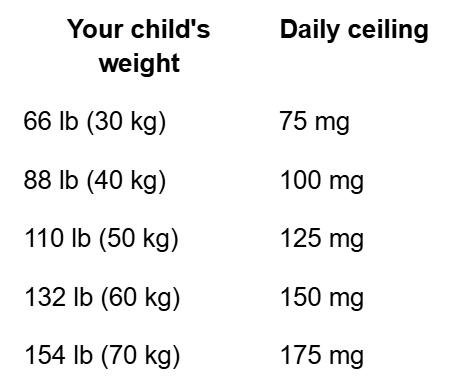
The general limit is 2.5 mg of caffeine per kilogram of body weight per day. A simpler rule many experts use is no caffeine under 12 years, then
no more than about 100 mg per day
for teens. The chart below has weight specific maximum daily amounts.
Two levels to know:
- Above roughly 5 mg/kg/day, children show more anxiety and withdrawal symptoms.
- Above 400 mg in a day, caffeine can cause real physical and psychological harm — especially in kids with heart or mental health conditions. Some energy drinks come close to this amount in one can and many kids and teens must visit the emergency room due to caffeine overdose.
If you suspect a child has consumed too much caffeine, you can contact the Poison Help Online Tool or call 1-800-222-1222 right away.
How Much Stimulant Is In What Your Child Eats and Drinks?
Caffeine isn't just in coffee, tea, and sodas. Energy drinks, energy bars, energy mints and chews, pre-workout supplements, bars, gels and many other products can contain caffeine and other stimulants.
While caffeine is often clearly labeled, sometimes there are hidden amounts elsewhere with more inconspicuous names, like green tea, coffee beans, guarana and other pharmaceutical stimulants. Many of these products have extremely high volumes of caffeine.
These days it's easy to look up how much caffeine is in a drink, whether it's on the label or from an online search, but how often do we actually do that? With the popularity of mega-infused drinks, it is important to know what your child is drinking.
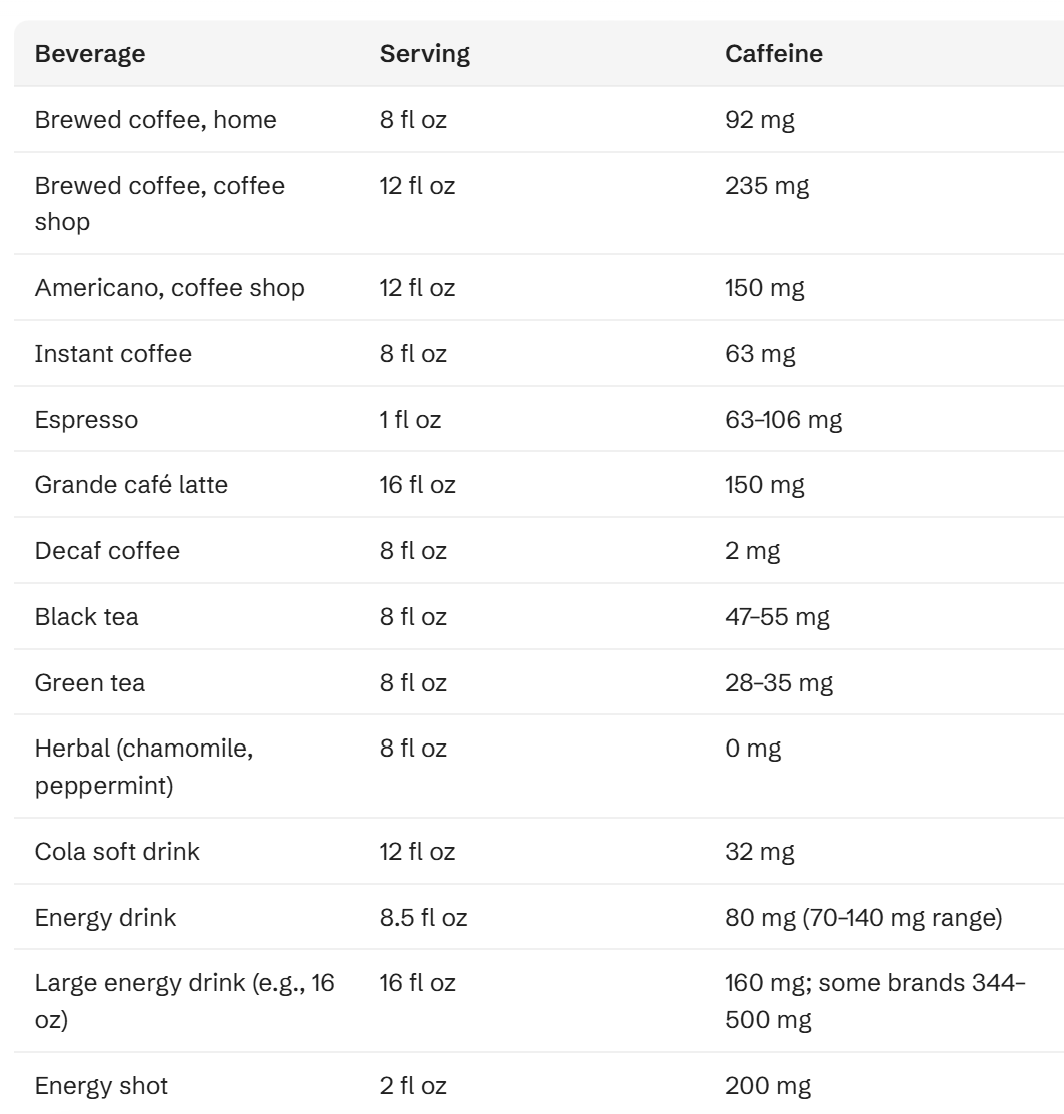
One thing that surprised me when researching this for this post is coffee shop brews have significantly more caffeine than home brews. The ounces is different in the chart below, but home brewed coffee is 11.5mg/oz and coffee shop brew is 19.5 mg/oz. It is discouraging to find that one 12 oz coffee-shop coffee is
more than double the 100 mg teen recommendation, exceeding the weight-based limit for any teen under about 200 lb.
Energy Drink risks are more than just from caffeine
The American Academy of Pediatrics recommends that
children and adolescents never consume energy drinks.
A single 16 oz energy drink already puts a teen over the daily recommendation of caffeine. This can be easily missed because labels often list more than one serving in one can, which is very misleading. Just two energy drinks can approach the 400 mg harm threshold, and I know many teens who report drinking that or more. A cola or a cup of tea leaves much more room in the day.
Another thing to consider with these drinks is that while the risk is high simply due to the very high amount of caffeine, they are not just caffeine. They also often contain added stimulants (guarana, taurine, yerba mate) that are not always indicated on the label. They also carry large amounts of sugar, which is unhealthy long term in ways beyond the risks of stimulants.
Energy drinks have been linked to
abnormal heart rhythms, high blood pressure, chest pain, and seizures and have led to a significant increase in ER visits for children and teens.
Additional warnings
Never mix energy drinks with alcohol. This combination masks intoxication and is associated with riskier behavior.
Bulk caffeine powder should never be in your home. A single teaspoon can equal 25–30 cups of coffee, and accidental overdoses have killed toddlers through adults.
Keep all energy products, especially those that look like candy or mints, stored out of reach of children, just like all other hazardous products.
Hidden Sources Of Caffeine Parents Often Miss
As mentioned above, there are many things you might not suspect have caffeine in them.
- School vending machines and cafeterias. More than half of US high schools sell caffeinated drinks. Coffee items averaged about 103 mg and energy drinks about 95 mg per item.
- Pre-workout powders. Most pre-workout supplements contain between 150 mg and 400 mg of caffeine per serving. These exceed the total daily amount recommended for teens.
- "Energy" gum (30-60 mg per piece), mints (40-80 mg per mint), chews (25-100 mg per chew), and jerky (0-150 mg per serving).
- Headache medications. Some contain 65 mg per tablet.
- Dark Chocolate. 12–25 mg per ounce.
- Milk Chocolate. 1–9 mg per ounce.
- Coffee-flavored ice cream. 2-5mg per 1/2 cup.
- Seattle Gummys (Mocca Shots). 100 mg to 200 mg per serving.
Timing Matters as Much as Amount
Caffeine stays in the body for 5-6 hours, much longer than many realize. It can affect bedtime if taken too late in the day, which then often leads to even more caffeine the following day due to feeling tired from lack of sufficient sleep. This is one of the most common reasons teens can't fall asleep. It's a cycle that's hard to break.
Teens need 8–10 hours of sleep. Caffeine that shortens sleep affects mood, school performance, athletic performance, and driving safety. For information on why sleep is important, see my personal blog on
what our brains do during sleep.
Practical rule: no caffeine after 12 pm–2 pm.
Younger kids and teens tend to metabolize caffeine more slowly, so earlier limits may be required.
Children Who Should Have Little or No Caffeine
Talk with your pediatrician before allowing any caffeine if your child has:
- Any heart condition, irregular heartbeat, or a family history of sudden cardiac death or long QT syndrome
- High blood pressure
- Anxiety, panic attacks, or a mood disorder
- Trouble sleeping or insomnia
- ADHD and takes stimulant medication
- Migraines
Warning Signs — Seek Medical Care
Go to the emergency department or call 911 for:
- Chest pain, racing or pounding heartbeat, or an irregular pulse
- Fainting or near-fainting
- Seizure
- Severe agitation, confusion, or hallucinations
- Repeated vomiting
Call our office for:
- Persistent trouble sleeping
- New or worsening anxiety, jitteriness, or irritability
- Headaches on days without caffeine (a sign of dependence)
- Stomach pain, reflux, or frequent nausea
If Your Child Or Teen Is Drinking Too Much
Parenting gets especially tough when your child or teen is doing something you know is harmful, like taking in too much daily caffeine, especially because it often happens when they’re out of your sight. Many kids and teens also become dependent on caffeine, and stopping suddenly can cause uncomfortable side effects. That combination makes it hard for families to step in, set limits, and help kids make safer choices.
Rather than stopping abruptly, a slow taper is generally tolerated better. Withdrawal causes headaches, fatigue, irritability, and difficulty concentrating, usually starting 12–24 hours after the last dose and lasting several days. Even people who are motivated to stop cave when withdrawal symptoms are uncomfortable, and if your child isn't motivated, they simply will not comply.
Help your child cut back slowly with the following taper:
1. Write down everything with caffeine consumed in a typical day, and add up the milligrams.
2. Cut the total by about 25% each week.
3. Start with the last drink of the day first by changing it to a non-sugar drink, such as herbal tea, or sparkling water.
4. Move all remaining caffeine to before noon.
5. Address the reason behind it — most teens are using caffeine to compensate for not sleeping enough. Help them get better sleep. I cover
sleep aides in this blog.
Talking Points That Work Better Than "No"
So you know you want them to cut back, but how you approach the issue is important. Setting a no caffeine rule isn't very helpful if they aren't always with you or if there are caffeine products in the home.
As with any parenting strategy, starting with getting curious about what they know and how they feel about it is a great place to begin.
1. Start with curiosity, not criticism
- “I’m not here to lecture—I just want to understand what you like about caffeine.”
- Ask: When do you usually drink it? What does it help you with? How does it make you feel afterward?
- Kids open up more when they don’t feel judged.
2. Explain what caffeine does in kid‑friendly terms
- “Caffeine is a stimulant—it pushes your brain and body to go faster.”
- “It can make your heart beat faster, make you feel jittery, or make anxiety worse.”
- “It can trick your brain into feeling awake, but it doesn’t actually fix tiredness.”
- Keep it simple and factual.
3. Connect caffeine to things THEY care about. Kids and teens respond best when the “why” is tied to their goals:
- Sleep quality
- Sports performance
- Focus at school
- Anxiety or irritability
- Headaches
- Mood swings
- Energy crashes
- Example: “Too much caffeine can make it harder to fall asleep, and that makes mornings feel awful.”
4. Talk about dependence without shame
- “Your body can get used to caffeine, so stopping suddenly can cause headaches or irritability.”
- “That doesn’t mean you did anything wrong—it just means we need a plan.”
- Normalize it. Kids shut down when they feel blamed.
5. Set realistic limits together
- Instead of “no caffeine,” try:
- No caffeine after a certain time (noon or 2 PM)
- Switching from energy drinks to lower‑caffeine options
- Cutting back gradually to avoid withdrawal
- Choosing caffeine‑free drinks they actually like
- Collaborative limits work better than top‑down rules.
6. Offer alternatives that meet the same need if caffeine is helping them:
- Wake up → sleep aides, morning routine tweaks, hydration, protein
- Focus → movement breaks, timers, structured tasks
- Social connection → fun drinks without caffeine
- Taste → flavored waters, decaf options
- Kids are more willing to cut back when they don’t feel deprived.
7. Share your own experience (briefly). A quick personal example builds trust:
- “I notice caffeine makes me anxious if I have it too late.”
- “I used to drink more than I realized, and cutting back helped me sleep better.”
- Not a lecture—just a human moment.
8. Make it a team effort, not a battle
- “Let’s figure this out together.”
- “I’m not trying to take something away—I’m trying to help you feel better.”
- Kids respond to partnership.
9. Keep the door open. End with:
- “If you ever want help cutting back or trying different options, I’m here.”
- “You don’t have to figure this out alone.”
- This keeps communication flowing instead of shutting it down.
10. Model it. Kids notice what you're drinking.
- Make the move to cut back on your intake as needed too.
- Your body will thank you and your kids will be more likely to follow suit.
Bottom Line
- Under 12: no caffeine.
- Teens: aim for under 100 mg a day, or max of 2.5 mg per kg of body weight.
- Energy drinks, energy shots, and caffeine powder: not appropriate at any age under 18.
- No caffeine after early afternoon.
- Read labels with caution — the drink in your teen's hand may hold two or three times the amount of caffeine from what you'd guess and might have other stimulants not included in the caffeine amount.
- Sleep is the real fix. Caffeine borrows energy from tomorrow.