Constipation Tips from Pediatric Partners
Constipation is a problem that affects most people at some time or another. It certainly is one of our top questions posed by parents.
Sometimes parents misinterpret grunting, color changes of the face, and less than daily stools as constipation. While these behaviors may be associated with constipation, having any of them does not make a person constipated.
Children (and adults) may be constipated if the stools are hard and formed (especially small balls or large masses) more than ¼ of the time, fewer than 2 bowel movements in a week, or there is straining during most bowel movements. Blood on the toilet paper is common with hard stools. Abdominal pain and loss of appetite are other signs that may be associated with constipation.
Severe or long-standing constipation can lead to stool accidents, a term called encopresis.
Topics covered below or elsewhere on our website:
If you have an infant with constipation concerns, see the Constipation in Infants page.
What causes constipation?
Most cases of constipation are caused by a problem of bowel function, not a structural problem. Some causes of constipation in children and adults include:
- Inadequate water intake (common)
- Inadequate fiber in the diet (common)
- A disruption of regular diet or routine, such as starting a new school or traveling (common)
- Inadequate activity or exercise or immobility
- Eating large amounts of dairy products, fatty foods, high sugar foods, low fiber foods
- Stress
- Resisting the urge to have a bowel movement, common during potty training and starting school (toddlers gain the ability to hold in a bowel movement BEFORE they are potty trained!)
- Hypothyroidism (uncommon)
- Medicines (especially strong pain medicines, such as narcotics, antidepressants or iron pills—NOT iron in formula or normal foods)
- Eating disorders
- Neurodevelopmental and mental conditions, such as ADHD, autism, and anxiety
- Irritable bowel syndrome
What can be done to prevent constipation in children?
1. Diet: Encourage a well-balanced diet with plenty of fiber.
- Good sources of fiber are fruits, vegetables, legumes and whole-grain bread and cereal (bran).
- Fiber and water help the colon pass stool.
- Most of the fiber in fruit is found in the skin.
- Fruits with edible seeds, such as strawberries, have the most fiber. Two kiwi per day has been shown to be very effective at managing constipation.
- High fiber foods include watermelon, grapefruits, grapes, peaches, and plums.
- Bananas have a bad rap for being constipating, but they are part of a healthy diet and do not cause constipation.
- Fiber gummies are available for children who need extra fiber in their diet. Be careful to increase water if you're using fiber gummies. Too much fiber without water may cause blockages. Because of this, we generally recommend fiber in foods, not gummies.
- Adding flaxseed to recipes can be very beneficial for both constipation and adding beneficial omega acids.
- Water: Drink plenty of water. If your child doesn't like plain water, cut up fruit and put it in a glass container with water. Place in the refrigerator for 2-4 hours. This infused water will remain safe to drink for a week. It is much healthier than juice or artificially flavored drinks. Good tips on making infused water are found on AllRecipes.
Things to avoid:
- Dairy (milk, cheese, yogurt, ice cream) increases constipation in many people. Cut back or entirely eliminate it for a few weeks to see if that helps your child. Be sure they get calcium from other sources.
- Foods high in sugar, low in fiber, and fried foods are constipating. This means avoid fast food, chips, cookies, candies, and other kid favorites!
- Some people find red meat constipating due to the tough fibers, low fiber, and high iron content.
- Caffeine, such as coffee and soft drinks, increase the amount of water loss and should be avoided despite the fact that in the short term they can act as a stimulant laxative.
- Gluten does not cause constipation in most people (contrary to what you might hear) but if a child is chronically constipated, one of the things we might check for is celiac disease. People with celiac disease can get constipation or diarrhea from gluten.
- White rice can cause constipation because the husk has been removed. Brown rice can be helpful because the husk remains, and that provides fiber.
- White bread promotes constipation because it's low in fiber. Go for whole grain breads, cereals, and pastas.
- Chocolate increases constipation. Sorry.
2. Exercise regularly.
3. Good toilet habits:
- Go to the bathroom when you have the urge. Don’t wait!
- Encourage your child to sit on the toilet after meals because the bowels are stimulated after eating. This can help prevent the need to go at school (which is often discouraged, leading to constipation).
- If a child’s feet cannot touch the floor, sometimes adding a stool can help. (Have you seen the Squatty Potty videos? They're hilarious but educational! This is not an endorsement specific to their product, but the videos are great.)
- Put books or magazines in the bathroom so a child won’t get up prematurely from boredom.
- Have the child sit with legs apart (as if on a horse) so the pelvis doesn't tilt when the bottom sinks into the toilet.
- Don’t require toileting when potty training. If your child wants a diaper for bowel movements, put a diaper on. This lasts for quite awhile in many kids. It is okay. You will lose the battle if you insist they use the toilet.
Home constipation treatments
- Offer two to four extra glasses of water a day. Try fruit infused water if your child doesn't like plain water.
- Try warm liquids, especially in the morning.
- Add fruits and vegetables to the diet.
- Offer prunes and/or bran cereal.
- Castor oil is an old fashioned remedy (not great tasting) but it does work if you can get your child to drink it. Do not use it excessively.
- Prunes, apples (especially the skin), carrot juice a few times a day, chopped beets, and garlic are foods that have beneficial properties for relieving constipation.
- Flaxseed (1tbsp with water after a meal), chia seeds, and sunflower seeds (only in children not at risk for choking) are also helpful. Add them to yogurt, smoothies, and more. Check the internet for recipes!
- Psyllium seed is a soluble fiber with proven effectiveness in adults, though there are no studies available in children. It works by absorbing water and swelling in the gut to add bulk to the stools. It must be taken with a large amount of water. It may cause gas, abdominal pain, diarrhea, nausea, and constipation (from too much bulk).
- Bisacodyl and senna are both stimulant laxatives. They are approved for use in anyone over 2 years of age. They should not be used long term because they are stimulant laxatives. Senna has been associated with bad diaper rash.
- Miralax (polyethylene glycol) is available over the counter. It is not a stimulant laxative and is completely safe to use long term. See our Miralax page for dosing information.
- Quick relief: For quick relief, rectal stimulation with a gloved finger coated in petrolatum jelly or a rectal thermometer or a glycerin suppository helps most infants. A pediatric Fleets enema offers quick relief for many children. Older children may require the adult sized enema. There is some evidence that anything per rectum is counter-productive in older children because they associate it with pain and then hold the next stool in for fear of pain again. We attempt to avoid the enemas in most children because they are very uncomfortable and usually result in fear of the next bowel movement, stool holding (infants learn this behavior even before being potty trained), and worsening constipation.
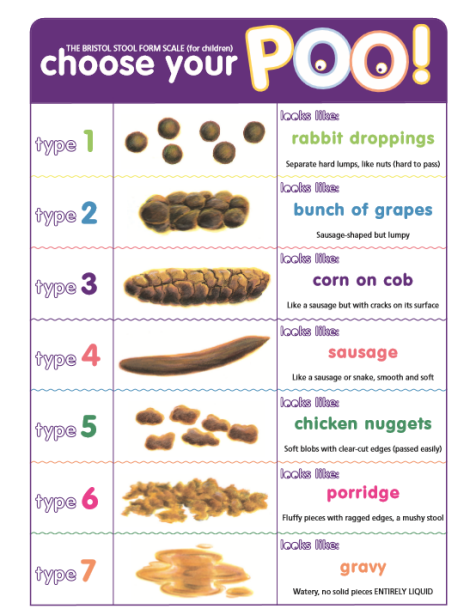
- Chart progress! Use a daily chart to remember how often your child has a bowel movement, its size, and consistency. The Bristol Stool Scale (easily searchable on the web) has an easy numbering system to record.
When do I need to take my child to be seen?
If your child has blood streaked stools or blood on the toilet paper associated with constipation, cover the rectal area with petroleum jelly for the next few days to help with the skin healing. If the bleeding becomes severe or more than just streaking, call the office for an appointment or go to the ER if your child is excessively irritable, pale, lethargic, or other concerns.
If the constipation is lasting more than 2 weeks, please call the office during regular business hours for an appointment.
Encopresis
Encopresis is a condition that can be distressing for both children and parents, but it's essential to know that you're not alone, and there is support available.
Encopresis is a childhood disorder characterized by the repeated passage of stool (feces) into inappropriate places, such as clothing or the floor, after the age when bowel control is typically established (usually around 4 years old). It's often associated with abdominal pain, chronic constipation, poor dietary habits, and difficulty with bowel movements.
Causes:
- Constipation: Chronic constipation is the most common cause of encopresis. When stool becomes impacted in the rectum, liquid stool can leak around the hardened stool mass, leading to involuntary soiling.
- Psychological Factors: Stressful life events, changes in routine, anxiety, or fear of using the toilet can contribute to encopresis.
- Neurobiologic Associations: Children with autism, ADHD, anxiety, and other conditions are at risk of encopresis.
- Dietary Factors: Poor diet, lack of fiber, and insufficient fluid intake can exacerbate constipation and contribute to encopresis.
- Medical Conditions: Hirshprung's, cerebral palsy, spinal cord problems, and other medical causes can increase risk of encopresis.
Treatment:
Treatment for encopresis typically involves a combination of medical intervention, behavioral strategies, and dietary modifications. Here are some common approaches:
- Stool Softeners or Laxatives: See constipation measures above.
- Toilet Training: Reinforcing proper toilet habits and establishing a regular toilet routine can be helpful.
- Behavioral Therapy: Cognitive-behavioral therapy or other forms of counseling may be beneficial, especially if psychological factors are contributing to the problem.
- Dietary Changes: Encouraging a diet rich in fiber and fluids can help prevent constipation. Avoiding foods that contribute to constipation, such as processed foods and dairy products, may also be recommended.
Managing Encopresis at Home:
- Establish a Routine: Encourage regular toilet sitting after meals, as this is often when the bowels are most active.
- Provide Positive Reinforcement: Praise your child for successful bowel movements and offer rewards for using the toilet appropriately.
- Encourage Fluid Intake: Ensure your child drinks plenty of water throughout the day to help soften stool.
- Maintain Open Communication: Talk openly with your child about their bowel habits and any concerns they may have.
- Work with the school in school aged children: The school nurse can help manage toileting issues at school.
When to Seek Help:
If your child is experiencing encopresis, it's essential to seek guidance from a healthcare professional. They can assess your child's condition, provide appropriate treatment, and offer support and guidance to help manage the condition effectively.
Remember, dealing with encopresis can be challenging, but with patience, understanding, and the right support, you and your child can overcome this condition together.
Helpful Video
Watch this video from the Children's Hospital Colorado on constipation and encopresis (soiling accidents) with your kids to help understand why we poop and what happens when our gut gets backed up.