Big Feelings, Growing Brains: Helping Children Learn Emotional Regulation
July 16, 2026
This week's newsletter focuses on emotional regulation, but first let's talk about the explosive diarrhea that's hitting your feeds.

First: Prevention
Cyclospora is a tiny parasite that spreads through contaminated fresh produce like berries, bagged salads, herbs, and leafy greens. It is NOT spread person-to-person or from pets.
Here's how to protect your family:
✅ Wash all fresh fruits, vegetables, and herbs thoroughly under running water before eating — even if the package says "pre-washed"
✅ Be aware that washing reduces risk but may not completely eliminate the parasite, since it's resistant to many common disinfectants
✅ Cooking to 158F kills this parasite, so cooking fruits and vegetables is a safe option
✅ Frozen fruits and vegetables are likely safe
✅ Stay updated on any FDA or CDC food recalls and avoid recalled products
✅ Practice good hand hygiene: wash hands with soap and water before preparing food, before eating, and after using the bathroom
✅ Keep your kitchen clean: wash cutting boards, counters, and utensils after preparing fresh produce
What to watch for
Symptoms usually start about 1 week after eating contaminated food.
Look for:
- Watery diarrhea (sometimes very frequent or "explosive")
- Belly pain or cramping
- Loss of appetite
- Tiredness or fatigue
- Nausea
- Low-grade fever
- Weight loss
A hallmark of Cyclospora is that symptoms can come and go — your child may seem better for a day or two, then the diarrhea returns. Without treatment, symptoms can last weeks to over a month.
WHAT TO DO IF YOU NOTICE SYMPTOMS
- Most children with mild diarrhea do not need to change their diet and electrolyte solutions are usually not needed. Water and regular foods are generally tolerated for most kids with diarrhea.
- You can keep giving human (breast) milk, formula, or cow’s milk. However, if your child seems bloated or gassy after drinking formula or cow’s milk, ask us if these should be avoided.
- Avoid sugary drinks, including juice. These may increase the watery stools.
- Call for an appointment or come in to our walk in hours if watery diarrhea lasts more than a few days, your child has poor appetite or weight loss, or known exposure to a recalled food product with symptoms (as of this writing, no products have been identified and many people who are exposed do not experience symptoms and the infection is self-limited, so only those with symptoms require treatment).
- Go to an Emergency Room if there are signs of moderate to severe dehydration as mentioned on the "learn more" page.
how we test for it
- Testing is recommended if watery diarrhea lasts more than 7 days, including if it comes and goes over that period.
- If we suspect Cyclospora, we'll order a stool PCR test that looks specifically for this parasite.
- Sometimes more than one sample collected a couple of days apart may be needed to show Cyclospora.
how we treat it
The good news: Cyclospora is very treatable! The standard treatment is an antibiotic called trimethoprim-sulfamethoxazole* (you may know it as Bactrim or Septra).
Most kids take it twice a day for 7 days and start feeling better within just a day or two.
While your child is recovering:
- Push fluids! Offer water, diluted juice, or an oral rehydration solution (like Pedialyte)
- Continue a normal diet as tolerated
- Keep your child home from school or daycare while they have active diarrhea
*If your child has a sulfa allergy, let us know — we have alternative options.
bottom line
Cyclospora is uncomfortable but very treatable.
The key is knowing when to bring your child in so we can test for it specifically and get them the right medicine.
When in doubt, call us!

Our next edition will be all about back to school, but there are far too many things to cover. Help me decide what is most important to you with this quick poll. Poll will close July 26th and the edition will post July 30th.
What is Emotional Regulation and Why Does It Matter?
Emotional regulation is the ability to monitor and manage your internal states and reactions. For children, it means learning how to pause between a feeling and an action. It involves recognizing emotions, calming down after big feelings, and choosing appropriate responses to challenging situations or social triggers.
When we're unable to regulate our emotions, little triggers lead to big reactions. Kids, teens, and adults with emotional dysregulation may use unhealthy coping tools that increase risk, such as self-harm or substance use. Dysregulation may lead to anxiety, depression, sleep problems, and/or eating disorders. Emotional dysregulation often leads to conflicts with friends and family and unhealthy relationships.
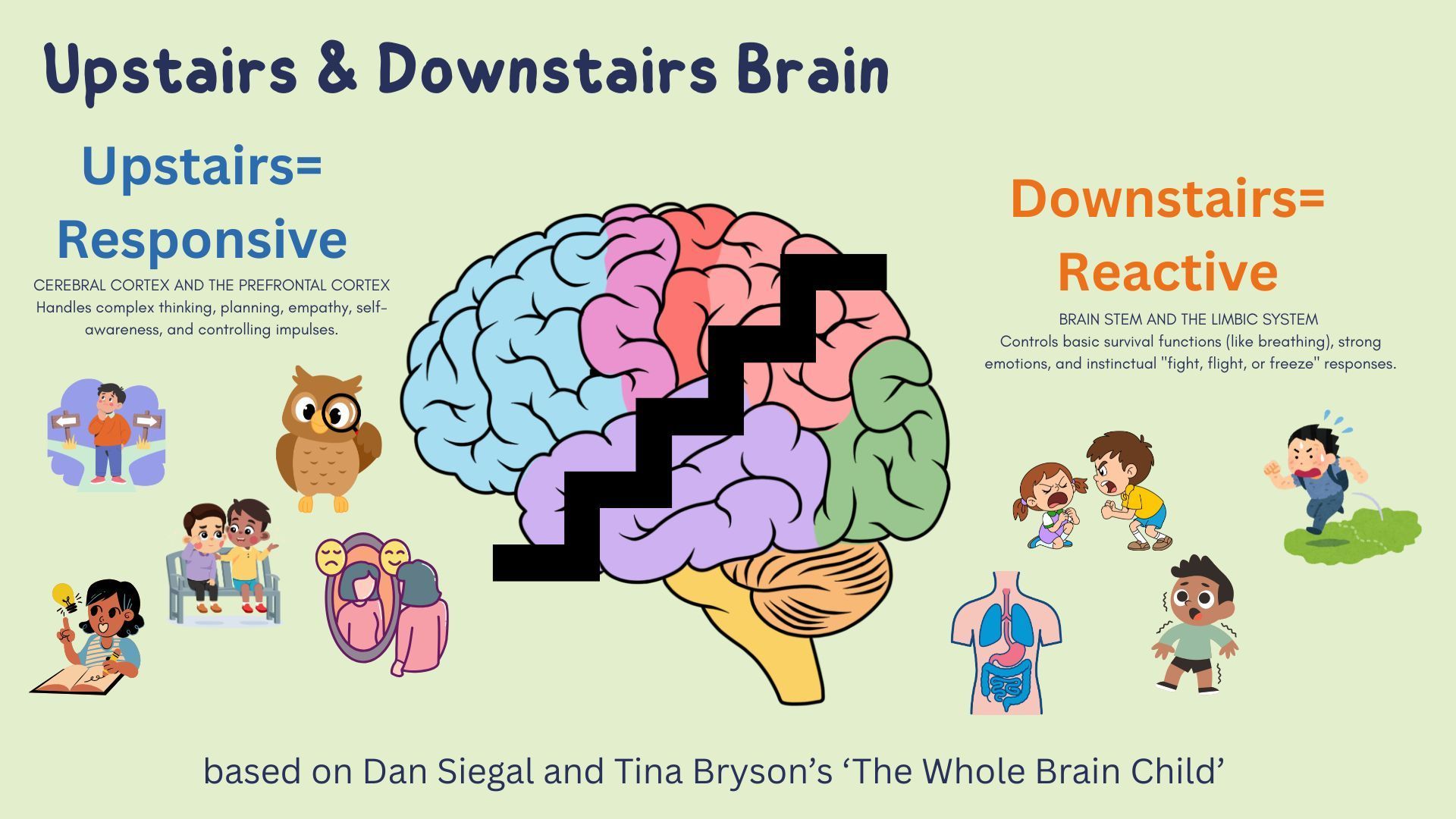
What is emotional regulation in children?
Emotional regulation isn't something children are born with. It is a complex skill that develops over time, much like learning to walk or read. It is the internal process of managing one’s emotions, thoughts, and behaviors in a way that is socially acceptable and allows for productive life engagement. In the early years, children rely heavily on "co-regulation"—the process where a caregiver provides the calm and safety necessary for the child’s nervous system to settle. As they grow, and with consistent support, they transition toward self-regulation.
We often see families struggling when a child’s "big feelings" lead to meltdowns, aggression, or withdrawal. Understanding that these are often moments of skill-deficiency rather than "bad behavior" is the first step toward effective parenting and emotional growth. When a child is dysregulated, their "upstairs brain" (the logical part) effectively goes offline, leaving the "downstairs brain" (the emotional/survival part) in charge. Our job as parents is to help bridge that gap.
Why does my child struggle with big feelings?
It is perfectly normal for kids to struggle with emotional control. Their prefrontal cortex—the part of the brain responsible for impulse control and executive function—isn’t fully developed until their mid-20s. However, some children may find this more challenging than others. Factors such as temperament, sensory processing differences, and underlying conditions like ADHD or anxiety can make the world feel more overwhelming.
Common reasons for emotional struggles include:
- Hunger, tiredness, or physical illness.
- Overstimulation from noise, crowds, or screens.
- Frustration from a task that is too difficult.
- Transitions between activities or environments.
- Feeling misunderstood or unheard by adults.
How do I teach a toddler to calm down?
Toddlers are famous for their tantrums because they possess huge emotions but almost no physiological way to manage them yet. At this stage, regulation is almost entirely about co-regulation. You are the thermostat for your child’s environment. If you get heated, they will likely get hotter. If you stay cool, you provide a target for them to aim for.
To help a toddler, try these strategies:
- Name it to tame it: Validate their feeling by saying, "You look really frustrated that the block fell over."
- Physical presence: Sometimes just sitting near them without speaking provides the security they need.
- Simple breathing: Use "bubble breathing" where they pretend to blow a giant, slow bubble.
- Sensory shifts: A cool washcloth on the face or a heavy blanket can help reset the nervous system.
- Keep it brief: Use very few words when they are in the heat of a meltdown.

Supporting school-aged children's emotional growth
As children enter school, the social and academic demands increase significantly. They are expected to follow multi-step directions, wait their turn, and navigate complex peer relationships. This is often where we see mental health concerns or learning differences become more apparent. During these years, we move from doing the regulating for them to teaching them the tools to do it with us.
How can I help my school-age child manage stress?
By ages 6 to 12, children can begin to use more cognitive strategies to handle their feelings. They can understand the concept of a "worry" or a "mad" as something separate from themselves. At this age, you can introduce a variety of tools that they can keep in their "emotional toolbox."
Effective tools for this age group include:
- The 5-4-3-2-1 Grounding Technique: Identify 5 things you see, 4 you can touch, 3 you hear, 2 you smell, and 1 you can taste.
- Positive Self-Talk: Help them develop a mantra like, "I can handle hard things."
- Journaling or Drawing: Encouraging them to put their feelings on paper to get them out of their head.
- Physical Activity: Jumping jacks or a quick run can burn off the "extra energy" of anger or anxiety.
- Predictable Routines: Consistency helps the brain feel safe, reducing the overall level of daily stress.
Navigating teenage emotions and mental health
The teenage years bring a second wave of rapid brain development, similar in intensity to the toddler years but with much higher stakes. Hormonal shifts combined with social pressures make emotional regulation a high-wire act. This is a critical time to keep the lines of communication open and to prioritize well visits yearly where we can screen for depression or anxiety. If a screening suggests a concern, we'll recommend a follow-up appointment to explore it more thoroughly. Even if symptoms seem mild, it's worth addressing them early. Just as we treat physical illnesses before they become serious, identifying and supporting mental health concerns early can improve outcomes and help prevent a future crisis.
How can you support your teen at home?
Keep communication open. Let them know you're here to listen, and be sure to listen rather than advise until they ask for your advice. You may see the obvious answer, but their brain isn't there yet, and if you tell them what to do rather than let them figure it out themselves, you're taking the learning opportunity away and are risking them turning away from you.
Get curious and ask them questions, which allows them to discover the answers themselves.
Teenagers often need more autonomy in their regulation. Remember that even though they look like adults, their brains are still under construction, and they still need your steady presence as a safety net.
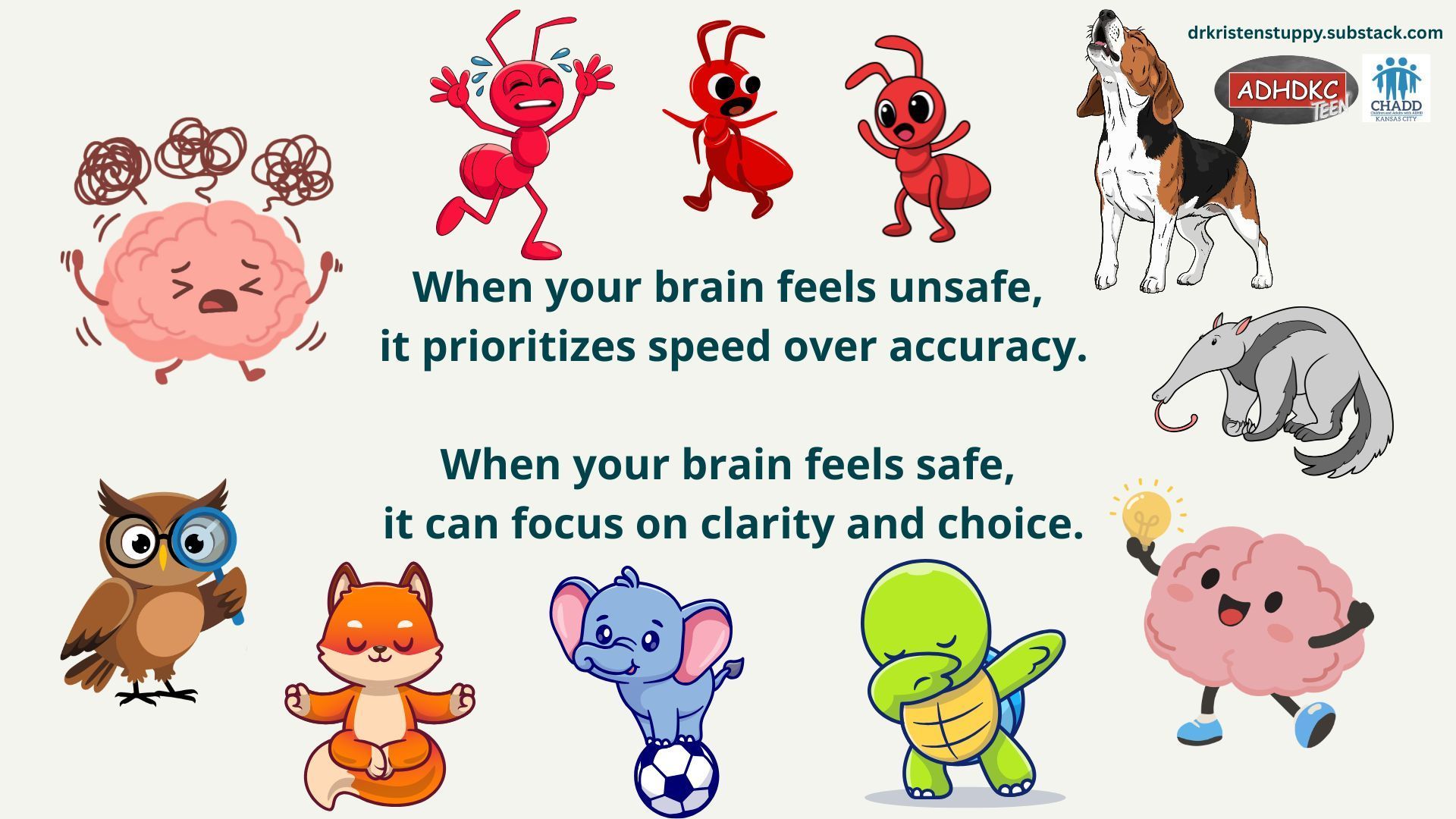
Animals of the Brain
Dr. Stuppy loves to teach kids and teens (and their parents) about the animals of their brain to help them learn how their brain works. Check out her blog on the animals and follow her on Substack to keep learning with her.
Why is parent self-care vital for child regulation?
You cannot pour from an empty cup. If you are constantly stressed, sleep-deprived, or emotionally overwhelmed, you will not have the patience required to co-regulate with a struggling child. Parent self-care isn't about spa days; it's about nervous system maintenance. It means knowing your own triggers and having your own set of tools to stay calm when the house is chaotic.
When parents model healthy emotional regulation—such as saying out loud, "I'm feeling a bit frustrated right now, so I'm going to take three deep breaths before we talk"—they are providing the most powerful lesson a child can receive. Children do what we do, not what we say. If you need additional support, our integrated behavioral health services are designed to help families find their balance.

How can our team support your family's mental well-being?
At Pediatric Partners, we believe in a holistic approach to healthcare. Physical health and mental health are inextricably linked. This is why we provide resources beyond the exam room. We want you to feel empowered as a parent, knowing you have a team of experts behind you.
We encourage you to utilize these resources:
- Prioritize Annual Well Visits: We screen for mental health concerns at well visits, plus if your child or teen is struggling, it helps them open up if they're in a familiar setting. They will feel more comfortable if they've developed a relationship with us over the years. If your child is due, schedule a well visit today!
- Meet Sean Haley: If your child is struggling with emotional regulation, Sean Haley , our clinical social worker, is here to help. He specializes in providing practical strategies for children and parents to navigate mental health challenges together.
- Specialized Care: For specific concerns like ADHD, we offer comprehensive diagnosis and follow-up.
- Dr. Stuppy’s Substack: Follow Dr. Stuppy’s Substack for in-depth articles on mental health, ADHD, parenting strategies, and pediatric insights. It’s a great way to stay informed on the topics that matter most to your family’s well-being.
Summary of Emotional Regulation Strategies
Helping your child learn to manage their emotions is a marathon, not a sprint. By focusing on co-regulation, naming feelings, and providing age-appropriate tools, you are building a foundation for lifelong mental health. Remember that progress is not linear, and there will be difficult days. What matters most is the consistent, loving connection you maintain with your child through the ups and downs.
Key Takeaways:
- Emotional regulation is a learned skill that takes years to master.
- Co-regulation is the essential first step for toddlers and young children.
- School-aged kids benefit from physical grounding techniques and predictable routines.
- Teenagers need a balance of autonomy and adult support to navigate social pressures.
- Parental self-care is the "oxygen mask" that allows you to help your child effectively.
If you have concerns about your child’s emotional development or behavior, please don't hesitate to reach out to us at our Overland Park or Olathe locations to schedule a consultation.