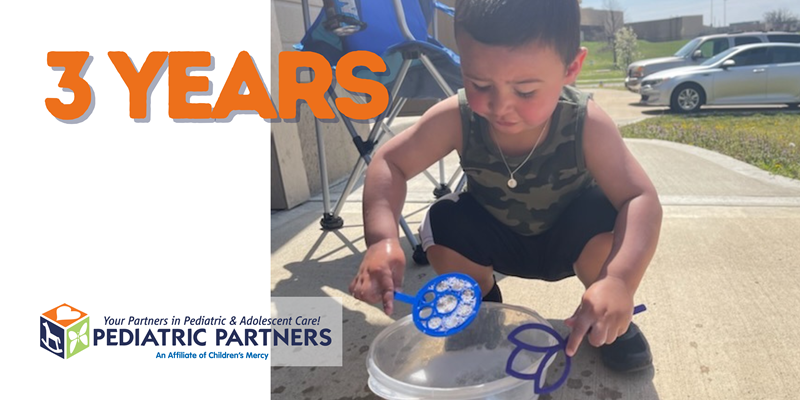
3 year

Five people stand in a line posing for a photo in front of a modern, multi-colored glass building facade.

Some babies are born with a short frenulum under the tongue. This inhibits the baby from extending the tongue past the lips.


Many people refer to this condition as "tongue-tied" (medically called ankyloglossia).


The tongue’s frenulum attaches the tongue to the floor of the mouth. It should allow the tongue to extend past the lower gums and lip, elevate to the roof of the mouth, and move from side to side. If it is too thick, too short, or too far toward the tip of the tongue it can affect feeding, speech, tooth placement, and growth of the mouth. 


Not all frenulums that appear thick need to be treated. If the tongue functions well and the baby is feeding successfully, we do not need to do any procedures. Dr. Stuppy has written a summary of the guidelines recommended by otolaryngolosts (ear, nose, and throat specialists) on management of tongue, lip, and cheek ties that you can read here. 


Tongue tie affects about 4 in 100 people. It is more common in boys and there often is a family history of tongue tie.

  • Check your baby’s weight (we check length and head circumference too at standard well visits)
  • Ask about your baby’s feeding, bowel, and sleeping habits
  • Do a physical examination
  • Ask questions about development (in a pre-visit survey- watch for these texts before visits
  • Ask if you have questions or concerns about your baby
  • Update immunizations as recommended per our office schedule and standard guidelines

HOW IS IT TREATED?

We usually schedule the first visit 1-2 days after discharge. You will need to call to schedule this visit. Due to the nature of our scheduling availability, you may be asked to schedule with a member of our team that you have not yet met, but we think you'll like every one of our physicians and nurse practitioners. All have extensive training and experience and work well together to care for our patient families. 


After the first visit newborns usually have several weight checks to be sure they are feeding well and establishing good weight gain. After that, they follow the typical well visit schedule.

PHOTOS FROM STANFORD.EDU

Our physicians take turns seeing newborns in the hospital. You may get to see a face you already know or meet someone new, but we all trust our work teammates to take great care of our patients.

There are times that newborns require evaluation and care from a neonatologist (specialist in newborn care), such as if your baby is premature, has breathing difficulties, is suspected of an infection, or has need of intensive care. The local neonatologists will update us on how your baby is doing before they go home.

In the office

We see newborns at the following hospitals each morning:

WHEN THE TONGUE'S MOVEMENT AFFECTS FEEDING, A FRENOTOMY MAY BE RECOMMENDED

  • Infection
  • Bleeding (usually minor)
  • Swallowed blood can lead to spitting up
  • Damage to salivary glands (rare)
  • Need for more surgery
  • Feeding aversion

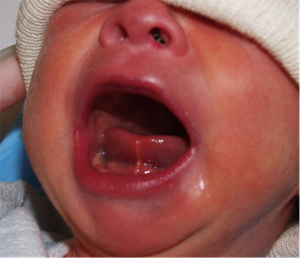
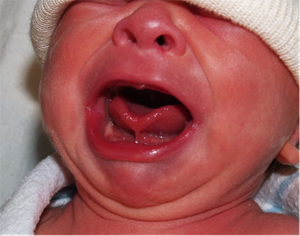
After the clipping the underside of the tongue will get a yellowed area (called "granulation tissue"). This is the normal healing tissue and will resolve within a few days.

What if your baby needs special care?

If you will be delivering at another hospital, just give us a call after you deliver to schedule your first visit. Please bring any paperwork given on discharge to your first visit. This may include your baby's birth weight, discharge weight, any lab values - such as bilirubin, screening results (such as hearing and cardiac screens) and any other information provided. This can help us learn about the hospital stay and continue care most effectively.

Newborns are scheduled to see one of our nurse practitioners or pediatricians for each visit. While we know that you will eventually see one of our staff primarily, initially it may be necessary to schedule with another person.

We all trust each other to work within our team, and newborns present the unique circumstance of needing a visit without much notice. Most of our routine well visits are scheduled 2-3 months in advance, so we hold spots for newborns, but it may not be with the person you will choose to see long term. We know this is not ideal because you want to introduce your baby to your chosen practitioner, but we cannot all have newborn spots open or it would cause scheduling issues for all the other patients - including your family long term. While we each have our unique personalities and bedside manners, we all follow standard care guidelines and will take great care of your little one!

If you want to learn more about us, check out the 
videos we have from each of our pediatricians, about our office locations, general medical advice we give and more.

Learn about each of the 
physicians and nurse practitioners on our individual pages.

  • Work with lactation to improve latch
  • Work with a speech pathologist or occupational therapist for feeding therapy

Kansas and Missouri each have routine newborn screens that are done in the hospital or birthing center to identify conditions that can be dangerous when not treated but not easily identified on a physical exam alone. The goal is to identify and treat diseases early enough to prevent serious complications such as growth problems, developmental delays, intellectual disabilities, blindness, deafness, and seizures.

You can learn more about the screenings from:

Risks of clipping:

Treatment of tongue tie involves lifting the tongue and clipping the frenulum (frenotomy).

A frenotomy can be done by trained pediatricians, ENTs, or dentists. Some of our pediatricians have this training, so if you're concerned we can make sure you get scheduled with one of them for an evaluation. ​There are local dentists who do a laser procedure, but this is more expensive and has not been shown to offer any benefit. (See Dr. Stuppy's review of guidelines for more details.)

​The frenulum does not have nerves for pain, and most newborns tolerate the procedure well without any anesthetic. We usually ask that they feed immediately after the procedure to assess their feeding. 

It is recommended if the frenulum is very thick, posterior, very vascular or if there is a family history of bleeding disorders that an ENT specialist does the procedure.

We work as a team at Pediatric Partners - from the front desk receptionists, to our nursing staff, to our nurse practitioners and pediatricians, we're all here to take the best care of your family!

  • Advent Health -Shawnee Mission
  • Overland Park Regional Medical Center

In the hospital

Most of the time we can start our relationship at the hospital when we see your baby soon after birth, but sometimes we begin care after they are discharged from the hospital. We generally see babies in our office 1-2 days after they are discharged from the newborn nursery or NICU.


If you choose our office, be sure to let the hospital know who your pediatrician will be. The hospitals call us after the baby is delivered and we will see you each morning.


One of our physicians will round each morning in the hospital to check on your baby, see how feeding is going, and treat most problems that arise. Most babies are in the hospital 2-3 days and we see them on daily rounds to evaluate how they are feeding, how much weight loss they have, perform a physical exam, and discuss parental concerns.


As mentioned above, we work as a team. Our pediatricians take turns rounding each day, so you may meet several of us during your stay at one of the above hospitals and it may not be the pediatrician you plan to see long term in our office, but we will be sure that person hears all about your baby. 

What if you're delivering somewhere else?

We occasionally care for babies in the Newborn Intensive Care Nursery (NICU) if they are there for a short time and for minor issues.

We have a relationship with the Neonatologists (specialists in sick and premature newborn care) at each of the hospitals. They help care for the infants who are requiring more specialized care and let us know when they're ready to see us.

Alternates to frenotomy:

During the visit we will :
A newborn with a noticeable tongue-tie, characterized by a short, tight lingual frenulum restricting tongue movement.
Close-up of a newborn with an open mouth, showing the tongue and gums.

The pictures are the same baby before and after the frenulum was clipped.

Three panels showing an uncircumcised penis, a healing circumcised penis with granulation tissue, and a healed penis.

PROCEDURE DESCRIPTIONS

MOGEN CLAMP:

The type of procedure done is dependent on the training and experience of the person performing the procedure. Risks and benefits overall are similar. The final "look" of the penis will be the same after the first week.

Both types use a local anesthetic called lidocaine to numb the area. This injection may sting initially (sugar and a pacifier are used to help pain control for the sting) and the injection may leave a bruise at the base of the penis. Babies can still feel the cold of the cleaning product we use to decrease risk of infection and they can still feel tugging, but the sharp pains of the procedure are lessened with the lidocaine. The foreskin is pulled away from the head of the penis (aka glans). 

The remainder of the procedure done and aftercare depends on the type of circumcision.

There are two main types of circumcision, one that leaves a plastic ring (Plastibell) on the head of the penis, and another that removes the foreskin and is left open with petrolatum jelly on gauze.

Care depends on the procedure done. After a baby's circumcision, it takes about a week to heal regardless of the method used. 

After the healing has taken place, no special care is needed other than routine cleaning.

We recommend putting petroleum jelly on the head of the penis during the healing process to keep it from sticking to the diaper. If stool gets to the area, simply rinse with water without rubbing the area much. Reapply petroleum jelly each diaper change. We suggest you do not use any creamy products or lotions on the healing penis, as they cause irritation. 


  • The foreskin is pulled up and the clamp is placed over the glans, to protect it from being cut.
  • The clamp puts pressure on the tissues to prevent bleeding.
  • The foreskin above the clamp is removed.
  • No stitches are needed unless there is excessive bleeding, which is a rare complication.
  • The head of the penis will look open and raw during the healing process. This is normal!
  • Change the gauze pad with petrolatum jelly (Vaseline) with diaper changes since it will be soiled. 
  • Rinse the head of the penis with water if stool (poop, bowel movement, meconium) gets on it, but usually simply changing the gauze is sufficient.
  • Continue to place Vaseline gauze on the head of the penis until it is healed. You will know when it is healed when there are no more red or yellow areas.
  • If there are signs of infection, such as redness of the penis shaft, temperature over 100.4F, poor feeding or fussiness, your baby should be evaluated.

Sometimes the penis will sink into the fat pad surrounding it, allowing the skin to reattach over time.


If your child's foreskin comes back over the head of the penis, push back on the fat pad to pull the skin off the head of the penis with diaper changes. Apply petrolatum jelly (Vaseline) to the area to prevent sticking.

If it does stick, it is called an adhesion. This usually doesn't cause any problems - remember that uncircumcised penises generally pull away from the foreskin over the pre-pubertal years. The adhesions of a circumcised penis will also naturally pull away over time. If they cause pain, they should be addressed. 

A white substance called smegma sometimes is seen around the edges of the head of the penis. This looks like cottage cheese and is sometimes mistaken for pus. It is not pus and is a normal substance made by the penis. Gentle removal with a moist cloth is all that's needed if it's bothersome.

Circumcision types and care

The foreskin is attached to the head of the penis at birth and will usually naturally pull away over the first few years of life. A white substance may be seen as the foreskin pulls back. This is smegma and normal, not a sign of infection.

As long as the foreskin doesn’t easily retract, only the outside skin needs to be cleaned.


If the foreskin retracts a little, clean only the exposed area with water. Don’t use soap on this area - this can irritate the skin. After cleaning always replace the foreskin back over the head of the penis. 


As your child gets older and the foreskin has completely separated and retracts easily, begin to teach him to clean underneath it as he bathes. 


If the foreskin does not naturally pull away from the head of the penis an this causes painful erections, bring your child in for an evaluation of the situation.

Uncircumcised penis

A WORD ABOUT ADHESIONS...

After the Mogen Clamp it will look bright red and swollen initially, then less swollen. As it heals, yellow granulation tissue appears on the head of the penis. This is normal and NOT an infection. 

PLASTIBELL

  • A plastic ring (Plastibell) is inserted between the head of the penis and the foreskin and tied off.
  • The ring is left in place until it falls off naturally, generally 3-7 days later. 
  • Routine cleaning with diaper changes is done.
  • If the ring does not fall off within 14 days or if it slips down the shaft of the penis, bring your baby in to be evaluated. This is an emergency if it seems red, tender, or your baby has a temperature over 100.5F, is fussy or not feeding well.
  • Track your child's development with FREE online tools
  • Find developmental milestone information so you can keep track at home.
  • Pathways offers resources for infant and child development.
  • Zero to Three offers resources for infant and child development and parenting.
  • Did you know you can sign up for free weekly texts coinciding with your due date to help with every stage of pregnancy and the baby's first year? Visit text4baby for more details. 

Milestone Tracking and Tools to Maximize Your Child's Development

Childcare can be done in a person's home or in an established child care center. There are pros and cons to each, so consider your family's needs to start your search. 

ChildCare Aware has a searchable database to help locate childcare providers, check licensing of childcare providers and see inspection reports. Click on the state to find providers in 
Kansas and Missouri.

To help locate a childcare provider, learn how to find the best childcare, and more use this searchable database: 
Childcare.gov. Use their Tip Sheets to help find the best care for your child(ren).

Local Resources to Optimize Development

  • Parents As Teachers works with parents to teach them how to teach their infants through 3 year olds. 
  • Infant and Toddler Services provides therapies for Kansas infants and toddlers through 3 years of age with delays in developmental skills, such as speech and language or gross motor skills. 
  • First Steps provides therapies for Missouri infants and toddlers through 3 years of age with developmental delays.

Daycare:

Colic (Fussy baby) Resources:

Hot topic: Separation Anxiety & Staying In Sight Outside the Home

Wandering in preschoolers can be concerning and stressful for parents. Whether it's wandering away in public places or from home, keeping your child safe is a top priority. Here are some tips to help manage wandering behavior in preschoolers:

  1. Identify Triggers: Pay attention to any patterns or triggers that may prompt your child to wander. It could be boredom, curiosity, or sensory overload in crowded environments.
  2. Supervision: Provide close supervision, especially in situations where wandering is more likely to occur, such as crowded places, parks, or near busy streets. Consider using child safety harnesses or leashes in high-risk environments.
  3. Establish Clear Rules: Set clear boundaries and rules with your child about staying close to you or holding hands in public places. Explain why it's important to stay together and reinforce these rules consistently.
  4. Communicate Openly: Encourage open communication with your child about safety. Teach them about the importance of staying close to a trusted adult and what to do if they get lost, such as finding a police officer or another parent with children.
  5. Use Visual Aids: Consider using visual aids like wristbands or temporary tattoos with your contact information in case your child wanders and gets lost. Make sure your child knows their full name, your name, and how to contact you or emergency services. Practice saying your phone number each night with the bedtime routine until they have it down - and then ask once in a while to keep it fresh once they've learned it!
  6. Create Safe Environments: Childproof your home and secure doors and windows to prevent your child from wandering unsupervised. Consider installing door alarms or child safety locks as additional measures.
  7. Practice Safety Drills: Practice safety drills with your child, such as what to do if they become separated from you in a store or public place. Role-play scenarios to help them feel more confident in handling these situations.
  8. Stay Calm: If your child does wander off, stay calm and act quickly. Alert nearby adults or authorities, and begin searching the area systematically. Use a recent photo of your child to aid in identification if necessary.
  9. Seek Professional Help: If your child's wandering behavior is persistent or puts them at risk, consider seeking guidance. We can help identify underlying reasons for the behavior and provide strategies for managing it effectively.
  10. Celebrate Progress: Acknowledge and celebrate small successes and improvements in your child's ability to stay safe and follow rules. Positive reinforcement can encourage continued cooperation and adherence to safety guidelines.

Managing wandering behavior in preschoolers requires vigilance, patience, and proactive measures to keep your child safe. By implementing these tips and seeking appropriate support when needed, you can help your child navigate their surroundings more safely.

On the other hand, it's also common for children to experience separation anxiety during this transition. Separation anxiety occurs when children feel distressed or anxious when separated from their primary caregiver. While it's a normal part of development, it can be challenging for both children and parents. Here are some strategies to help you and your child manage preschool separation anxiety:

  1. Gradual Transition: Ease your child into preschool by gradually increasing the time they spend away from you. Start with short separations and gradually extend the duration as your child becomes more comfortable.
  2. Establish a Routine: Create a predictable routine for drop-off and pick-up times. Knowing what to expect can help your child feel more secure.
  3. Stay Positive: Be positive and confident when saying goodbye to your child. Reassure them that you will return and that preschool is a fun and safe place.
  4. Keep Goodbyes Short: While it may be tempting to linger when saying goodbye, keep farewells brief and decisive. Prolonged goodbyes can make separation more difficult for both you and your child.
  5. Create a Transition Object: Give your child a special object, such as a small toy or photo, to keep with them during the day. This can provide comfort and remind them of home.
  6. Encourage Independence: Encourage your child to engage in activities independently while at preschool. Building confidence in their ability to navigate new situations can help reduce anxiety.
  7. Validate Feelings: Acknowledge and validate your child's feelings of anxiety. Let them know that it's okay to feel nervous and reassure them that you understand how they're feeling.
  8. Communicate with Teachers: Keep open lines of communication with your child's preschool teachers. They can provide insights into how your child is adjusting and offer support as needed.
  9. Follow Through: Be consistent with drop-off and pick-up times. Following through on routines can help build trust and confidence in your child.
  10. Take Care of Yourself: It's natural to feel emotional when leaving your child at preschool, but it's essential to take care of yourself too. Seek support from friends, family, or other parents who have been through similar experiences.

Remember that separation anxiety is a normal part of development and usually improves with time and practice. With patience, consistency, and support, you and your child can navigate this transition successfully.

If you have concerns about your child's separation anxiety or if it persists over time, don't hesitate to reach out to us for additional support.


If your preschooler is afraid at the doctor's office, have them watch this short video to learn what will happen.

Our website has many resources.

Some pages you might find helpful at this age include:

  • Nutrition This page has several articles related to feeding your child.
  • Picky Eating
  • Immunizations This page has answers to all your questions about the vaccines we give and what to expect after vaccinations. At 2 years we give any seasonal and catch-up vaccines that are indicated.
  • Safety This page has a large number of subtopics to learn all about safety and prevention topics for your family.
  • Parenting Tips This page has tips on sibling rivalry, tooth care, sleep and more. 
  • Is your child sick? This page has a searchable list of articles to help manage illnesses.
  • Medicine dosages Always make sure you're giving the right amount of medication to your baby. Over the counter medications won't say how much to give, so we have weight based guidance on our site. Tip: If you're buying over the counter medicines, usually the infant specific versions are more expensive than children's versions without any benefit other than a syringe. You can usually buy a syringe and children's syrup for less! Some common questions about medications are covered on:
  • Acetaminophen (Tylenol)
  • Ibuprofen
  • How to give your child medications
  • Special Needs for those of you with children who have special needs.

Help optimize development

  • Preschoolers often have behaviors adults worry are inappropriate sexually. Learn what's normal and what's not.
  • Help preschoolers develop social skills with tips from the AAP.
  • You have probably realized that kids of all ages are drawn to screens (tvs, tablets, computers). Consider how screen time will affect your child's development by asking the 5C's - with age-specific advice: healthychildren.org/English/family-life/Media/Pages/kids-and-screen-time-how-to-use-the-5-cs-of-media-guidance.aspx
  • Reading to your child daily has been proven to boost development. The Imagination Library will ship a free book to your home monthly for your child(ren) from birth to 5 years. Sign up here
  • Most 3 year olds can pedal a tricycle, open doors, build a tower of 9 cubes, copy a circle, dress self with supervision, and wash/dry hands.
  • Vocabulary includes more complex words and sentence of 3 words. They are starting to use pronouns. Most are able to give their full name, age, sex, and count to 5.
  • Offer puzzles and begin age-appropriate games that help teach taking turns, colors, counting, and more.
  • Preschoolers may have a period of stuttering, which is usually self-limiting. Make an appointment to discuss this if it lasts longer than 6 months.
  • Use "no" sparingly - redirect when possible. Praise behaviors you want them to repeat. Look for the good behavior! Tantrums decrease if you ignore them.
  • Offer choices, but make sure either answer is acceptable. (Would you like an orange or banana?)
  • Continue healthy sleep habits and routines.
  • Imagination really develops at this age. Encourage pretend play. Some children have nightmares and other fears due to this growth of imagination. Validate fears. Rather than saying "don't be scared," teach children how to conquer fears.
  • See To Learn was developed by the Eye Care Council as a preventive program to help make sure every child’s early education is unaffected by vision problems. Parents can schedule a FREE vision assessment for their 3-year-old child in a participating optometrist's office.
  • Early childhood developmental screenings for 3-5 year olds are held through the local school districts for any child who has developmental concerns. 
  • Shawnee Mission School District
  • Olathe School District
  • Blue Valley School District
  • Others: click here

Feeding & Nutrition

  • Preschoolers should have meals and snacks offered at the same times each day. Don't let them graze on snacks all day long - think of snacks as mini meals with healthy food choices offered at a standard time.
  • Offer small servings of each food. Children become overwhelmed by large portions of food.
  • Your child may decide they don't like certain foods. Never force them to eat. Keep offering those foods every once in a while. As children get older their tastes change.
  • Parents choose the types of foods offered, children will decide how much they eat.
  • Keep the tv and other screens off while eating. Distracted eating now sets up unhealthy patterns for life.
  • Vitamin D 600 IU/day is recommended for everyone over 6 months.
  • Limit milk to 24 oz or less per day. Too much milk increases the risk of malnutrition and iron deficiency anemia. If you need a cow's milk substitute, talk to us about which is most appropriate for your child. Many (including almond, rice, and other milks) sound healthy, but offer little nutrition and are not appropriate for young children.
  • Juice should be limited and other flavored drinks are still not recommended. They have too much sugar and fill kids without providing much nutrition (even 100% fruit juice).
  • Smoothies can be made with fruits and vegetables and a protein source, such as milk or yogurt. These can be a great way to get nutrition into picky kids! Pour them into popsicle molds to make popsicle treats filled with great nutrition!
  • Kids can eat an unrestricted variety as long as it's a well balanced diet. A parent should decide what kids eat, but they decide how much! If they favor one type of food, offer it after other healthy foods have been eaten to ensure a good balance.
  • It's not unusual for a child's appetite to drop at this age. Provide healthy options then allow your child to decide how much to eat. Your child may eat one regular meal, and consume the rest of their calories in small meals and snacks, so make sure healthy options are provided with every time they eat. Try to give a plant (fruit or vegetable) plus a protein each time your child eats. This helps them get to the 5-a-day fruit/vegetable recommended intake. 
  • Limit juice and minimize sugary snacks. Juice offers little nutrition and has a lot of sugar! See Dr. Stuppy's summary of the AAP Juice Guidelines for more. 
  • Low-fat milks are appropriate. Limit to no more than 24 oz. daily. Too much milk is dangerous because it fills kids up and they don’t eat other nutrient rich foods, leading to deficiencies in other vitamins and iron.
  • Let kids help serve themselves and prepare food - this helps them develop their skills and often times helps picky eaters increase their food intake!

Health

  • Kids get 8-12 viral infections per year. Each may last 2-3 weeks, so they seem like they're always sick, especially during the cold and flu season. Visit our illness pages as needed.
  • Smoke exposure and day care increase risk of viral infections.
  • Fever (temperature more than 100.4° F. under the arm) is the body’s response to illness. It can be a good thing by helping to eliminate infection. Treat only if uncomfortable.
  • ASK (Autoimmunity Screening for Kids) is a free, research-based program that screens for T1D and celiac disease.
  • For people 1 to 99 years old
  • No family history of T1D required
  • No current or past diagnosis of diabetes
  • Visit AskHealth.org to learn more.
  • When your child is able to spit after brushing, you can increase to a pea-sized amount of fluorinated toothpaste. 
  • It is time to establish care with a pediatric dentist. Check your insurance to see who is covered.
  • Smoking in enclosed spaces allows smoke dust to settle on cloths and hair. When held, the child inhales the smoke dust and can develop allergies, asthma, and ear infections. Never smoke around your child or in the home or car – even if the child is not present at the time.

Safety for your family

  • Keep medications, cleaning products, and other toxins away from young children. Secure furniture to walls. Charlie's House is a great local resource for all your child proofing questions!
  • Drowning danger: Never leave young children alone in bathtub. Stay within arms reach of young children at the pool. Empty wading pools and buckets immediately after use to prevent drowning and mosquitos!
  • Put your shoe, cell phone, or purse in the back seat so you never forget a sleeping child in the car.
  • Street safety: Teach kids to stay out of the street and hold hands if possible in parking lots and when crossing the street.
  • Bug sprays with DEET are recommended when exposed to insects.
  • Use a helmet and protective shoes (no open toed sandals or shoes that slip off) whenever on bikes, Big Wheels, scooters, etc.
  • Keep the poison control number in your phone. 1-800-222-1222
  • Prevent cavities - brush teeth twice a daywith a grain of rice amount of kid's fluorinated toothpaste until they can spit, then a pea sized amount once they can spit. Children should see a dentist regularly at this age.
  • Keep the water heater set to less than 120F to avoid burns.
  • If you own guns, be sure they are stored properly locked with the ammunition locked separately.
  • Don't allow kids nearby when you're mowing the lawn. Projectile objects can hurt those who are too close.
  • Use sunscreen. Apply 30 minutes before sun exposure and repeat every 2 hrs as needed.
  • If you feel unsafe at home, see safehome-ks.org or call 913-262-2868.
  • Keep cigarettes, matches and lighters out of sight and reach. Don't smoke or vape around children.
  • When in crowds have your child wear or carry your phone number (such as on an arm band). Teach them to show it to another parent or worker if lost.
  • If you are worried about your living or food situation, talk with us. Community agencies and programs such as WIC and SNAP provide information and assistance. Find information about this and more on our Community Resources Page. See the "Economic and Financial Help" tab.
  • Ask us for help if you have been hurt by your partner or another important person in your life. Hotlines and community agencies can also provide confidential help. 
  • Tobacco-free spaces keep children healthy. Don't smoke or use e-cigarettes. Keep your home and car smoke-free. If you need help quitting, find information on our Community Resources Page.
  • Car safety:
  • Kids are safest rear facing until they exceed the height or weight limits of their carseat, then they should turn forward with the 5 point harness still in use.
  • Booster seats with a lap belt only are not safe at this age. Stay in the 5 point harness!
  • If you need a car seat sticker, ask us! They can help identify who to call in case of emergencies.
  • Do not put kids in thick clothing under a car seat belt. Remove coats and put blankets on top of the seatbelt.
  • Make sure your child is always stays properly strapped in the car safety seat during travel. 
  • Always wear your lap and shoulder seat belt to better protect yourself in case of accident.
  • Never drive after drinking alcohol or using drugs.
  • Never text or use a cell phone while driving.
  • Do not smoke or vape in the car - even if children aren't in the car, it is an enclosed space and your baby will be exposed to third hand smoke or vaping chemicals.
  • Turn your hot water heater down to below 120° F to decrease the risk of burns.
  • Check your smoke and carbon monoxide detectors and replace batteries regularly.
  • All parents should learn CPR and refresh skills every 2 years. For a list of CPR classes for both non-medical and medical professionals, search for "CPR" with your zip code on a web search engine.
  • Always leave contact information with babysitters. For more babysitter tips, see our Babysitter page.

Looking ahead to the 4 year visit:

We'll talk about

  • Taking care of your preschooler, your family, and yourself.
  • Developmental milestones - use the tools above to prepare!
  • We recommend the "kindergarten shots" at 4 years, and we may also offer seasonal or catch up vaccines as indicated. Review the vaccines we'll give before your visit.