ADHD General Information
General Information About ADHD And Related Conditions
Teachers and parents often are concerned about disruptive and hyperactive behavior. About 10% of people have ADHD. Many of the symptoms can be found in any child at any given time, but in children with the disorder it can cause problems at home, at school and socially.
Symptoms can include difficulty following instructions, problems with organization and losing things such as toys or homework, inattention to details or a tendency to make careless errors in schoolwork or other activities, fidgeting, excessive movements or talking, difficulty waiting in line, problems interrupting, or difficulty remaining seated.
Most patients of Pediatric Partners can do evaluations for and treatment of ADHD in their medical home. We generally ask that parents and teachers (as well as older teens) fill out surveys and then meet to discuss results.
The initial consult visit will be done by our clinical social worker when there is a concern about neurobehavioral conditions. This will help improve access and start appropriate management faster. Behavioral health follow up can be continued when indicated and the pediatricians and nurse practitioners will have access to his full assessment when they first see patients to develop a medical treatment plan. This system allows for a comprehensive evaluation in a more timely manner and the physicians and nurse practioner can more effectively use their initial visit to discuss medical treatment options.
If you suspect learning differences (dyslexia, dysgraphia, and others) contribute to the learning and behavior concerns, a specialist will be needed for those assessments. If you're not sure, just ask!
There is no single test to diagnose ADHD, but we use your history of concerning behaviors and Vanderbilt surveys from parents and teachers to help us assess ADHD and associated conditions.
Symptoms must be present before age 12 years, last longer than 6 months, be more severe than most children of the same age, and must occur in two settings (such as home and school).
Patients with ADHD should follow up regularly for best management. Our office policy is here.
Associated Conditions
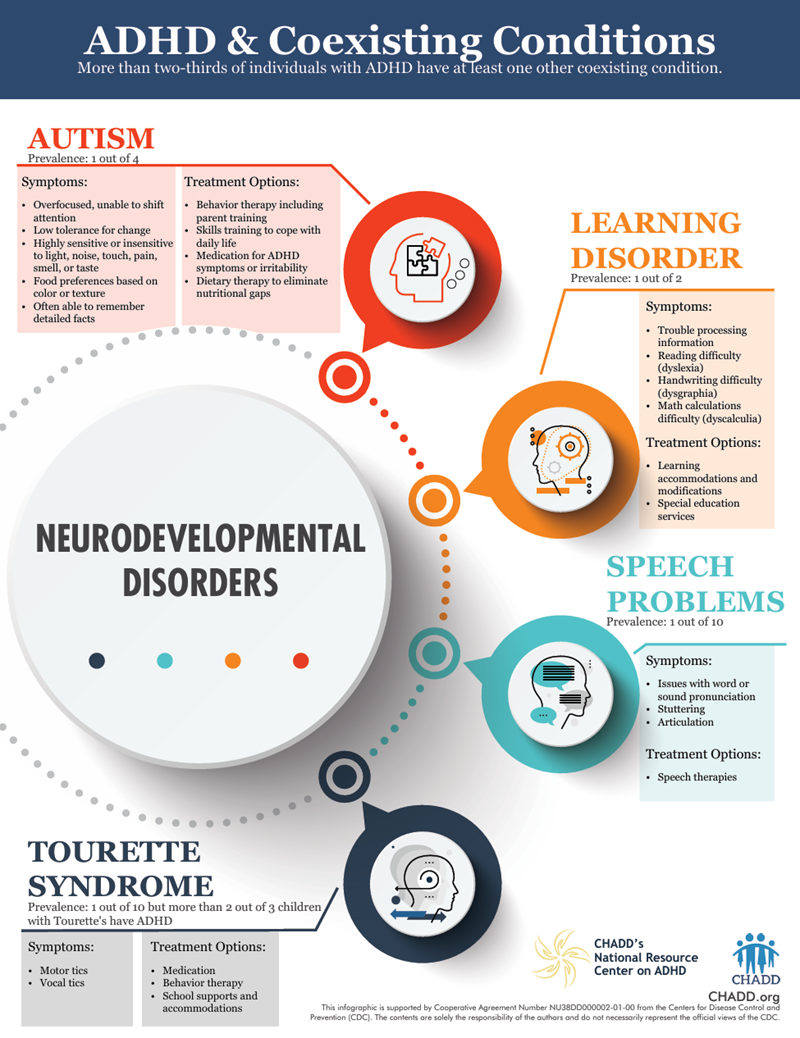
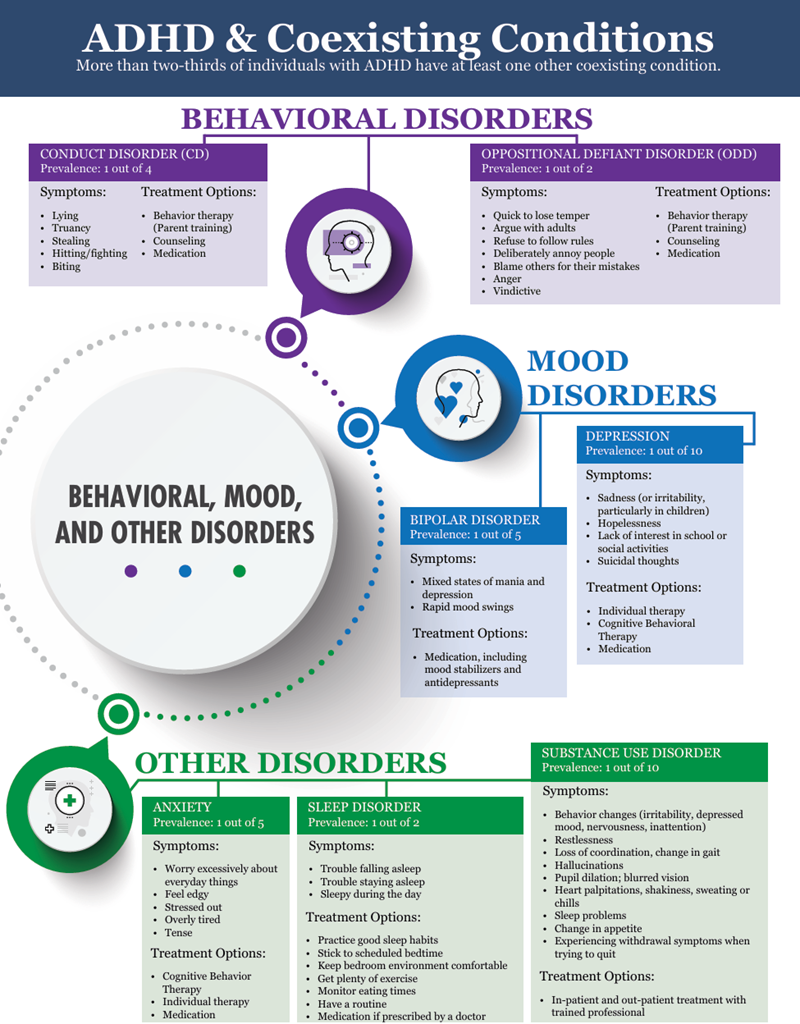
It is important to note that often there is more than one thing contributing to behavior issues and school problems. These may mimic ADHD or co-exist with ADHD. They can make diagnosis more difficult. The most common include:
Oppositional Defiant Behavior
- This involves stubbornness, temper and rule breaking.
Depression or Anxiety
- Anxiety or depression can occur with ADHD or have symptoms such as inattention and forgetfulness that may mimic ADHD. Anxiety co-exists with ADHD at times, with worry, fear and sometimes physical symptoms, such as headache or tummy ache. Sometimes treating the ADHD helps the anxiety because kids feel more confident when they can focus on tasks, complete assignments, and not get in trouble as much. Sometimes treating the ADHD worsens anxiety because kids focus on their worry thoughts more with a medicine for focus. It is really important to investigate anxiety along with other issues that can mimic ADHD. Poor management of ADHD can lead to anxiety or depression.
- Post-traumatic stress disorder can affect focus and behavior.
For more on ADHD, anxiety and depression:
- Inattentive ADHD is often overlooked, which can lead to more significant problems later in life. Learn more on Childmind: https://childmind.org/article/what-is-inattentive-adhd
- Hey, Sigmund (fantastic website, use the search feature for more articles!)
- Anxious Toddlers to Teens
- Pediatric Partner's Pinterest page on Mental Health
- Pediatric Partner's Pinterest page on ADHD (divided into sections: medication, evaluation and testing, life skills, books, schools and camps)
- Dr. Stuppy was interviewed on GetHealthy360 all about ADHD. Take time to listen to the podcast!
- Follow the local CHADD chapter - ADHDKC's Facebook and Instagram accounts. They post helpful articles to Pinterest. They also maintain a list of area professionals (therapists, coaches, psychiatrists and more) here.
Learning Disabilities
- Learning disabilities can be exacerbated if there is also an attention problem.
Hearing and Vision or Other Neurological Conditions
- Hearing and vision problems or absence (petit mal) seizures can appear to be attention problems.
Nutritional Issues
- Anemia or iron deficiency can cause tiredness, which can manifest in kids as hyperactivity or poor concentration.
- Chronic diseases or malnutrition leading to pain or hunger can affect focus and behavior.
Sleep Problems
- Sleep problems can cause chronic tiredness, which can lead to hyperactivity and concentration problems.
- These problems might simply be not getting enough sleep, and an earlier bedtime might help.
- Other children have sleep apnea, shown by grinding the teeth or snoring with pauses in breathing noted throughout the night.
Concussions
- After a concussion kids can temporarily have concentration problems (but this can last several months).
Dr Stuppy talks about ADHD in kids and teens
National ADHD Resource
CHADD is a national support group for people with ADHD. A great place to begin learning about ADHD is their Toolkit.
Medication Treatment Options
For a list of medications commonly used to treat ADHD, please see the ADHD Medication Guide and click that you agree to the end user agreement. (It's free and easy to access, but they are trying to limit plagarism.) The guide separates medicines by type, notes if it is able to be chewed or sprinkled, if it is available as a generic, and more. You can compare the names of the medicines to the formulary your insurance provides to find one that is appropriate for your child and hopefully covered by insurance.
About Us