RSV Prevention
RSV Prevention
RSV Prevention - 2026/27 Season
We will be offering Beyfortus to eligible patients at their regularly scheduled visits and as scheduled nurse visits for those eligible without an upcoming appointment starting October 1st.
Medical stuff to know about RSV and the preventions available
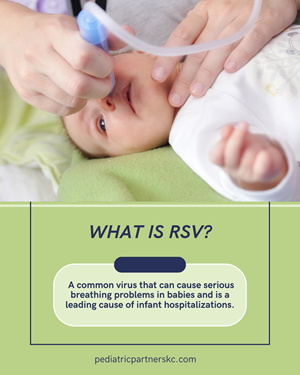
- RSV is one of the most common causes of childhood respiratory illness and results in annual outbreaks of respiratory illnesses in all age groups.
- Each year in the US RSV leads to approximately:
◾️2.1 million outpatient medical visits in children under 5 years
◾️58,000-80,000 hospitalizations in kids under 5 years
◾️60,000-160,000 hospitalizations in adults over 65 years
◾️6,000-10,000 deaths in adults over 65 years
◾️100–300 deaths in children under 5 years - You can learn how to manage RSV infections at home and when to seek medical attention here.
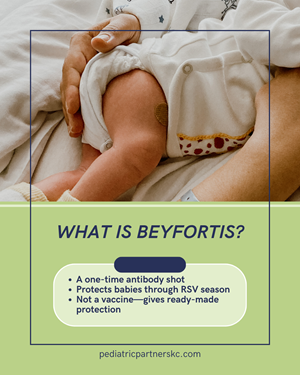
- Beyfortus (nirsevimab) and Synagis (palivizumab) are both monoclonal antibody injections that give passive immunity. They are not typical immunizations that help the immune system develop ways to fight infection. They’re given to prevent serious respiratory illness from RSV in young children. Beyfortus protects for 5 months (a full RSV season) whereas Synagis only lasts 1 month (requiring monthly injections). Synagis is no longer be available as of December 31, 2025.
- Beyfortus can be given with other vaccines.
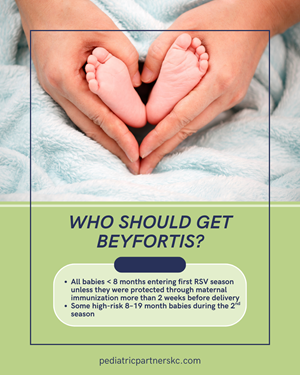
- Beyfortus is recommended for all newborns and infants up to 8 months old*, starting at birth, during the RSV season, if they did not receive passive immunity through parental immunization at least 2 weeks prior to birth. Some children up to 19 months old who are at higher risk of severe RSV can also get this vaccine.
* An RSV vaccine is also available to give during pregnancy to protect the baby. If a baby got the benefit of this vaccine more than 2 weeks prior to delivery, no further RSV protection is needed unless the baby is in a high risk group.
Infants 8-19 months can get Beyfortus if:
- they have chronic lung disease from being born premature and are requiring medical therapy for their lung disease
- they are severely immunocompromised
- have cystic fibrosis with severel lung disease or weight for length less than the 10th percentile
- American Indian and Alaska Native children
Insurance issues
- Insurance covered Beyfortis very well overall during the past two seasons, with a few exceptions. We expect that it will continue to be covered but there is no guarantee with any individual private insurance plan.
- VFC will cover Beyfortus for all eligible Medicaid patients as well as Native American and Alaskan children.
- Parents must sign an ABN (Advance Beneficiary Notice) if they want their child to be protected with Beyfortus until the insurance issues are clarified and we can rely on insurance payments. This ABN will state that parents will pay if insurance does not.
- When asking insurance if they cover Beyfortus, the CPT codes we will use are 90380 (5kg or less) or 90381 (more than 5kg).
- Newborns are not eligible until they are able to show proof of insurance. This is because it is not uncommon for the eligibility of the Vaccine for Children (VFC) program to change from what we are originally told. We could be charged significant fines or lose our ability to participate in the VFC program if we inadvertently give an ineligilbe child a VFC product or a private stock vaccine to a patient eligible for VFC. We cannot take this risk.
Scheduling
- Beyfortis is approved for use starting October 1st through March 31st to cover the typical RSV season.
- When we have Beyfortus in stock, any eligible infant in the office will be offered Beyfortus at the time of their visit.
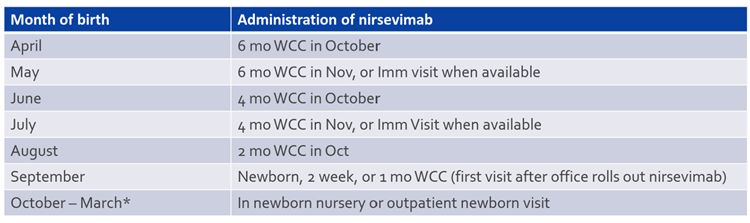
Approximate timing of nirsevimab
(based on availability, catch up may be needed later in the season)